"S is in Town—and so is Mrs Crewe. I am in the Country and so is Mr Crewe—a very convenient Arrangement, is it not? Oh the Tiddlings and Fiddlings that have been going on at Chatsworth. 'Twas quite a Comedy to see it."
Monday, January 30, 2012
Gossip at Chatsworth
Eliza Sheridan was certainly aware of her husband's tendencies to be, oh how do we say this delicately, a slut. When she first found out about his affair with Fanny Crewe, Eliza threw a fit, but sadly Sheridan was not a man to be controlled and Eliza ended up admitting defeat (although she had her own vengeful affairs). Her letter to her friend Mary Anne Canning in 1785 is very revealing of for genteel women had to constantly deal with their husband's infidelities:
Ob-sessed: Coiffure Products
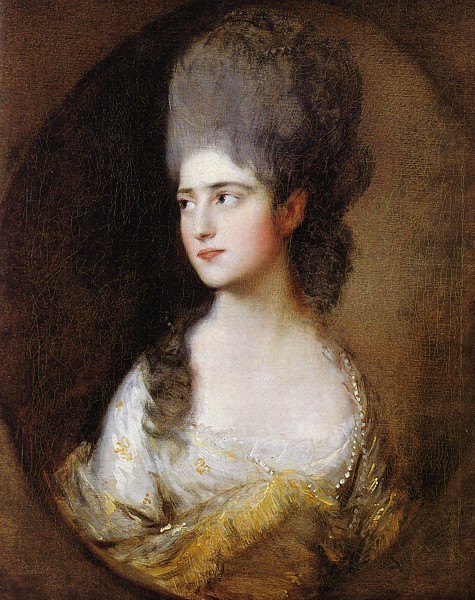
Oh marketing gimmicks! While looking for hairspray this weekend I came across a product with the image you see above. Did I need Umberto Gianni's Backcomb in a Bottle? No. Did I want it? You know it!
Luckily the company puts out travel sizes of their products which is ideal for impulse buyers like myself. Well, it looks like I will be buying the normal-size version in the future too, this stuff is great! Take a few strands of hair that need some pouf action and spritz them and style your glorious locks into the coiffure of your choice. It does have hairspray-like elements in it so it will harden hair. For extra 18th century action you can pair it with Bumble and Bumble white hair powder (one of my essential hair products) and you will really be indulging in your inner eighteenth-century fashionista/o.
I found Backcomb in a Bottle at Boots, North American peeps will sadly have order them from overseas, because I haven't yet found any US suppliers- let me know if you do find it stateside though!
![]() |
| More marketing gimmicks! |
I found Backcomb in a Bottle at Boots, North American peeps will sadly have order them from overseas, because I haven't yet found any US suppliers- let me know if you do find it stateside though!
Saturday, January 28, 2012
The Duchess of Gordon's Sim City
The Duchess of Gordon was known as being the quintessential Tory political hostess in fashionable London society. However, like many politicians today, she had a soft spot that didn't get exposed in the public area as much. The duchess was an economic stimulator!
The little highland estates of Badenoch and Strathspey didn't have much going on in terms of economy but when Jane Gordon looked across those rolling fields she saw an opportunity to roll in the pounds. Either that or this was how eighteenth century aristocrats played Sim City. She hired instructors to teach the locals how to raise crops of flaxen and linen (to make all those fashionable gualle gowns Marie Antoinette had popularized!). The duchess then pulled some threads to get supplies to the area.
There was only one problem, Badenoch and Strathspey weren't actual towns and therefore couldn't sustain this new influx of economy. So what did Jane do? She damn-well built a village. Because she was a duchess and duchesses have money to build their own villages if it suits their fancy.
Jane seems to have been very good at establishing and tending to villages for Kingussie (look you can have a pretty wedding there and eat haggis in the pubs and other fun things!) is still alive and well today thanks to the Duchess of Gordon.
The little highland estates of Badenoch and Strathspey didn't have much going on in terms of economy but when Jane Gordon looked across those rolling fields she saw an opportunity to roll in the pounds. Either that or this was how eighteenth century aristocrats played Sim City. She hired instructors to teach the locals how to raise crops of flaxen and linen (to make all those fashionable gualle gowns Marie Antoinette had popularized!). The duchess then pulled some threads to get supplies to the area.
There was only one problem, Badenoch and Strathspey weren't actual towns and therefore couldn't sustain this new influx of economy. So what did Jane do? She damn-well built a village. Because she was a duchess and duchesses have money to build their own villages if it suits their fancy.
Jane seems to have been very good at establishing and tending to villages for Kingussie (look you can have a pretty wedding there and eat haggis in the pubs and other fun things!) is still alive and well today thanks to the Duchess of Gordon.
Tuesday, January 10, 2012
18th Century Fashion on the Streets: Muffs
I have been very pleased that every since the north wind began blowing this season that I began to see the resurrection of the muff both in shops and on the street. Not only does this allow many cleverly crass puns on your part but also another means of exhibiting an 18th century fashion trend.
In the beginning of the 18th century muffs were rather small and cozy, allowing for efficient hand-warming. Mary Robinson sports one of the smaller muffs in her 1782 Romney portrait which is similar to muffs I've seen for sale at John Lewis and Top Shop (the later of which I own and love!). Toward the end of the century muffs became bigger and bigger, escalating in size until they nearly hung to the wearers knees, turning practical hand warmers into a quite cumbersome fashion accessory. I've noticed these in the shops as well (not knee-length, thank goodness) in the form of the "snood." Snoods are circular scarves meant for your neck but it wasn't until I saw my friend using her faux fur snood as a muff on a night out that I realized furry snoods are ideal late-18th/early-19th century muffs. Check out my finds below! Not only are muffs fashionable, but they're also quite handy for texting on cold winter walks- no pulling off gloves to respond to texts anymore!
Remember Darlings, just because it is cold outside doesn't mean you have to sacrifice fashion! Keep those dainty fingers covered.
Subscribe to:
Posts (Atom)


