Showing posts with label Tart of the Week. Show all posts

Friday, July 25, 2014

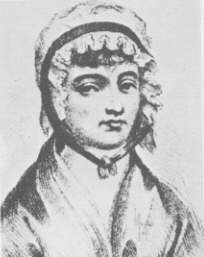
Tart of the Week: Eglantine, Lady Wallace

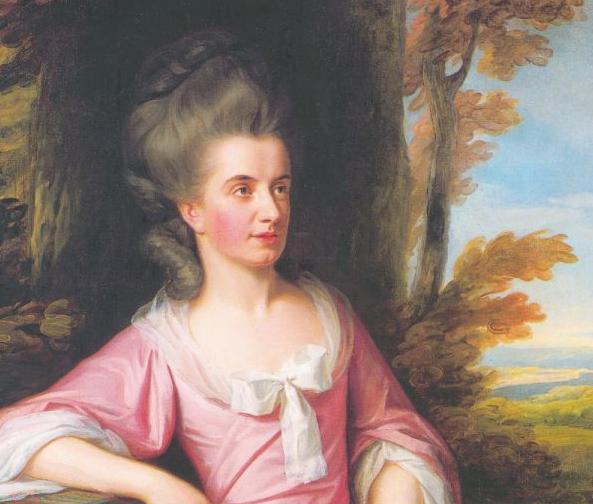
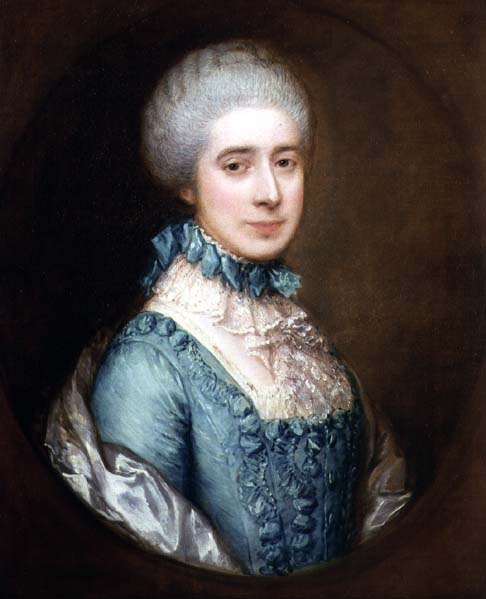
Like many little sisters of celebrated big sisters, Lady Wallace was stuck in the shadow of her elder sister, Jane, Duchess of Gordon.  However, just like the Harriet to Jane's Georgiana, Eglantine, or Betty as she was known, proved to be just as interesting of a character.

Betty and her sisters were brought up by their mother, Lady Maxwell in a tenement in Edinburgh.  The girls were known to be a bit wild (especially for daughters of a baronet) and rode pigs down the street with all the local children (hence the term 'piggy-back rides').  While Jane seemed to have curtailed the majority of her wild personality as she successful moved up the social ranks, Betty never seemed to lose her fire.  She married Thomas Dunlop in 1770 who was made the 5th Baronet of Wallace shortly afterward.  The marriage only lasted eight years; the couple legally separated on the grounds of Thomas's cruelty.  However, I wouldn't be too surprised if Betty didn't give back as good as she got.  Around this time she was summoned before a magistrate to answer for assaulting a female companion.  She had to answer the same charges in 1793 when she assaulted a servant.  Lady Wallace was a honey badger.

In 1793 she snuck into the House of Commons to watch a debate.  Since women were forbidden from the public gallery Betty disguised herself in mens' clothing and managed to see much of the debate before she was discovered and consequentially kicked out.  After her separation, she moved to London and took up the playwrights' pen.  Three of her plays seemed fairly well-received in the late 1780s, with Sarah Siddons even taking up one of the roles.  Her 1795 play, The Whim: A Comedy, however was banned by the licenser for an unknown reason.  One can only hope it was because it was too racy.

Betty had a few close calls in her adventurous life.  In 1789 she decided to travel to France to take the spa waters for her health, not thinking, perhaps this wasn't the best time to do so.  After speaking her mind about the current political situation to, erm, the wrong people, she was arrested and accused of espionage - a crazy accusation considering Betty would have been the worst spy ever.  She luckily managed to escape the situation with her head intact. 

Not deterred by the continent after that experience, Lady Wallace seems to have spent the remainder of her life traveling in London through Europe.  She died in Munich in 1803. 
Friday, May 20, 2011

Tart of the Week: Fanny Crewe


In the late 18th century there were three main Whig society hostesses, Georgiana, Lady Melbourne, and Mrs. Crewe.  All were good friends and all were considered the ton and members of the Devonshire House set.  All also qualify as tarts!

Frances Anne Greville was born in 1748 to two published authors, into a family with strong political connections, strong ties to the great minds of the time, and kickass girl power.  Who could complain?  Just sit back and absorb all of these connections.  Fanny's mother, Frances Macartney, was besties with Lady Spencer so Fanny and Georgiana most likely knew each other since childhood.  Fanny's Dad, Fulke Greville was besties with Dr Charles Burney, father of Fanny Burney so the two Fannys grew up together and were friends as well.  Talk about friends in all the right places!

With this social upbringing it is no wonder Fanny grew up talking and talking and talking.  All her life she was known as quite the chatterbox.  Georgiana once complained that Fanny had lately been a bit of a sycophant with her and needed to stop cooing over her.  Lady Douglas once stated that Fanny's "ideas came so quickly that [she] could not follow them" and assumed that neither could Fanny!

Fanny was also privileged enough to be considered a great beauty of the time.  Which no doubt helped to attract her husband to her.  She was married to John Crewe in 1766, joining two powerful Whig families together which worked out just perfectly for Mrs. Crewe who quite enjoyed playing hostess.  Her beauty and wit also got Fanny in trouble as well.  She succumbed to an affair with a frequent house guest and cohort of her husband's, Richard SheridanFox was right when he said "she loved high play and dissipation."

Of course Fanny's well-known beauty was up for debate depending on who you asked.  Fanny Burney said she was so beautiful that she "uglified everything near her."  However, if you asked the critical Lady Douglas she would tell you Fanny was "very fat with a considerable quantity of visible down about her mouth..."  Lady Sour Grapes seemed to not be be impressed with Mrs. Crewe.

Regardless of whether she was pretty or not or whether she was a big mouth or not, Mrs. Crewe's political influence cannot be denied.  She like Georgiana and other society hostesses was the backbone of political causes.  Organizing events to bring together the minds of political factions, participating in elections, and being prominent in public (and also risking reputation) in order to further the cause; Fanny did it all tirelessly.  She died as Lady Crewe (due to her husband's elevation to Baron in 1806) in 1818. 

Friday, February 4, 2011

Tart of the Week: Catherine Hayes


Catherine Hayes is both the name of an opera singer and the name of a murderess.  Take a guess which one we shall be discussing based on the above mugshot.

The more bloodthirsty Catherine Hayes was born in 1690 and was a teenage runaway.  She made a living through prostitution and as a servant, leaving her no easy life and at least two illegitimate children.  In 1723 she was hired by a wealthy farmer with two sons.  The eldest, John, fell in love with Catherine, even though she was slightly older than him and with a shadowy past.  They married in secret and moved to London.  Catherine earned a reputation as the white trash of Tottenham Court Road: arguing with neighbors, conducting adulterous affairs, and fighting with her husband.  The marriage was strained but things became worse when Catherine convinced her husband to take in a teenage lodger named Billings; a lodger who just happened to be her son.  Neighbors whispered of Catherine having an incestuous affair with Billings but one can only wonder about that accusation.

After a particularly bad argument with John, Catherine the sociopath decided he must be killed.  She recruited Billings for the task and a second lodger who she had convinced him that John has killed two of their children.  So the plan was hatched.  The three binge-drank with John until he was black-out drunk.  Then, like a scene ripped out of the pages of Party Monster (the similarities are uncanny*) the three went about murdering John.  They hit him over the head with a hatchet and then cut up the body into pieces to be disposed in the Thames.  Catherine actually wanted to boil her deceased husband's body to remove the bones which just shows how sick in the head she was!  However, that plan was thrown out.  So, long gruesome story short, body parts were dropped off in various ponds and the Thames due to poor planning.  Poor planned murders always lead to spoiled murder plans and that is exactly what happened to Catherine and her followers.
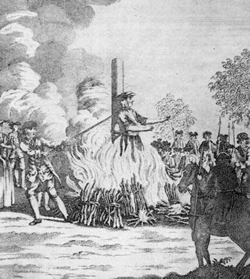
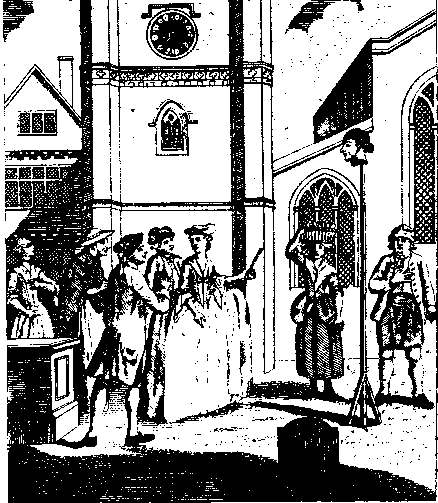
John's head washed up on the shore of the Thames and Catherine, Billings, and the lodger accomplice were detained and put on trial where they confessed to the crime.  Catherine was charged with the crime of petty treason.  Because men were considered more valuable than women, if a lady or servant murdered their husband/boss it was considered treasonous due to the act being against the natural order of things.  Naturally, the trial was quite the scandal so when the date of Catherine's execution near Tyburn arrived, there was quite the crowd appearing to spectate.   Catherine watched as men were hung at the infamous tree, including those for sodomy, theft, and even her accomplice Billings for the crime he committed with her. Catherine's grim destiny lay elsewhere.  Her punishment was to be burned at the stake.  Catherine had begged the executioner to strangle her with the rope around her neck, a common means of mercy for executions by fire, however the smoke blew into his eyes preventing him from the act of mercy.  All eyewitness reports describe a very dramatic ending for dear Catherine, complete with her pawing to move the fagots of wood away.  She put on quite an end show that was rather gruesome...but then again, it would seem she was quite deserving of it.

*In this true story, murder was committed by parties under the influence of drugs.  They hit the victim over the head with a hammer rather than hatchet, cut up the body and put it in a box to be disposed in the Hudson rather than Thames.  However the box was lined with cork and floated.

Friday, January 7, 2011

Tart of the Week: Nancy Dawson


The ongoing trend for celebrities in all ages is to have their great moment of fame and then to be cruelly forgotten, only leaving traces of their celebrity through time.  Such is the case of Nancy Dawson.  Googling the name today will deliver songs, and dances and nursery rhymes such as this one:
  • Nancy Dawson was so fine 
  • She wouldn't get up to serve the swine; 
  • She lies in bed till eight or nine,
  •  So it's Oh, poor Nancy Dawson.

  • And do ye ken* Nancy Dawson, honey? 
  • The wife who sells the barley, honey? 
  • She won't get up to feed her swine, 
  • And do ye ken Nancy Dawson, honey?  
But what do we ken about Nancy Dawson?  What little we do know is a tart-ly tale; certainly not altogether appropriate for children.

Nancy was born around 1728 into a poor situation in life but had aspirations for the stage.  She turned to prostitution for survival and then took up with a traveling puppet company where she learned to dance.  Her natural ability for dance opened up the opportunity to play Columbine, the ballerina in Commedia Dell'Arte and brought Nancy some recognition.  Nancy continued to take different dancing jobs, performing at various coffee houses in Covent Garden.  She was quite the go-go girl of her time.  Her dancing caught the attention of Ned Shuter, a renown comedian and became his mistress.  The relationship opened up more theater opportunities for Nancy.

Nancy was now comfortably situated in Covent Garden taking small acting parts here and there but her big break came in 1759.  In the wildly successful The Beggar's Opera the dancer who would dance to horn pipes in the play was ill and an understudy was needed immediately.  Nancy was given the role and when she pranced onto the stage she brought the house down.  She became such a sensation that she was hired to perform her horn-pipe dances in between the acts of the play.

Songs and poems showered Nancy with praise.  Of course this was 18th century London, so other songs and poems mocked her as well.  The signature song she danced to had the tune of what we know as Pop Goes the Weasel and words were added to immortalize the lady who made the song famous.
  • All the girls in our town, 
  •  black the fair the red the brown,  
  • Who dance and prance it up and down,
  •  There's none like Nancy Dawson!  
  • Her easy mien her step so neat,  
  • She foots she trips she looks so sweet,
  • Her every motion is complete,
  • I die for Nancy Dawson  
Popular sailor songs were song long after Nancy was alive and the Faithless Nancy Dawson was a popular dance which I feel I must have seen in at least one Jane Austen film.

Capitalizing on Nancy's fame were two books which may or may not have been published by her or with her permission; Genuine Memoirs and the appropriately titled, Nancy Dawson's Jests. Although far from a pure woman, Nancy seemed to have a good sense of  humor, a tenacity, and a very fine talent which is what truly made her famous.  After taking a few more rolls as Columbine Nancy retired to a comfortable house in Hampstead where she died in 1767.

*"Ken" is Scottish slang, still used today, meaning "know"

Friday, October 22, 2010

Tart of the Week: Sophia Musters


Many smitten men through time have sung the praises and dangers of a beautiful face.  One of the legendary beautiful faces of 18th century England was that of Mrs. Sophia Musters whom many found hard to resist.

Sophia Heywood was born in 1758, her father being the governor of Plymouth she was thrown into the path many aristocratic young ladies were forced into.  By the age of eighteen her parents had found Sophia a husband who was convenient to them, John Musters.  John was rich, good looking, and not too much older than Sophia.  Sadly Sophia had feelings for George Pitt who, as a younger son, was not a convenient marriage for the Heywoods. Sophia and John married in 1776.  A child was born to the couple every year for the next four years, sadly though, their last daughter did not make it past infancy.  Life at their country home, Colwick Hall was quiet.  Both John and Sophia were patrons of the arts.  Many portraits during this time exist of both husband and wife as well as John's various horses and Sophia's beloved spaniels, giving the outside world the idea that the Musters were in isolated bliss.

Fanny Burney described Sophia as "most beautiful, but most unhappy" as well as being the toast of the town.  John was happy being a country gentleman but Sophia flourished in a metropolitan environment.  She was adorable yet swore like Lady Lade.  The men couldn't stay away from the charming Mrs. Musters and who was she to deny them the attention?  Once, at a ball, a man approached Sophia with a glass of chalk and water and used this clever pickup line: "Chalk is thought to be a cure for the heartburn; I wonder whether it will cure the heartache?"* No word on whether the line worked.  It wasn't long before Sophia threw caution to the wind and dove into numerous love affairs.  There was and Penniston Lamb who would go on to marry Caroline St Jules (The illegitimate daughter of the Duke of Devonshire and Lady Bess Foster) and also her first love, George Pitt.  Rumors also surfaced about other men as well such as the Prince of Wales (who wasn't he attached to!) and even Joshua Reynolds who spent man hours with the beauty behind closed doors, either painting her or giving her private painting lessons. 
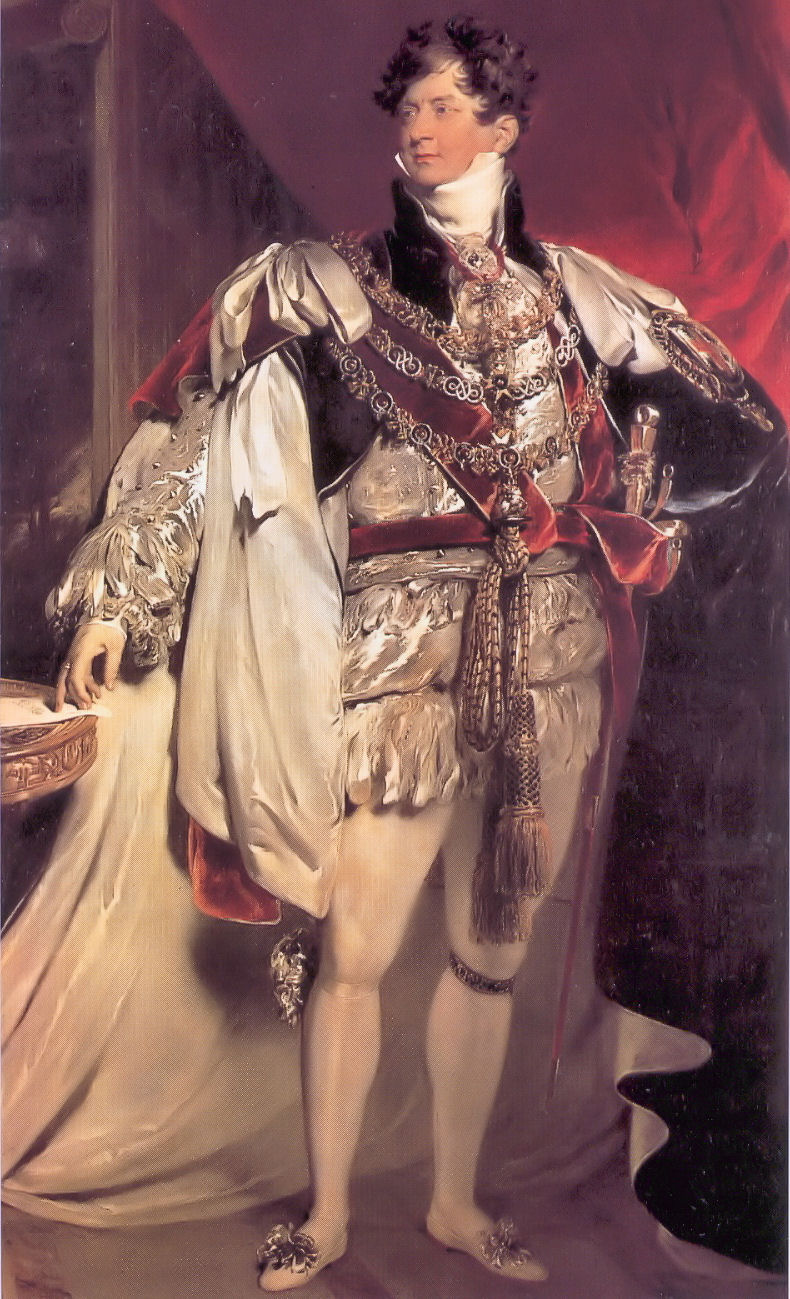
As with all 18th century aristocratic affairs, infidelity never stays secret for long.  John was furious over the discovery of being cuckolded, he took an artistic revenge and had Stubbs paint Sophia out of their portrait in front of Colwick Hall.  As commenter, Jennifer pointed out in a past post, " It was only in the late '80s that restorers realized what was behind the layers of paint and restored it to it's original form."  How ancient Egyptian of him! 

Despite the jealousy and deceit earlier in the marriage, somewhere down the road the couple kissed and made up.  Perhaps once Sophia got the wild child out of her system and John felt he could forgive her, they realized they could settle down to a contented marriage.  When Sophia died at 61 in 1819 John was heartbroken.  In her memory, he commission a tomb sculpture portraying a weeping woman so that someone will eternally morn the beautiful Mrs. Musters.


*I've seen other texts saying she had said this to the man, oh gossip!

Friday, August 13, 2010

Tart of the Week: Peg Plunkett


In 1727 Margaret Plunkett was born in County Westmeath, Ireland.  She would be destined to lead the hard-knock life that many women of the lower classes were forced to struggle for survival in.  However, Peg wasn't afraid to take down a few people in the process.  Her mother died when Peg was young and her father left his children in the care of the sadistic eldest brother who constantly beating Peg and her sisters with a whip.  The abuse was so bad Peg once had to cut the sleeves of her dress because of her swollen arms.  In further acts of cruelty her brother denied two suitors who asked Peg to marry them, forcing her to be kept prisoner in the household.  Peg could only take so much abuse and ran away to Dublin as an escape.

Once in Dublin, Peg quickly took up with a gentleman who promptly got her pregnant.  Peg, however, found the situation quite freeing because she managed to get a home out of it.  But when Peg tragically lost her child, the man and house followed suit.  When the next man that came into Peg's life offered her money for her company, Peg realized that this would be the new lifestyle she would take in order to remain out of the clutches of her abusive brother.  Peg fell in love with her social life in the bustling Georgian city, there was always someone to see or something to do with the endless stream of concerts and balls.  Of course all these things cost a pretty penny.

Peg was forced to give up the temptations of the city when she became the kept mistress of a Mr  Leeson.  She took his last name played wife while all the while rejecting his formal proposals of marriage.  The relationship dissolved when Mr Leeson realized Peg was screwing around on him, and she was kicked to the curb, only to be picked up by a Mr. Lawless whom Peg flung herself into a dramatic relationship with.  You know those couples who you can't stand because they are constantly suspicious and jealous of the attention the other receives from others?  That was the relationship Peg had with Mr Lawless.  The two would fly at each other every time he looked at a pretty lady or when a handsome gent winked at her.  One time when Peg caught him drinking champagne with some floozy she grabbed the decanter and was about to smash it into the tart's face had she not been stopped.  The two also got violent with each other until the relationship ultimately ended, leaving Peg heartbroken.

Peg herself was quite scrappy, and being a true bad-girl, never afraid of a fight.  When an actress/courtesan spread venomous gossip about her, Peg waited outside after the actress' play got out to just hurl insults at her.  When a famous violinist requested no women of the demi-monde (fallen women) be at his performance Peg purposely went to the next show and was seen being physically escorted out fighting all the way.  When the bouncer got a little too pushy in the process of getting her out, Peg ran to the authorities who arrested the celebrated musician.  Another time the street gang, the Mohawks broke into Peg's house and she fought them tooth and nail, unfortunately at the loss of her daughter and the child she was carrying.

Peg jumped back and forth between poverty and luxury.  Toward the end of her life she ran a brothel and when finding herself extremely broke, she wrote her memoirs in order to put money back in her pockets.  Despite the rough and tumble life, Peg managed to survive to the age of 70, dying in 1797.

Friday, July 9, 2010

Tart of the Week: Georgiana Fawkener Townshend


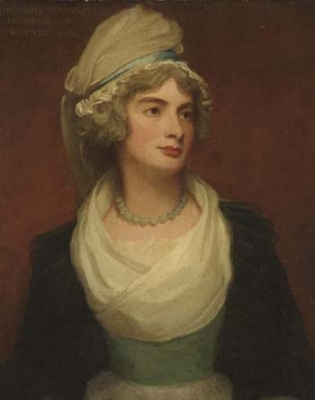
Another famous victim of a bad aristocratic marriage was Georgiana's own cousin, Georgiana Poyntz.  Georgiana, or 'Jockey' was born in 1763, the second of seven children who all had the Poyntz longevity.  Jockey had the misfortune of being the first daughter presented with a marriage opportunity.  The lucky man was the boring William Fawkener who was rich and therefore a perfect match for Jockey in her parents' eyes.  Jockey, however, was disgusted by the man and made her disinterest known.  Sadly though, she was forced into the marriage. 

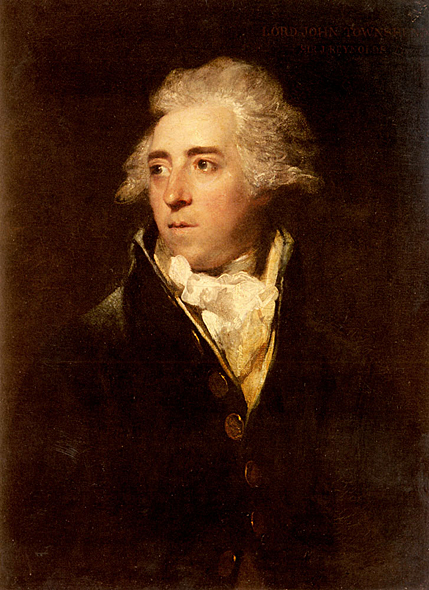
Jockey took her mind off her unhappy marriage by spending time with her friends.  Too bad Jockey's friends had a reputation as being the 'bad crowd,' Jockey hung out with her cousins at Devonshire House. It was there that she met the rather dashing and witty Whig, Lord John Townshend.  The two fell for each other and felt comfortable enough in the lax environment of the Devonshire Set to enter into a hot and heavy affair.  By 1786 the two could no longer take the strain of the affair and revealed themselves which created some major dramz.

Fawkener flew into a fury upon realizing he had been cuckolded.  He actually even accused Georgiana of aiding the couple in their adultery.  Georgiana was enraged at the accusation and her husband was equally as upset, writing to Fawkener to stop pointing the finger at his innocent wife.  Fawkener then accused Lord Melbourne of having something to do with the affair, resulting in a duel (which he lost but not at the price of his life).  Meanwhile Jockey's parent's and aunt kept her prisoner in their home, trying to force her to give up Townshend.  Jockey never relented. 

If Fawkener was a clever man with a mind for revenge, he would have kept his married to Jockey.  However, he gave his wife exactly what she was looking for.  Fawkener sued for Crim Con (in which the Duke of Devonshire testified at the trial- I'm sure he loved that) and then had Parliament grant him a divorce.  Jockey and Lord Townshend promptly married.  Although Jockey caused a scandal, alienating herself from polite circles, I would say she found an even more advantageous marriage than her parents could get her; now she had a title!

Friday, March 26, 2010

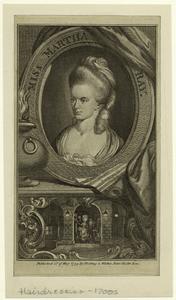
Tart of the Week: Martha Ray


Martha Ray sounds more like the name of a jazz singer than a tart, but a tart she is. But don't worry, the name isn't totally misleading; with a name that jazzy Martha was born to be in showbiz.

Miss Ray was born into the middle class. In her teenage years she decided to follow in her father's (a staymaker) business, and was an apprentice to a milliner. But Martha's true talent did not lie in fashion, she had a natural talent for singing. This talent caught the attention of John, the Earl of Sandwich who was as much a lover of music as he was of beautiful, naive teenagers. At seventeen, Martha gave up her sewing career and moved in with a man many years her senior.

Lord Sandwich was no stranger to mistresses and whores, but he seems to have really cared for, and even loved Martha. He paid for her to live in France in order to receive a proper education in social graces, and more importantly, refine her musical ability. After her training was finished she returned to Sandwich. Meanwhile a still very much alive, yet mentally unstable Lady Sandwich began to show the signs of insanity. Her husband openly living with some harlot couldn't have helped her mental state. But in the egocentric world of the nobility, Lady Sandwich didn't matter. Martha, couldn't have been happier. She would go on to have five of John's children, whom he seemed to care for more than his legitimate ones. This new extension of the Sandwich clan may have been built upon immoral foundations but it was the picture of domestic felicity.

But all was not perfect in Sandwich Land. A soldier by the name of James Hackman was introduced to the couple and soon became a regular visitor and friend. He also fell deeply in love with Martha, and didn't consider her off limits since she was not legally married. Perhaps Martha led James on, perhaps they actually did have some sort of relationship, but Martha never left John for the young officer, although he proposed to her multiple times. James' attentions veered on stalking, but fortunately enough he was dispatched to Ireland before more problems could arise.

Martha was however, getting a little frustrated with John. He was a typical rake, building up more debt than fortune. He also wasn't getting any younger; quite the opposite in fact! As a live-in mistress, Martha and her children had no financial security, especially if John decided to kick the bucket any time soon. Receiving no allowance from her benefactor, Martha decided to work for her money and began a successful stage career. John was reportedly horrified but, whether from lack of money or backbone, couldn't stop Martha.

James Hackman reentered Martha's life, this time as a newly-ordained Anglican priest. He had hoped that this respectable career change would change Martha's mind about marriage and maybe even Lord Sandwich would comply. On the night of 7 April, 1779 Martha was approached by James, who inquired after where she was going. When she told him that it was none of his business, James automatically assumed she was visiting a new lover. As she left her destination (Royal Opera House) that night and stepped toward her carriage, two shots rang out. The first one missed its target but the second one hit Martha in the head, killing her.

Those in Covent Garden who looked to see where the shots sounded and saw James Hackman. He had two pistols, the second of which he put to his head...and only injured himself with the shot. Amazing to think, how a former army officer/current priest could mess up a suicide at point blank range. James was apprehended and convicted of murder. Despite Martha being a fallen woman, she was still loved by many and her premature death shocked the nation. John was devastated by Martha's death but gave James his forgiveness before he hung at Tyburn, but still reminded him that he, "robbed him of all the comfort in the world."

Friday, March 5, 2010

Tart of the Week: Hannah Lightfoot


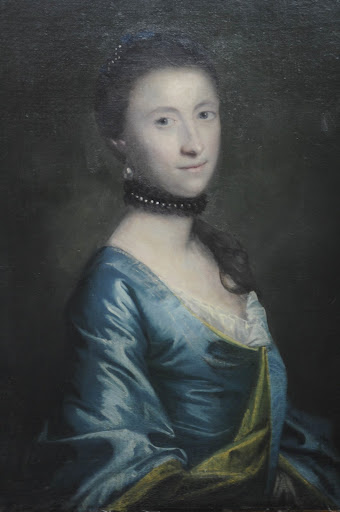
Many mysteries surround our tart this week. So many so, that some even question her existence. Her portrait, for example, by Joshua Reynolds, has been attributed as Hannah Lightfoot but she is described in life as being a blond bombshell and the clothing is a little too luxurious. So her tartly tale is about 10% fact and 90% gossip; most of the gossip springing from the following century. But I know gossip shouldn't be an issue for this crowd.

Hannah Lightfoot was born into the middle class in 1730. Her family was Quaker and she was raised as such, growing up in extreme simplicity in an age of extreme outrageousness. Her father died when she was young which relocated the girl to live with her uncle, a linen-draper in Westminster. It was here than Hannah not only grew up but would work to earn her keep, much like a Cinderella story. Perhaps some day her prince would come?

At the age of twenty Hannah had had enough of the linen-draping business and secretly married a grocer, Isaac Axford. The young Quaker soon tired of her rebellious marriage and around this same point in her life we loose track of what is fact and what is fiction of the fair Quaker "maid."

Allegedly it was in this time frame that Hannah met up with none other than the Prince of Wales, the future George III, who was thirteen by many accounts. Of course, this doesn't add up since by the time Hannah married her husband, George would have been 15. Either way George was young, naive, and not yet the prudish person we now come to think of. Some tales chatter of him first seeing her in her uncle's shop window as he was leaving the Royal Opera, other, more daring tales speak of them meeting at a masquerade. Either way, the prince and the Quaker met, and despite the age gap, began an affair. Allegedly.

It is interesting to envision the young George having this affair. It is even more perplexing to think that the affair is alleged to have resulted in a marriage between the already married Hannah and the teenage George III. This is the same man who passed the Royal Marriage Act making it impossible for members of the royal family to marry without the king's permission. It is also the same man who flew into a rage when he found out his son married the Catholic widow, Mrs. Fitzherbert. A bit hypocritical if true, huh?

Supposedly the affair produced two, maybe even three illegitimate children. Oh whom descendants graves were found in 2000. Hannah herself conveniently disappeared into obscurity. Her own mother stated that she didn't know if her daughter was living or dead since she had not seen her for two years when she made her will in 1760. Isaac Axford remarried in 1759 with his certificate stating he was a widower. Yet there is no trace of where Hannah could have disappeared to. With the few sources citing she married George in 1759, had three kids with him, and then wasn't heard from again a year later, there are obviously many missing pieces in the mystery.

Friday, February 5, 2010

Tart of the Week: Anna Maria Crouch


For many years there was a thin line between actress and whore, which was entirely unfair considering there were some fabulous actresses out there who worked hard on stage for their living. But then again, this was the eighteenth century, actresses tended to come from the lower classes where it was dog-eat-dog, and stereotypes don't just appear out of thin air. While the fabulous Mrs. Crouch never took to the streets (as far as we know) she was no stranger to scandal, or rich men's bedrooms.

Born Anna Maria Phillips, in 1763, Anna Maria was destined to be a famous actress, starting her stage career while still a child. She broke into the London scene at the tender age of sixteen, performing at Drury Lane, which was then under the management of Richard Brinsley Sheridan and Thomas Linley (Eliza's father). Not only was Anna Maria not bad on stage, she had a lovely singing voice. Her singing talent naturally landed her many singing rolls, most notably Polly Peachum in The Beggar's Opera.

Not long after Anna Maria began at Drury Lane, she was already flouncing off with rakes. In 1783 it was reported that she eloped with a certain Irish peer, but we cannot confirm who. The fling must not have lasted long for the following year she married a naval lieutenant by the name of Crouch. Right after the marriage, she returned to the stage. Now that Anna Maria was married, she could go by Mrs. Crouch which many actresses would title themselves, whether married or not, so they would look like chaste married women instead of floozies. It was once Anna Maria returned to acting in London that she met her great love.

Michael Kelly was a Dublin-born musician and singer who had been giving performances all over Europe and had also dabbled in acting. He arrived in London from Vienna with Nancy Storace, looking to making it big in England's capital city. A mere three years after her marriage, Anna Maria began an affair with Kelly. The two were not only sleeping together but also acting together, which as we all know, made great whisperings around London. To further delve into infidelity, Mrs. Crouch caught the eye of the Prince of Wales (he always did have a thing for actresses) and she had a brief affair with him. Let us examine how very tartly this was: Anna Maria was married and having an affair, and possibly hadn't cut things off with Kelly yet. The Prince, was also married at this time albeit, illegally to Maria Fitzherbert. Although the affair was brief, Anna Maria still managed to make off with a £10,000 bond from the silly prince, which probably ticked Perdita Robinson off royally because of all trouble she went through to get some of the prince's money!

After jumbling all these men around in 1791, Anna Maria reorganized herself. She separated from her husband and moved in with Kelly. The two divided their time between their home in London and their other home in Brighton. Sadly, Anna Maria's life was cut short in 1805 when she suddenly died. The 42 year old's cause of death is unknown and it sounds as if it wasn't a pretty situation, for rumors suggest she died from either drinking or a tragic carriage accident. Kelly was heartbroken and the monument he errected in her memory still stands today.

Friday, January 29, 2010

Tart of the Week: Henrietta Countess of Suffolk


Although Henrietta Hobart was born in the lap of luxury in 1689 that didn't mean life was going to be easy on her. Her father, Sir Henry Hobart died in a duel when Henrietta was a mere eight years of age and her mother soon followed three years later. It appears that the family moved in with their cousin, the Countess of Suffolk in order to survive. It was the countess' son, Charles, who would take an interest in Henrietta and in 1706 she would marry him in hopes it would bring security to her family.

It does not take too much imagination to figure out what sort of marriage these happy foundations created. Charles was a drunk and a gambler. He also had a tendency to be violent and there were reports that he beat his new wife. It took Charles no time at all to spend all his money and the little bit his wife had brought to the marriage. This lack of funds sent the couple packing for Hanover to get some work at Electress Sophia's court. Henrietta did well in the foreign country, despite being homesick. She made friends with Sophia's grandson, George (the future George II) whose attention to her was more appealing than that of her husband's. During her time in Hanover, Queen Anne died and the English throne went to George I, Sophia's son. The switch in monarchs in England as well as Sophia's death right before, sent the Howards back to England looking for work.

Henrietta was able to gain a position as a Lady of the Bedchamber to the new Princess of Whales, the wife of George, her newfound friend. Well, it wasn't long before they were more than friends! Isn't it so very Tudors of Henrietta to carry on an affair with the husband of her employer? Her lack of respect for her boss was rewarded with a promotion to full-time mistress, a position that her husband must have been well-aware of. This coveted position came with full benefits: securities, money her husband couldn't legally touch, endless gifts, a trust fund, and property.  However George was still in love with his wife so he treated Henrietta awfully, as many men with mistresses treated their wives.

When the king died and George ascended to the throne as George II, Henrietta went through another promotion, this time as royal mistress to the king. I suspect this coveted position was one of high-stress and her husband constantly bugging her for money probably didn't help. Eventually, she used the money she earned to by him off and make him go away, legally separating from him. When Charles became the 10th Earl of Suffolk in 1731 Henrietta was now too high of rank to serve as a lady of the bedchamber. A perfect chance for Queen Caroline to ditch the Harlot, right? Instead, she promoted her to Mistress of the Robes!  Queen Caroline liked having Henrietta under her thumb and specifically holding her water basin in the morning.  Henrietta was merely a court pawn to both the king and queen, used and abused.

In 1733 the Countess of Suffolk became a widow after many miserable years of marriage. By 1734 Henrietta, well-off from her mistress position (not the robes one) and weary of life at court, retired from her positions with the king and queen.  The queen argued with Henrietta about her retirement but the strangely enough it was George who was happy to let her go. She was given a pension from the king to live comfortably in retirement. Henrietta didn't wait long to marry and her new choice was George Berkeley, which surprised many. Lord Hervey described him as "neither young, handsome, healthy, nor rich" but Henrietta saw past all that and was deeply in love with him. The two were soul mates. She happily spent her days with George and intimate friends which included at one point or another, Alexander Pope and Horace Walpole.

Henrietta was heartbroken when her beloved husband died in 1746. She spent the reminder of her life in ill-health before finally dying in 1767 and was laid to rest beside the man she loved the most at Berkeley Castle.

Friday, January 8, 2010

Tart of the Week: Flora MacDonald


In 1722 in the northern islands of Scotland a little girl named Flora MacDonald was born, destined to become an icon of Scottish patriotism. Her father died while she was a child and her mother remarried another MacDonald (there weren't many other clans on the sparsley populated island). Gossip has it, that new Husband MacDonald actually abducted Mrs. MacDonald to marry her! That would explain why Flora was raised by the head of the clan instead of her mother. When she was thirteen, a friend of her mother had Flora join her own daughter in receiving a lady's education in Edinburgh.

Scotland was politically abuzz in the early eighteenth century. The Jacobite political movement had been afoot, trying to restore a Stuart king to the throne of England, ever since Queen Mary (with her Dutch husband) took the throne from her Catholic father in 1688. Prince Charles Stuart was the grandson of King James II and known as Bonnie Prince Charlie to the affectionate Scots and the Old Pretender to those who opposed his claim to the throne. Charles himself, fancied the English throne and fought for his right to it, therefore becoming the newest mascot of the Jacobite movement. The young prince was also just two years older than Miss Flora MacDonald.

In 1745 Flora was back in the northern islands of Scotland when Charles ended up hiding out there after a defeat at the Battle of Culloden. He wasn't safe there and needed to get out before the local militias discovered him. The person willing to do that job was Flora. She dragged- up the prince, disguising him as her Irish maid, Betty Burke, and secured a passport to the mainland. That is how Bonnie Prince Charlie passed right under England's nose, thereby saving Charles' life as well as preserving the Jacobean sense of hope. However, the plan wasn't foolproof and after arousing some suspicion in trying to arrange further transport for Charles, Flora was summoned for questioning. By then Charles was safe and Flora proudly confessed to her crime, stating that it was an act of humanity, one which she would have done to any soul in peril. But just look at that tartan gown she wears, Flora was feisty, daring, lass willing to risk everything for a cause she believed in.

Her actions landed her on a nasty ship ride to London to be thrown into the Tower of London. Flora was only there briefly before she was allowed to live on parole before being released. The people of England seemed to take pity on her due to her excellent tale of female heroism. As we all know, the English public loved good stories, especially when they concerned someone sticking it to the king. Flora's new celebrity welcomed her into society and even allowed her to meet people such as Samuel Johnson and even the son of the king she allegedly took action to dethrone. When the prince asked her why she did it, her response was that she would have done the same for him if he had been in need. She obviously had no problem being blunt!

After all that Prince Charlie fuss died down, Flora decided to settle down and marry. The man was yet another MacDonald, Captain Allan. The two would eventually move to North Carolina. When the American Revolutionary War broke out, the couple surprising sided with the loyalists, thinking the Colonies would loose. With Flora's history with the monarchy, she feared what would happen to her and her family if King George found out her treasonous ways hadn't died. Luckily, her family survived the war. However, by 1779 she had decided that living in the newly formed United States wasn't for her and it was time to move back to her beloved Scotland. During the voyage, pirates attacked the ship and the ever-stubborn and spirited tart refused to leave the deck, sustaining an arm injury.

Flora eventually did make it back to her native land and remained there until her death in 1790, at the age of 68 -two years after her former partner-in-crime, Bonnie Prince Charlie died.

Friday, December 4, 2009

Tart of the Week: Henrietta Baroness Luxborough


Born into the lap of luxury, Henrietta St John was the adoring half-sister of Henry, 1st Viscount Bolingbroke, the politician whom she claimed made a "half-scholar" of her. She grew up among the glamour of the beau monde and her brother's circle which included, Alexander Pope and Voltaire. Unlike many aristocratic ladies, Henrietta didn't marry in her teens and enjoyed her twenties, gossiping with her bff, the future Duchess of Somerset, spending half her time in London, and gardening.

Of course, marriage ruined everything.

In 1727 Henrietta found herself in a married to a businessman, Robert Knight. He was rude and crude and his job forced them to live mostly in Paris. Paris probably didn't bother Henrietta so much (her mother was French) as being far away from her friends and family did. Not to mention, she didn't care for her husband's crowd who only talked of money instead of the cultured topics of her brother's circle. Despite her miserable marriage, Henrietta had a son and daughter whom she loved dearly. But it was only a matter of time before she cracked.

In 1736 Henrietta was the talk of the town for an affair. It's unclear who exactly she conducted it with, some gossiped a doctor, others a tutor, and the more romantic notion is a poet since Henrietta herself was one. No matter whose bed Henrietta hopped in, her husband was furious and banished her to his remote estate, Barrells (sometimes 'Barrels') to "moulder and die." He chose not to divorce her and left her a meager annuity so that she would be forced to live like a prisoner. She couldn't visit London and she wasn't allowed any contact with her children. What's a girl to do?

Henrietta got vengeance in the simplest of ways: by enjoying her life despite her husband's attempts to cut her off from the world. Barrells was meant to be her soul-crushing prison but she was able to transform it into her own personal "Arcadia." She finally had a chance to get back into gardening and dove into the hobby to distract herself. She took up writing to friends, sometimes in poetic stanzas. She called herself a "farmeress" and delighted in her home which turned out to be just what Marie Antoinette tried to achieve with her Petit Trianon. Visitors began to venture to the middle of nowhere to see Henrietta's humble retreat. Not everyone was impressed, for whatever reason Horace Walpole liked to bitch about Henrietta calling her "lusty" and making snide remarks about her hair. Her home even became a literary center, a gathering place for the educated minds she so loved to mingle with since childhood.

For the most part Henrietta lived her life quietly. When her children grew up they were free to visit her and mother was finally reunited with children. Henrietta died in 1756, her husband would outlive her by many years, finally dying in 1772. Barrells would go to the eldest son he had with his long-time mistress.

Friday, November 13, 2009

Tart of the Week: Lavinia Fenton


Sometimes the best tarts are the products of tarts themselves. Lavinia Fenton was the result of her mother's late night rendezvous with a sailor. Things were rough growing up in Charing Cross in the early 1700s. Lavinia, like so many young women, turned to prostitution as a child. From there she took the usual prostitute promotion and became an actress.

Her first recorded appearances on the stage happened while she was still a teenager. It was when Lavinia joined the production at Lincoln's Inn Fields that she became noticed. Of course this could just be because she was a pretty face. Either way, people flocked to see the divine Miss Fenton on stage. One of those people was Charles, Duke of Bolton.

The Duke was in a loveless marriage and much older than Lavinia but that wouldn't stop the two from shacking up. Nor would Lavinia let shacking up get in the way of her career. It was her performance as Polly Peachum in The Beggar's Opera that earned Lavinia the most success. It also earned her a depiction in a Hogarth painting portraying the play. Now Lavinia was a full-out star: the papers followed her, prints were made of her, and she became the reason people would see the play.

After her initial success as Polly Peachum, there was a demand for Lavinia to play the character in just about any production of The Beggar's Opera. In the meantime she had three sons, all with the Duke. It wasn't until the death of his wife in 1751 that the Duke made an honest woman out of Lavinia. Nine years later, Lavinia died, having lived her celebrity life with a happier ending than its beginning.

Friday, October 16, 2009

Tart of the Week: Mary Read


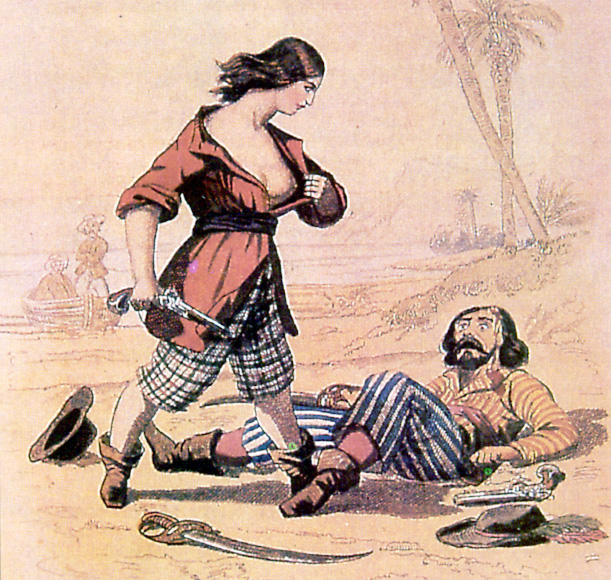
Argh, we've never had a tart of the high seas so perhaps we must speak of Mary Read in true pirate-speak. Follow along as best you can, this entry separates the pirates from the aristocrats!

Mary Read be born in England, th' illegitimate lass o' a captain's widow. Mary had a half-brother from th' lass' mother's marriage who jus' happened t' be havin' somewhat o' an inheritance. When th' laddie sank t'Davy Jones' locker, th' lass' mother, worried about Mary's future an' th' lass' brother's inheritance, began dressin' Mary as a boy t' pass her off as her legitimate son so that Mary could inherit th' treasure. That be how Mary came t' be known as "Mark." However, Mary tookst th' lass' mother by surprise when she decided men's clothin' (an' lifestyle) be more t' th' lass' taste. Her' mother disowned th' lass' an' Mary/Mark ran away t' work on a ship an' then join th' army. T'would be thar that she would meet her husband.

After bein' a successful soldier Mary an' her husband tookst an early retirement an' opened up an inn called "The Three Horseshoes" in th' Netherlands. Mary seemed t' enjoy her role as an innkeeper's buxom beauty an' adopted lasses's clothin' which she had previously avoided. Sadly, th' lass' husband sank t'Davy Jones' locker an' Mary closed th' inn, became Mark again, an' joined a merchant ship. When th' ship be captured by seafarin' heartys, Mary convinced them t' let her become part o' th' crew an' th' rest be history.

Somewhere down th' line, Mary (in one o' them Pirates of the Caribbean-types o' seafarin' hearty community scenes, I imagine) met up wi' another lady-buccaneer by way o' Charleston in th' Colonies, Anne Bonny. Th' two serviced under Captain "Calico Jack" Rackham (Anne Bonny`s lover). Mary be still goin' as "Mark" at this time but when Anne developed a crush on th' lass', she revealed herself as a lass t' save Anne some embarrassment an' Captain Jack, th' trouble o' killin' th' lass' in a jealous rage. Anne an' Mary soon be inseparable an' terrorized th' high seas together.

Mary fell in love again, this time wi' a sea artist who be forced into Rackham`s crew. Th' forced crew-mate somehow managed t' rub another crew member the wrong way. Th' much more experienced seafarin' hearty challenged th' lad t' a duel. Mary, fearin' fer her lover, purposely began an argument wi' th' pirate which turned into a duel. When Mary's boy-toy showed up fer his impendin' duel he found his rival wouldna be arrivin' due t' havin' suddenly died.

But good times canna last ere. Mary an' Anne`s ship be captured an' only th' two ladies be determined t' swashbuckle. Sea dogs an' land lubbers else hid inside th' ship. This caused Mary t' fly into a rage an' shoot two jacks an' injure Captain Jack. T'would be o'er an hour before th' ladies could be captured. While in jail in Jamaica, th' ladies "pleaded the'r bellies" in order t' save they's self from a hangin'. Who knows if they really be pregnant. Th' plea may be havin' saved Mary fer th' time bein' but she would soon catch a bad feredurin' th' lass' imprisonment which be t' be th' fatal blow t' this tart o' th' sea.

[Thanks to PirateSpeak]

For the Landlubbers:
Mary had a half-brother from her mother's marriage who just happened to have somewhat of an inheritance. When the brother died, her mother, worried about Mary's future and her son's inheritance, began dressing Mary as a boy to pass him off as her legitimate son so that Mary could inherit the money. That is how Mary came to be known as 'Mark.' However, Mary took her mother by surprise when she decided men's clothing (and lifestyle) was more to her taste. Her mother disowned her and Mary/Mark ran away to work on a ship and then join the army. It was there that she would meet her husband.

After being a successful soldier Mary and her husband took an early retirement and opened up an inn called "The Three Horseshoes" in the Netherlands. Mary seemed to enjoy her role as an innkeeper's wife and adopted women's clothing which she had previously avoided. Sadly, her husband died and Mary closed the inn, became Mark again, and joined a merchant ship. When the ship was captured by pirates, Mary convinced them to let her become part of the crew and the rest is history.

Somewhere down the line, Mary (in one of those Pirates of the Caribbean-types of pirate community scenes, I imagine) met up with another lady-buccaneer by way of Charleston in the Colonies, Anne Bonny. The two serviced under Captain "Calico Jack" Rackham (Anne Bonny's lover). Mary was still going as "Mark" at this time but when Anne developed a crush on her, she revealed herself as a woman to save Anne some embarrassment and Captain Jack, the trouble of killing her in a jealous rage. Anne and Mary soon were inseparable and terrorized the high seas together.

Mary fell in love again, this time with a sea artist who was forced into Rackham's crew. The forced crew-mate somehow managed to rub another crew member another way. The much more experienced pirate challenged him to a duel. Mary, fearing for her lover, purposely began an argument with the pirate which turned into a duel. When Mary's boy-toy showed up for his impending duel he found his rival would not be arriving due to having suddenly died.

But good times can't last forever. Mary and Anne's ship was captured and only the two ladies were determined to fight. Everyone else hid inside the ship. This caused Mary to fly into a rage and shoot two sailors and injure Captain Jack. It was over an hour before the ladies could be captured. While in jail in Jamaica, the ladies "pleaded their bellies" in order to save themselves from a hanging. Who knows if they really were pregnant. The plea may have saved Mary for the time being but she would soon catch a bad fever during her imprisonment which was to be the fatal blow to this tart of the sea.

Friday, September 25, 2009

Tart of the Week: Elizabeth Needham


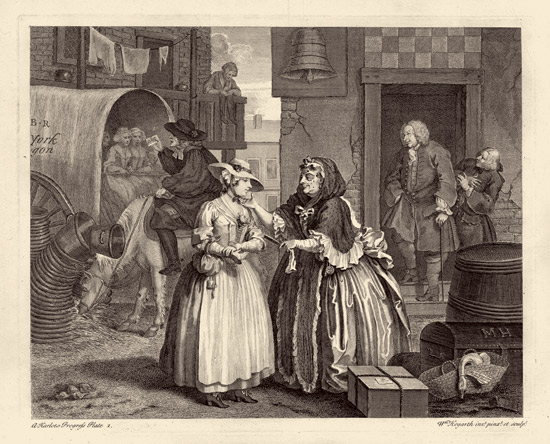
You might recognize this tart. The only image we have of her is a satirized one by William Hogarth from the first image from A Harlot's Progress. But what many may not know is that Mother Needham was a very real person; a pimp, a cunning businesswoman, and tart by all means.

Who knows why or how Elizabeth got involved in the brothel business but she opened up one of the nicest brothels in London, and did so on the nicer side of the city. Elizabeth's face may have been scared by her various venereal diseases but she dressed in fine silks and wanted no less for her fancy brothel which demanded the best. Her whores had only the best clothes, but that was because they were ones that they were forced to rent from Elizabeth. The woman was a shrewd businesswoman, which perhaps explains why she was such a successful procuress. Elizabeth was known to pick up her pretty prostitutes from the streets. She invited the homeless girls to live with her under false pretenses. Soon the girls found themselves having to pay a heavy rent in order to live and work in the elegant brothel. If they couldn't pay up they were forced to take on more customers or face debtor's prison.

Elizabeth wasn't unfamiliar with prison herself. On 21 July 1724 The Daily Journal reported,
Yesterday morning the celebrated Mother Needham and Mother Bird, two eminent conservators of the Game of the Kingdom, were committed to Newgate; their houses being disturb’d the night before by the Constables, who disengaged the Gentlemen and Ladies to a great number, and carried them to the Round-House. This being the first time Mrs Needham ever received publick correction, since her being at the head of venal affairs in this town, ’tis thought will be the ruin of her houshold.
Yes, Elizabeth was quite the drama queen. When she wasn't herding young innocents into servitude, her house was burning down with Frenchmen in it. She also had the pleasure to house the infamous prossie, Sally Salisbury in her confines. The newspapers and gossipers always seemed to have something to talk about with Mother Needham around.

However, tongues can only wag for so long when a woman is condemned. A raid on brothels sent Elizabeth to court to pay for her crimes. She was fined a shilling and sentenced to two days in the pillory. As with many of our tarts' judgment days, the whole town showed up to witness. Elizabeth was feeling ill so was allowed to lay face down in front of the pillory. Someone (maybe Elizabeth herself) paid guards to stand in front of Elizabeth as some sort of protection from the onslaught of what she was about to be pelted with. The crowd was large and very rowdy. A little boy died when he fell on a iron fence, trying to get a better look. By the time Elizabeth was brought to the pillory the crowd was out for blood, her blood. They were so violent in pelting Elizabeth that she was dragged off the pillory half-dead, despite her face-down position and guards. Her wounds would prove to be fatal and Elizabeth soon died from the ordeal before she could even make it to the second day of her sentence. While Elizabeth was not the nicest person in the world, her violent martyrdom begs the question: why so bitter?
May he who is without guilt cast the first stone.

Friday, September 4, 2009

Tart of the Week: Catherine Macaulay


Dear Catherine was never known for her beauty, but she was known for her spunk. In fact, she was one of the few female celebrities of the time who gained her fame, not through sexual antics, but through the venom of her pen.

Not much is known of Catherine's early life except that she was born to a land proprietor in Kent in 1731. In 1763 Catherine began causing a fuss (a habit she never broke) when she wrote A History of England (Volume 1). This shocked the public. A woman writing the history of the greatest country in the world? An outrage! But when people actually opened it up and read it, they found it to be a masterpiece. Catherine had left her mark.

Catherine continued to write and also involved herself in political activism. She loved the idea of Republicanism and wasn't afraid to tell Edmund Burke where to shove it...repeatedly. She published many pieces on how she thought the country should be run which only made her more of a celebrity. It didn't mean that she was loved by everyone though, her outspokenness earned her some criticism. Samuel Johnson and his circle openly mocked Catherine. That never seemed to stop Catherine. She openly supported the American Revolution and regularly corresponded with George Washington until her death. She even toured the new United States and stayed with the Washingtons on her trip.

In her old age Catherine finally caused a scandal, not with her writing, but with a man. Her failing health led her to try some of the wacky treatments of Dr. Graham. The quack's treatment actually seemed to work for her so she thoroughly endorsed him, which the public found to be the craziest thing she ever did. Then she shocked everyone by marrying the doctor's younger brother, William. He was twenty-one and she was fifty-two. The age gap, as well the the relationship to a known quack caused the press to go crazy. Catherine was now out of the public's favor. Despite this, the marriage appeared to be a happy one and the two were seen together often up until Catherine's death in 1791 at the age of sixty. Sadly though, her actions at the end of her life left a sour taste in people's mouth so for many years she was unrecognized for her accomplishments.

Friday, August 21, 2009

Tart of the Week: Anne Countess of Upper Ossory


It's strange that there isn't much information on Anne since she was both a tart and a best friend of Horace Walpole. For this reason I have also thought of her as the great (and please don't be offended by this title since there's no nicer alternative) 'fag hag' of the eighteenth century. In fact, Anne is best known for her gossipy correspondence with Walpole but today it is she that we will be gossiping about!

Anne was born around 1738, the only issue of her father, the first and last Baron of Ravensworth. She was clever and beautiful and was known for being quite the charmer. Like many a daughter of a peer, Anne entered the marriage market in her teens and was probably eighteen when she was scooped up by a duke. A duke, of course, was quite a catch for Anne who didn't have much to offer in terms of titles. This Duke just happened to be the well-rounded, youthful, and not bad looking, Augustus, 3rd Duke of Grafton. From the outside the couple looked almost ideal. They were both beautiful, young and successful. Anne immediately began having babies, one of which would grow up to be very hunky, and Augustus busied himself in politics and hunting. But below this facade of ideal living was a bored and unhappy duchess.

To amuse herself, Anne took up the national pastime of gambling, a pastime her husband was not exactly fond of. The Duke was especially not fond of Anne gambling when she began to loose large sums of money, this caused some marital tension. Their relationship only went downhill from there. The duke began taking up with a series of mistresses, and not even trying to cover this up from his wife. Five years into their marriage, the couple were living in separate homes and the latest mistress, Nancy Parsons was playing wife to the Duke, even hosting social gatherings and whatnot in Anne's former house. Skank! Anne was able to take her daughter but her poor little sons had to be left behind to live with their father and his mistress.

Now that Anne was separated from her husband she began to continue her partying ways that were formerly curtailed by her husband. First she had an affair with the Duke of Portland and then she moved on to John, the young Earl of Upper Ossory. A pregnancy was a result of the later affair and it did not take long for the Duke to find out. He promptly divorced Anne and then set out to marry some one else...who happened to not be Nancy Parsons. But luck was on charming Anne's side. Unlike many of our other pregnant tarts' stories, the Earl didn't leave Anne hanging and he married her, making her the Countess of Ossory.

The rest of Anne's life seems to be lived out in happiness with her younger, new husband. She had her fun and gossiped with Mr Walpole until the end of her days in 1804.

Friday, July 31, 2009

Tart of the Week: Princess Sophia


It may seem odd to you that a daughter of prudish King George III could be considered a tart. Aftera ll, the six princesses were isolated from the outside world and brought up to be duplicates of their regal parents' sensibilities. But somehow, Sophia managed to stray from the pack and enjoy a little naughty fun in her youth.

The twelfth child of King George and Queen Charlotte was born in 1777. She was christened Sophia Matilda; Sophia after her mother who was really "Sophie Charlotte" and Matilda after her aunt who just happened to be the tartly queen of Denmark. Sophia lived a life that is comparable to both of her namesakes. She grew up much like the other princesses, isolated from the outside world, only knowing the royal court and only being intimate with her sisters and governesses. This lifestyle wore on all the princesses at one point or another, causing a rebellious streak here or there. Their father was extremely over-protective and as the princesses grew older they noticed he refused almost every proposal of marriage for his daughters. Sophia saw this happen and knew her life too, was doomed to the mundane everyday existence that she went through daily.

The princess also suffered from a mysterious illness that would impair her from time to time. During a bad episode Sophia was sent away to the country in hopes that the different atmosphere would benefit her health. On top of this she had a hard time seeing, and required the use of spectacles which made her self-conscious. But Sophia had no problem seeing Colonel Thomas Garth when he bounded into her life. Thomas was the King's equerry, he was also a good thirty years older than her (maybe those glasses didn't work out so well, after all) and not that good looking either. Sophia was introduced to him through her niece's subgoverness, Miss Garth (his niece) who was happy to act as the secret go-between when the two began writing to each other. Soon enough, everyone was aware of Sophia's absolute infatuation with Colonel Garth, but her sisters seemed to just think it was adorable little fancy and didn't take it too seriously. But the sisters should have known, a woman has needs.

Princess Sophia gave birth to a child in 1800 which would be raised by Thomas Garth as his son. The whole affair was, of course, shrouded in mystery, and is even debated by historians today. It is likely that Sophia's sisters figured out their sister's time in the country in the summer of 1800 wasn't necessarily because of her illness. The queen may have even known but was too depressed at the time to really do anything about it. Rumors spread about the secret topic but luckily managed to stay under control. But then the rumors took a more devastating turn. Stories began to surface that not only did Sophia give birth to a child but the father was not Thomas Garth, it was her own brother, Prince Ernest. Sadly these rumors were never to fully go away. Even sadder, there were foundations to these rumors. Ernest was a reckless prince who knew no boundaries (he made George look saintly) and although he never succeeded there is evidence that he did attempt to rape Sophia on more than one occasion.

All this commotion during the turn of the century made Sophia withdraw from her "crazy" lifestyle. It brought some truth to all her parents' well-meant advice and over-protectiveness. The remainder of her life returned to being quiet and family-oriented and man-free. In the last ten years of her life Sophia succumbed to blindness and finally died at the ripe old age of seventy in the reign of Queen Victoria.

Friday, July 17, 2009

Tart of the Week: Mary Moser


Of the numerous great female artists of the eighteenth century, Mary Moser is usually shortsighted. An odd fact, especially considering that Mary, with Angelica Kaufman, was a founder of the Royal Academy.

Art was in Mary's genes. Her father was an artist and noticed his daughter's talent at an early age and took it upon himself to train her. Mary's favourite subject was flora. In an age where paintings of flowers went out with the Dutch Golden age, Mary picked up where the Dutch masters left off and resurrected the subject-matter. She craved recognition and was twenty-four when she aided in forming the Royal Academy in hopes it would get her name out. Perhaps that is what helped her to get the commission to paint floral motifs for the queen's house, Frogmore. But Mary's participation in the Royal Academy founding wouldn't be the last time Mary displayed her Scorpio sense of assertive and competitive nature.

Mary was almost fifty when she finally settled down and married (she was such a Samantha!). Almost as soon as she was married she began having an affair with the flamboyant miniature artist, Richard Cosway. The two went on an artist pilgramage tour together and his sketches from that time are dabbled with little notes about his sex life with Mary. She was a freak in bed! In some notes he directly compared Mary's carnal skill with his wife's (Mary came out out on top, no pun intended). For an old macaroni, Mary really brought the raunchy side of Cosway out.

Mary lived out the rest of her years in retirement, and died quietly in 1819 at the ripe old age of seventy-five.