
Location: Merseyside
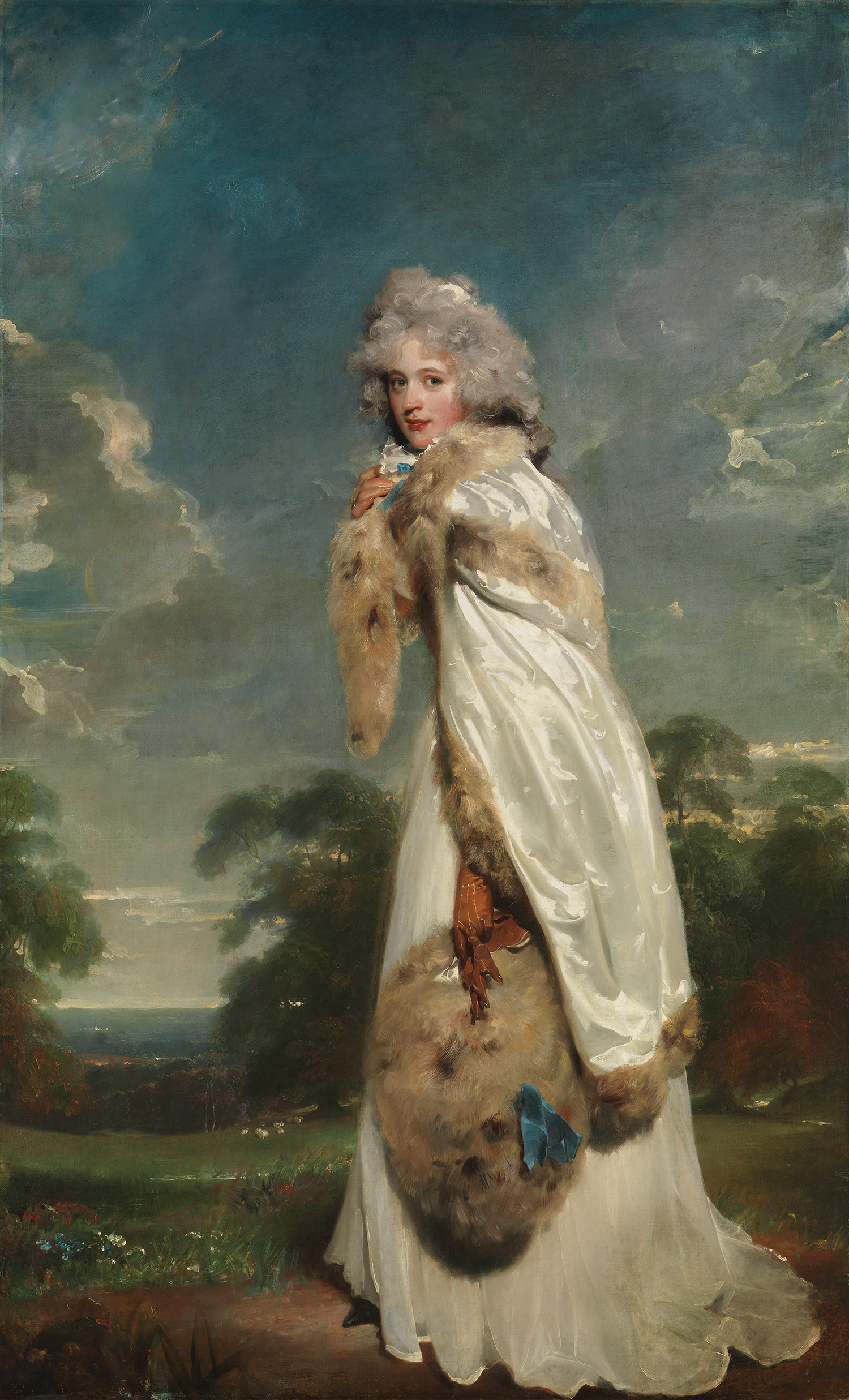
Famous Inhabitants: Lady Elizabeth Derby, Elizabeth Farren
Website: www.knowsley.com


Seven merry monologues...
 Well, Lauren and I just got back from from our rendez-vous in the big apple. We had a very successful trip that I just thought I'd share some of our discoveries. This time we hit up The Met for the reopening of the Wrightsman Galleries. These galleries consist of late French interiors taken from various hotels and homes of period to save them from renovations. They contain much of the original furniture and decoration. Plus, they are lit by electric candles that have fake flames that wiggle every once in a while. This entertained me more than you'll ever know. But enough of that, here are some of the pictures I snapped to entice visitors to The Met.


 Rose Adélaïde Ducreux's Self Portrait with Harp was on display in the first room of the Wrightsman galleries.
 Gainsborough's full-length of Grace was on display in all its glory.

 Madame Grand was looking angelic of course.
 And who doesn't love David's enlightened portrait the Lavoisiers.

 Ailesbury. While her parents were abroad little Anne experimented with the art of sculpture, as encouraged by her godfather, Horace Walpole. Life seemed pretty normal and boring for young Anne but luckily a dumb husband changed all that (as they usually do for many of our tarts of aristocracy).
 This put Mrs. Damer in an awful situation. But believe it or not, it was probably the best thing that could happen to her. Walpole not only took her in at his home in Strawberry Hill but he helped to get her on her feet again and allowed freedoms that her marriage lacked. The old bachelor loved her as his own and even willed his Strawberry Hill home to her. Anne took up her childhood hobby of sculpture and honed her skills until she was a reputable artist. Her work reflects the Neoclassicism of the period which helped to gain her many allegorical commissions such as the heads of Isis and Tamesis which still grace the keystones of Henley Bridge today. Her friendships that developed between Sarah Siddons and Elizabeth Farren also earned her some theatrical commissions including reliefs for Boydell Shakespeare Gallery. By 1784 Anne was an honorary exhibitor at the Royal Academy and remained so until 1818.
 naturally drawn to the Devonshire House Circle and became a close friend of Georgiana. She was one of the many devoted canvassers in the 1784 Westminster Election. Mrs. Damer also frequented the masquerades quite often; not the best way to keep a good reputation. In fact, many rumors of Mrs. Damer being a lesbian surfaced, although this could be due to her affinity for male clothing. In truth, Anne was, in all likelihood, a lesbian and enjoyed the company of her female friends. It is thought that Walpole introduced her to the author, Mary Berry, with whom she had a long-standing romantic relationship.


 ry. She excelled at playing aristocratic ladies, even portraying Lady Teazle in Sheridan's School of Scandal, a part based upon The Duchess of Devonshire.
 ecret affair was once again very public in satirical prints and therefore a widely followed affair. When Lady Derby died, the earl wasted no time making Elizabeth his wife (and the new Lady Derby). They were married two months after his first wife's death. The couple continued to be ridiculed in satires with Elizabeth portrayed as as the tall and skinny gold-digger and the earl as short and squatty. They amused and inspired satirical artists throughout the rest of their marriage. A typical celebrity union.
