Showing posts with label Whigs. Show all posts

Thursday, June 21, 2012

The Duke of Bedford Causes a Stir

"Indeed we are all undone,"

These were Georgiana's distressed words to Lady Melbourne in 1802.  Political catastrophe was first thing on the two ladies minds; she continued, "no possible event could have so thoroughly overtuned the habit of our society as this.'

The Duke of Bedford was considering, do I dare say it? 'tis truly horrible...a Tory for a wife. 

Yes, the prominent Whig was not just crossing over to the dark side, he was crossing over to the deep-dark side; he was considering the Duchess of Gordon's daughter as a wife.  That would mean having Tories for in-laws.  Georgiana saw him as good as turned just from mere proximity to that Tory temptress!

She also blamed herself for this whole debacle. Bedford had once been after her eldest daughter, Little G but she instead ended up marrying Lord Morpeth.  He had also been canoodling with the widely available Lady Melbourne for fun.  Although Little G marrying some other dude didn't hurt Bedford's feelings, Georgiana not paying him back money she owed him when he was short on cash did.  He refused to speak to her, and not long after was courting Georgina Gordon. 

Georgiana and Lady Melbourne expected the worst but they certainly didn't expect the duke to suddenly drop dead while playing tennis three weeks later.  Neither did the notorious husband-hunter Duchess of Gordon; she and her daughter were severely lampooned by satirical artists for their fruitless labour of love.

Friday, May 20, 2011

Tart of the Week: Fanny Crewe


In the late 18th century there were three main Whig society hostesses, Georgiana, Lady Melbourne, and Mrs. Crewe.  All were good friends and all were considered the ton and members of the Devonshire House set.  All also qualify as tarts!

Frances Anne Greville was born in 1748 to two published authors, into a family with strong political connections, strong ties to the great minds of the time, and kickass girl power.  Who could complain?  Just sit back and absorb all of these connections.  Fanny's mother, Frances Macartney, was besties with Lady Spencer so Fanny and Georgiana most likely knew each other since childhood.  Fanny's Dad, Fulke Greville was besties with Dr Charles Burney, father of Fanny Burney so the two Fannys grew up together and were friends as well.  Talk about friends in all the right places!

With this social upbringing it is no wonder Fanny grew up talking and talking and talking.  All her life she was known as quite the chatterbox.  Georgiana once complained that Fanny had lately been a bit of a sycophant with her and needed to stop cooing over her.  Lady Douglas once stated that Fanny's "ideas came so quickly that [she] could not follow them" and assumed that neither could Fanny!

Fanny was also privileged enough to be considered a great beauty of the time.  Which no doubt helped to attract her husband to her.  She was married to John Crewe in 1766, joining two powerful Whig families together which worked out just perfectly for Mrs. Crewe who quite enjoyed playing hostess.  Her beauty and wit also got Fanny in trouble as well.  She succumbed to an affair with a frequent house guest and cohort of her husband's, Richard Sheridan.  Fox was right when he said "she loved high play and dissipation."

Of course Fanny's well-known beauty was up for debate depending on who you asked.  Fanny Burney said she was so beautiful that she "uglified everything near her."  However, if you asked the critical Lady Douglas she would tell you Fanny was "very fat with a considerable quantity of visible down about her mouth..."  Lady Sour Grapes seemed to not be be impressed with Mrs. Crewe.

Regardless of whether she was pretty or not or whether she was a big mouth or not, Mrs. Crewe's political influence cannot be denied.  She like Georgiana and other society hostesses was the backbone of political causes.  Organizing events to bring together the minds of political factions, participating in elections, and being prominent in public (and also risking reputation) in order to further the cause; Fanny did it all tirelessly.  She died as Lady Crewe (due to her husband's elevation to Baron in 1806) in 1818. 

Tuesday, May 17, 2011

A Good Whig

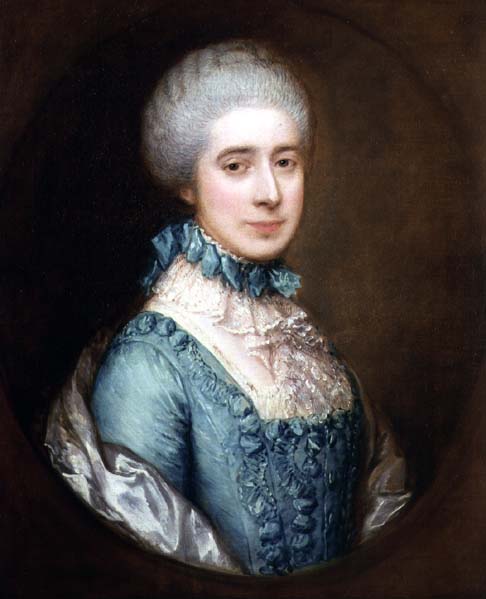
"Mrs. Crewe" was a name synonymous with "Whig."  Frances Anne Crewe, later Lady Crewe was a leading society hostess who could talk politics as well as any man...that is, if you could follow along with her fast-paced conversation.  By all accounts Mrs Crewe was bubbly, which none of her portraits seem to convey.  But luckily Mrs. Crewe had her own special legacy to leave behind.

When any toast was given at a Whig function everyone would raise a glass and boisterously cry,
"Here's buff and blue and Mrs. Crewe!"
Wherever Fanny just happened to be at the time; in the middle of conversation, at cards, etc; she would turn, casually raise her glass and with natural grace reply:
"Here' buff and blue and all of you!"
Cheers!

Wednesday, February 3, 2010

Whiggery in the Hunt

Hunting was quite the popular sport among the gentry in 18th century. There was nothing the boys loved more than racing around on horses in the woods with a pack of hounds. Then of course you could have a party afterward. There was also the hunting lodge which would allow for a more masculine decor to counter-balance the main house's feminine interiors. See, there was just so many fun aspects of the sport! France preferred the stag hunt, but England was becoming quite enamored with something that would come to be quintessentially English, the fox hunt.

As you probably well know, the fox hunt wasn't merely going out in the woods with a gun, oh no. You got all dressed up in your riding gear, got a bunch of buddies together with suitable mounts, collected your multitudes of baying dogs, and set out into the woods. Once the dogs caught the scent of a fox, or quarry, the hunt was on its way.

The people who became the most fond of foxhunting tended to be the more conservative crowd. The Whig party was quick to point this out, painting fox hunters as stuffy Tories who amused themselves with these trivial activities because they were rich men with nothing constructive to do. As historian Jane Ridley puts it, "The Whig caricature stuck. Country gentleman equals Tory equals fox hunting equals stupid is an association of ideas which still persists." Well, as with the typical Whig-Tory fight, the Tories had their own spunky comeback. They began referring to the quarry as "Charlie," named after the one any only, Charles James Fox. Fitting, no?

The Tories got the last laugh, though. To this day in English fox hunting, the fox is referred to as "Charlie."

Thursday, July 16, 2009

Whigs in the Air

In the early 1780s everyone had hot air balloon fever. Prints, jewelery, and decor all reflected the public's new found love for aeronautics. Always the excellent PR agent, Georgiana wondered if she could woo the public on behalf of the Whigs by giving them a balloon show. First Georgiana had to woo the aeronautic Jean-Pierre Blanchard and once he was under her finger she offered to sponsor a public balloon display in Grosvenor Square.

Every self-respecting Whig gathered in the chilly December air to witness the hot air balloon decked out in blue and buff. Georgiana herself released the tethers and the balloon was later dubbed the Devonshire Aerial Yacht. For a moment the streets of London came to a standstill while everyone raised their eyes to the sky to see the ship that could defy Newton's law. Georgiana's PR feat was a success. She now knew that the key ingredient to getting positive political attention was to distract with something everyone liked, no matter how un-related the two items were.

Wednesday, May 27, 2009

The Results are In!

Last month I began a poll to see if my blog readership mostly consisted of Tories or Whigs. Well the results are overwhelming Whig (84% in fact). It seems most favor the same political party our beloved duchess subscribed to.

Which makes me feel a bit like the Morning Chronicle.

The 18th century saw the birth of the press as we know it and, more importantly, freedom of press. Because of these two aspects, newspapers tended to lean toward certain political opinions, just as certain television networks do now. The Morning Post favoured the Tories whilst the Morning Chronicle favoured the Whigs. While Georgiana was canvassing in the 1784 election, the Morning Post was notoriously badmouthing her every move and making up scathing falsities. But of course the Morning Chronicle was not without its own faults; no newspaper was truly innocent.

I guess my humble blog is also just as guilty for favouring the Whigs, so I apologize to my 17 beloved Tory readers. Don't worry though...I sense more Tory-ish posts in the future.

Friday, May 22, 2009

Tart of the Week: Maria Duchess of Gloucester


Many of our tarts are rule-breakers; rebels if you will. That is part of their appeal. So this week's tart should prove to be very appealing.

Maria Walpole (yes, Horace Walpole's niece) was the second daughter of Edward Walpole, an MP and son of the first Prime Minister, Robert Walpole. Normally, this would mean Maria and her sisters would grow up with good prospects but there was a problem. Maria's mother, Dorothy Clements was a milliner and not married to Edward. She wasn't, however, just some mistress; Edward loved her, he didn't marry her out of fear of it hurting his family's reputation. Well, her daughters, although Walpoles and loved by their family, did have a ruined reputation. They struggled to be accepted by society. Eventually a few brave members of the gentry opened up to them and they were introduced to court.

Maria stood out from her sisters in both beauty and personality. So when the twenty-two year old Maria was introduced to Lord Waldegrave, the forty-three year old was smitten. Not only was James almost twice Maria's age but he was known for poor personal hygiene. But a girl could use some extra pocket money, especially if you're considered to not have the best prospects to begin with. Hence, Maria became the Countess Waldegrave. Three beautiful daughters quickly followed the 1759 marriage but no heirs were to grace the Waldegraves for James died of smallpox in 1763.

After three years of marriage Maria was a widow with three young children. In those three years she had also made a name for herself as a delightful society lady. Maria had become close friends with Lady Coventry and Horace Walpole delighted himself to report that the beauties would be mobbed by onlookers when they took walks in the park. However, she was still not thoroughly protected financially. She needed another husband, and there was no shortage of eager candidates. She had already rejected the Duke of Portland (a duke!) when Prince William, Duke of Gloucester became acquainted with her. A romance blossomed, but it was a forbidden romance for Maria's illegitimacy prevented William from being able to marry Maria. His brother, King George would need him to form a proper attachment. Their chances of marriage approval diminished completely when the Duke of Cumberland enraged their brother by marrying a commoner.

King George saw the marriage as a betrayal and made William promise not to do the same with Maria. William gulped, and agreed in an attempt to calm his brother's anger. When Maria became pregnant though, in 1772 he had to finally admit that they has been secretly married in 1766. George threw a temper tantrum and tried to prove the marriage to be a farce but was defeated. The two were recognized but not welcomed at court, forcing them into exile onto the continent.

Maria did not go through all this trouble for the money (this time) she and William genuinely loved each other. Eventually George did forgive his brother and the two were welcomed back and their children provided for, after all, they were princes and princesses. Sadly, Maria and William's love cooled after a fight over their daughter's education and they eventually separated. Maria occupied herself by finding good husbands for her three eldest daughters and involving herself in politics. She was a fervent Whig, and would have made a mean politician if she were born a man. Maria continued to cause fusses and live fabulously until her death in 1807.

Thursday, April 16, 2009

Voting Registry

I was thinking on this fine, sunny day how it was perfect weather for a good canvass. Then I remembered, why this was canvassing season after all! When Georgiana infamously canvassed for Charles James Fox in the 1784 Westminster election, she began in April and went into May. So my faithful citizens of the blogosphere, it is time for you to do your duty and register in your political party of choice. And no, Independent is not an option! We're talking serious politics here! Everyone knows the only two real parties are Tory and Whig. So which one are you?

You might be a Tory if:
  • You support the King's right to the direction of state
  • You support or attended Oxford
  • You would rather have a mad king on the throne than a party-animal prince
  • You are not totally opposed to slavery...the prices of massages these day, sheesh!
  • You tend to be a bit conservative
  • You think religion is very important, and by religion I mean the only religion, Anglican!
  • You are a fan of William Pitt, even if he won't admit he's really a Tory
  • You wouldn't mind kidnapping someone in the name of getting the right person elected.
  • You think of yourself as old-fashioned, because some values should never go extinct

You might be a Whig if:
  • You constantly find yourself out with the lads at the local Gentlemen's Club
  • You support or attended Cambridge
  • You think the King is great and all but...Parliament should have more say than one guy!
  • Any religion is good with you, pass the wine!
  • You are from a great aristocratic family
  • You like free trade
  • You think slavery is abominable
  • You think a good old-fashioned revolution is good for a country
  • You think the colour combination of blue and buff could just never go out of style
You can "register" in the sidebar. Now get out there and canvass for your favorite candidate! Bonus: Show your patriotism with these political party buttons!


Friday, October 17, 2008

Tart of the Week: The Honourable Mrs. Anne Damer


The adventurous life of Mrs. Damer began in 1748 when she was born to a prominent Whig family as Anne Seymour Conway. Her father, Henry Seymour Conway was a cousin of Horace Walpole and her mother was the extremely Scottish, Caroline Bruce, Lady Ailesbury. While her parents were abroad little Anne experimented with the art of sculpture, as encouraged by her godfather, Horace Walpole. Life seemed pretty normal and boring for young Anne but luckily a dumb husband changed all that (as they usually do for many of our tarts of aristocracy).

John Damer was a drunk and a gambler, which wasn't so unusual for the time. He was also the son of an earl who provided a generous annual income which had to have looked good to 19 year old Anne. This on top of this Anne brought in some fortunes of her own from inheritances. Well, John, being the idiot he was, gambled away most of their money in first six years of their marriage. What he didn't gamble away he spent on his wardrobe. In the seventh year of marriage, he lost it all in one night. He then retired to a room above the Bedford Arms in Covent Garden and shot himself through the head. Anne was now a widow. A widow in a lot of debt.

This put Mrs. Damer in an awful situation. But believe it or not, it was probably the best thing that could happen to her. Walpole not only took her in at his home in Strawberry Hill but he helped to get her on her feet again and allowed freedoms that her marriage lacked. The old bachelor loved her as his own and even willed his Strawberry Hill home to her. Anne took up her childhood hobby of sculpture and honed her skills until she was a reputable artist. Her work reflects the Neoclassicism of the period which helped to gain her many allegorical commissions such as the heads of Isis and Tamesis which still grace the keystones of Henley Bridge today. Her friendships that developed between Sarah Siddons and Elizabeth Farren also earned her some theatrical commissions including reliefs for Boydell Shakespeare Gallery. By 1784 Anne was an honorary exhibitor at the Royal Academy and remained so until 1818.

Her new freedom also allowed her many friendships. Due to her Whig roots, she was naturally drawn to the Devonshire House Circle and became a close friend of Georgiana. She was one of the many devoted canvassers in the 1784 Westminster Election. Mrs. Damer also frequented the masquerades quite often; not the best way to keep a good reputation. In fact, many rumors of Mrs. Damer being a lesbian surfaced, although this could be due to her affinity for male clothing. In truth, Anne was, in all likelihood, a lesbian and enjoyed the company of her female friends. It is thought that Walpole introduced her to the author, Mary Berry, with whom she had a long-standing romantic relationship.

Anne also enjoyed her widowhood because it allowed her travel. She was good friend and regularar guest of the expat, William Hamilton, (of Emma notariety) the ambassador to Naples. At one point in her travels to Europe she was captured by a privateer but released. She also happened to be in Paris during the Treaty of Amiens and met Napoleon himself.

Anne died a happy old lady in 1828. As requested, she was buried with her sculptor's tools and apron as well as with the ashes of her favorite dog.

Tuesday, September 23, 2008

The Gordon Riots


In the first week of June 1780, over 300 people were dead and a good portion of London was either burnt or in ruins. The madness stemmed from a bill that had passed 2 years before and left the residents of London, Bath, and the rest of Great Britain in fear. It was known as the Gordon Riots.

In 1778 the Catholic Relief Act was introduced by the Whig, George Savile, and passed. Although Whigs were traditionally professors of religious tolerance this bill was actually to get more people in the army to fight the American Revolution. The bill absolved Catholics from taking a religious oath which had, until then, prevented them from joining England's forces. The spoilt younger son of the Duke of Gordon, George Gordon was a strong Protestant who had strong feelings against giving Catholics equal rights. He organized the Protestant Association in 1779 in order to upturn the relief act and in June of the following year he marched his followers to Parliament to petition. The group quickly turned into a mob of (at least) 40,000 strong and things quickly got out of hand. Whether this was Gordon's intention or not, we have no idea.

The crazed mob marched onto the House of Commons and then, with their "No Popery" banners and then proceeded to Newgate Prison and the Clink which were both mostly destroyed. The Clink, which had housed religious prisoners since 1151, was never to reopen. The prisoners were released and joined the mob. For a week while the mob raged and grew worse, Catholics and Protestants alike were prisoners in their own homes while London burned. During the day there was some peace but every night the riots reignited and the injured and drunk could be found among the corpses and ashes. Aristocrats' houses were targeted and some barely escaped with their lives. Edmund Burke, George Savile, the Marquis of Rockingham, Lord Mansfield, Lord North (the Prime Minister) and even the Duke of Devonshire narrowly escaped their wrath. An explosion at a Catholic distillery in Holborn sent gin and rum into the streets. People who went down on their hands and knees to drink the free booze from the cobblestones soon crumpled and died in the streets from the deathly acidic concoction. Reports from the time relate the flames of the city to that of volcanic explosions which reached to the heavens.

The army was finally called in on June 7 and ordered to fire on any group of 4 or more who refused to relinquish. It is estimated that 285 were shot dead, hundreds more were wounded, and a couple dozen executed. Although Gordon was charged with high treason he was found not guilty. He later was imprisoned for badmouthing Marie Antoinette and was thrown in Newgate, the same prison his mob almost destroyed. Ironically, he converted to Judaism shortly afterward while London was still was rebuilding (years later) from the week-long riots.

This site has a great map of the damage done in the riots.