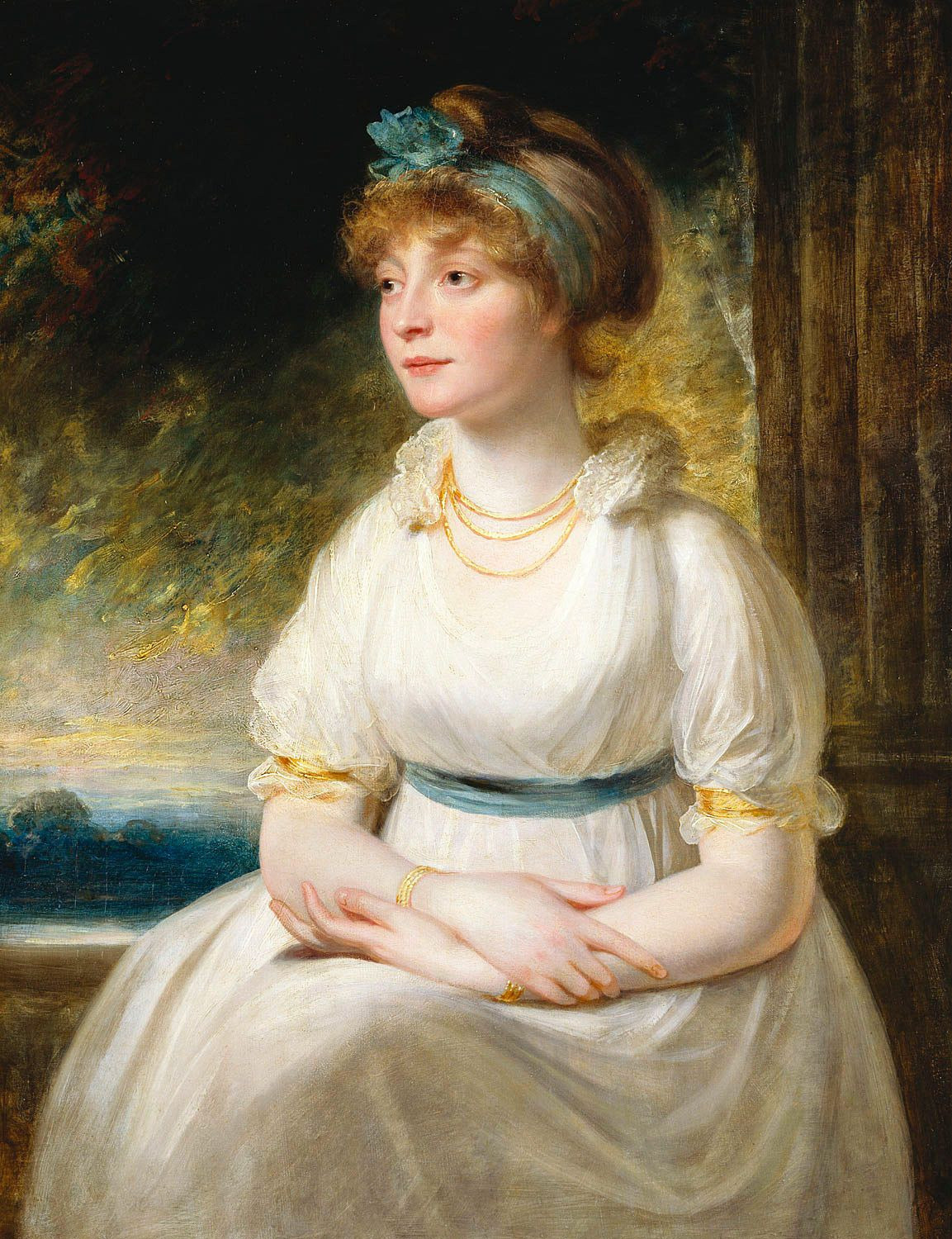
It may seem odd to you that a daughter of prudish King George III could be considered a tart. Aftera ll, the six princesses were isolated from the outside world and brought up to be duplicates of their regal parents' sensibilities. But somehow, Sophia managed to stray from the pack and enjoy a little naughty fun in her youth.
The twelfth child of King George and Queen Charlotte was born in 1777. She was christened Sophia Matilda; Sophia after her mother who was really "Sophie Charlotte" and Matilda after her aunt who just happened to be the tartly queen of Denmark. Sophia lived a life that is comparable to both of her namesakes. She grew up much like the other princesses, isolated from the outside world, only knowing the royal court and only being intimate with her sisters and governesses. This lifestyle wore on all the princesses at one point or another, causing a rebellious streak
 here or there. Their father was extremely over-protective and as the princesses grew older they noticed he refused almost every proposal of marriage for his daughters. Sophia saw this happen and knew her life too, was doomed to the mundane everyday existence that she went through daily.
The princess also suffered from a mysterious illness that would impair her from time to time. During a bad episode Sophia was sent away to the country in hopes that the different atmosphere would benefit her health. On top of this she had a hard time seeing, and required the use of spectacles which made her self-conscious. But Sophia had no problem seeing Colonel Thomas Garth when he bounded into her life. Thomas was the King's equerry, he was also a good thirty years older than her (maybe those glasses didn't work out so well, after all) and not that good looking either. Sophia was introduced to him through her niece's subgoverness, Miss Garth (his niece) who was happy to act as the secret go-between when the two began writing to each other. Soon enough, everyone was aware of Sophia's absolute infatuation with Colonel Garth, but her sisters seemed to just think it was adorable little fancy and didn't take it too seriously. But the sisters should have known, a woman has needs.
Princess Sophia gave birth to a child in 1800 which would be raised
 by Thomas Garth as his son. The whole affair was, of course, shrouded in mystery, and is even debated by historians today. It is likely that Sophia's sisters figured out their sister's time in the country in the summer of 1800 wasn't necessarily because of her illness. The queen may have even known but was too depressed at the time to really do anything about it. Rumors spread about the secret topic but luckily managed to stay under control. But then the rumors took a more devastating turn. Stories began to surface that not only did Sophia give birth to a child but the father was not Thomas Garth, it was her own brother, Prince Ernest. Sadly these rumors were never to fully go away. Even sadder, there were foundations to these rumors. Ernest was a reckless prince who knew no boundaries (he made George look saintly) and although he never succeeded there is evidence that he did attempt to rape Sophia on more than one occasion.
All this commotion during the turn of the century made Sophia withdraw from her "crazy" lifestyle. It brought some truth to all her parents' well-meant advice and over-protectiveness. The remainder of her life returned to being quiet and family-oriented and man-free. In the last ten years of her life Sophia succumbed to blindness and finally died at the ripe old age of seventy in the reign of Queen Victoria.