Showing posts with label Science and Medicine. Show all posts

Wednesday, November 14, 2012

Put this in the Medical Books

As we all well know, women fight a constant battle with themselves...not to faint.  Hysterics as they were called, were an expectant problem of women - not because of tightly-laced stays, this malady was the cause of those emotions women are forced to deal with or, rather to contain.  An expert at the time explained:
The entire female body is riddled by obscure but strangely direct oaths of sympathy...from one extremity of its organic space to the other, it encloses a perpetual possibility of hysteria.  The sympathetic sensibilities of her organism...condemns woman to...diseases of the nerves.
Why thank you for that elucidation, "doctor."

Yes indeed, it was believed that all those pent-up emotions of amorous affection that women contained had no way of escaping and therefore built up in a lady's womb as some sort of massive heat-bomb ready to explode.  And when it did explode?  Hysterics.

Tuesday, August 23, 2011

Flushing Your Troubles Away

Normally when the term "toilet" is used in a Georgian context the image of a lady sitting at a dressing table comes to mind.  Did you know, though, that the flushing toilet existed at the time?  It's difficult to picture when we know this was the time period when these were still popular.  But believe it or not, the likes of Thomas Jefferson were sitting upon this flushing water closet.

The flushing water closet is very English.  The first flushing toilet was made for Queen Elizabeth, who was delighted by the new, yet unreliable invention.  I suppose that means "throne" is a rather accurate nickname.  The model obviously didn't catch on, despite Liz's affection for it.  Next, a real Renaissance man, Alexander Cummings took the idea and improved upon it.  He installed a lever on the primitive toilet which you would slide aside and therefore create an exit for the unwanted waste.  New water would come in as the waste would hopefully move into the sewers.  Perhaps the smartest part about the invention was that Cummings got a patent for it in 1775.  It is always good to protect yourself!

Bramah's useful contraption
Three years later a clever locksmith/plumber by the name of Joseph Bramah was installing some of Cummings' patented invention and couldn't help but notice that the water in the toilet would freeze on especially cold days which didn't help anyone.  He replaced the sliding valve with a flap that sealed off the bottom of the bowl.  Now the toilet water wouldn't freeze and as an added bonus: those sewer smells stopped traveling up the pipes and into your house.  The description reminds me a bit of those frightening airplane bathrooms that we so enjoy while in mid-air. 

Of course the modern flush toilet as we know it wasn't to arrive until the following century.  Ironically, the inventor who is responsible for that was named Thomas Crapper.

Wednesday, April 13, 2011

Dinosaurs in the Fop Age


When it comes to the modern history of dinosaurs it was the 19th century when everyone went fossil crazy and actually began thoroughly studying the giant lizards.  But the long 18th century (really long) has some dino discoveries as well.  In fact, one could say that the forward thinking of the Enlightenment aided in shaking off the superstitious thinking of the past which created more logical ideas about those prehistoric bones.


For example, Megalosaurus is a frightfully English dinosaur.  When its femur was unearthed in 1675 Dr Robert Plot and other experts at Oxford determined it to be that of a giant...the warm-blooded kind that live up in beanstalks.

Almost 100 years later part of a Mosasaurus skull was found in a quarry in the Netherlands.  Being the Enlightenment, the educated minds knew this wasn't something silly like an ogre.  This time it was determined to be a fish.  Our scientific minds were getting a little closer.  Mosasaurus was not a fish but it was one of those dinosaurs that you would find swimming around in rivers.

The esteemed zoologist Georges Cuvier has many achievements under his belt.  Perhaps the coolest being that he discovered the Pterodactyl. Apparently "Pterosaur" is the correct term although it was Cuvier who dubbed the dino, "Ptero-Dactyle."  Not only did Cuvier discover one of the most well-known species of dinosaur but he discovered it by looking at a drawing of the fossils found in Bavaria.  It's like identifying a new type of mammoth over email!  Cuvier also cleared up the whole Mosasaurus/fish issue.

Left: Mary and her dog, Tray (who accompanied her in fossil
hunting and died in the line of duty due to a landslide)
  Right: A Victorian (and inaccurate) depiction of two of Mary's discoveries.


Ladies dominated the Regency with their dinosaur discoveries. Take Mary Anning for example.  She was a mere twelves years old when she unearthed the rest of an Ichthyosaur skeleton, the head of which her brother had found, in Lyme Regis in 1811.  She is credited with the dinosaur's discovery.  While other ladies were embroidering Mary could be found dangerously scaling cliffs in order to collect as many fossils as possible and went on to discover the Plesiosaur and the first Pterodactyl Pterosaur outside of Germany.  In other words, Mary was awesome.

Mary's work with fossils inspired Gideon Mantell to follow in her footsteps.  But Gideon is a lying jerk about many things in his life so it is not in my interest to credit him with anything.  His wife, May Ann, on the other hand (who left him in 1839 which I think says a lot about Mr Mantell!) was a clever cookie and probably made many of his dinosaur discoveries.  It was she who found a tooth while taking a stroll in 1822 which turned out to be that of an Iguanodon.  Mary Ann went on to discover other fossils and illustrate her husband's discoveries (hmph, take "husband's discoveries" with a grain of salt).

The word "Dinosaur" itself wasn't coined until the Victorian age.  It was Sir Richard Owen who came up with the name.  Ironically, he disagreed with Darwin's theory of evolution.

Wednesday, February 2, 2011

London Lock Hospital


In such a hedonistic century, STDs were far from uncommon.  You could even go as far as saying venereal diseases were a national epidemic.  A big statement, sure, but there were actually hospitals dedicated solely to the treatment of these diseases!

Lock Hospitals came to England in the thirteenth century.  They were mostly for the treatment (if you could call it that) of lepers and evolved to other diseases that were dangerously contagious, hence being "lock" hospitals, to lock up the disease.  By the eighteenth century leprosy wasn't an issue, but syphilis ran rampant.  In 1747 the London Lock Hospital opened.  Like the modern-day health clinics, sufferers of the neither regions who were short of cash could line up in hopes for some sort of relief.  There were thirty clean beds for the patients but this being a time when there was no successful cure of syphilis the hospital probably only served as a place to get out of the rain and a hot meal.

Still, the charity-funded hospital was considered a success in the forward-thinking Age of Enlightenment which had also birthed, the Foundling and Magdalen Hospitals.  In 1792 a sister-hospital opened up, Lock Asylum for the Reception of Penitent Female Patients.  This was a rescue center for fallen women who were treated at the lock hospital and was meant to get them on their feet again.  The lock hospital remained working throughout the centuries, eventually becoming a gynecological center before closing down in the 1950s.

Wednesday, December 1, 2010

The Pox!

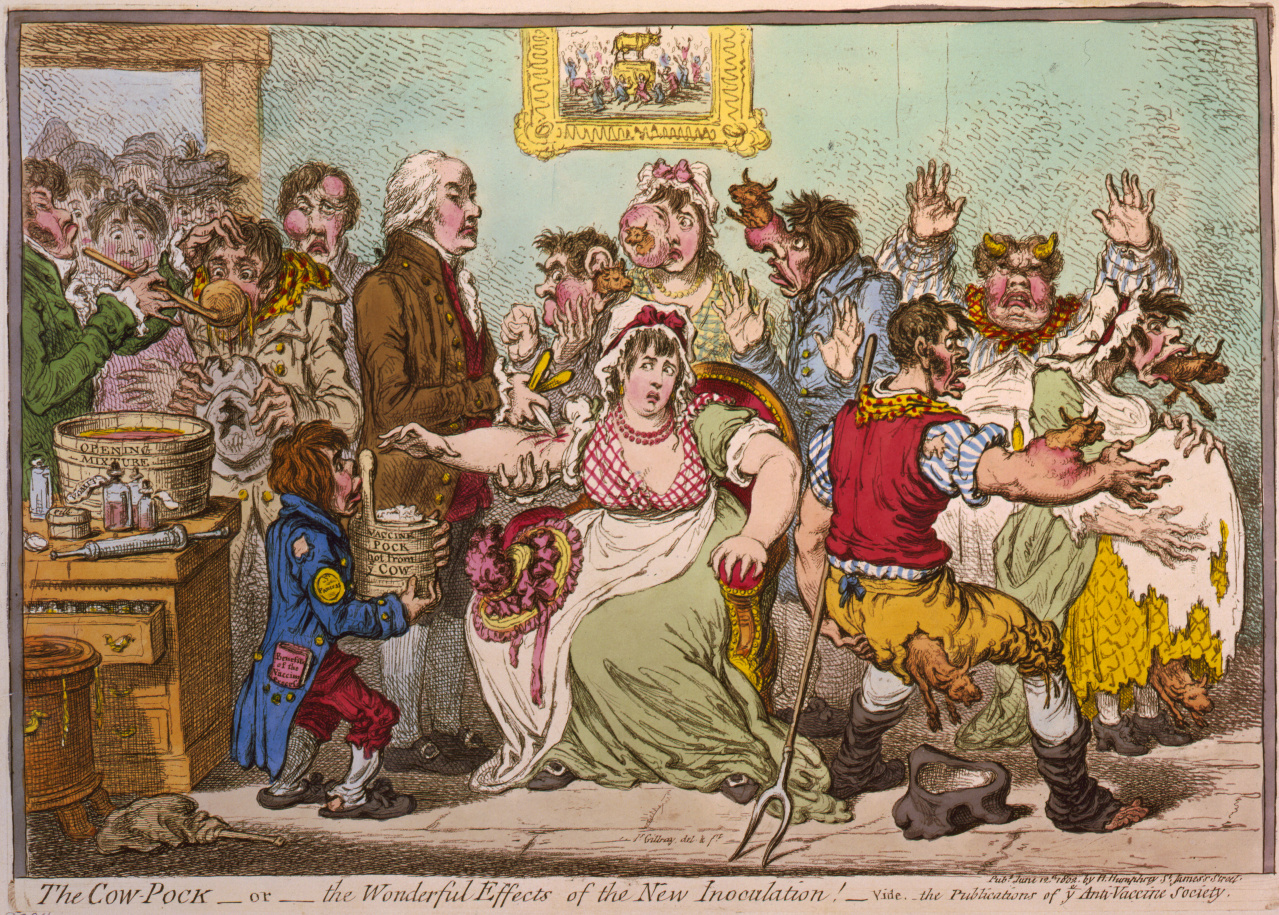
Cold and flu season is here and it might have you sniffling and sneezing but at least it doesn't have you covered in ungainly pustules.  Smallpox was the great villain of the 18th century, claiming 400,000 Europeans a year (as well as annihilating native cultures in the Americas and Australia) making it the leading cause of death.  The disease was deadly and those who survived forever had their pock marks as a reminder of the deadly disease they escaped. 

One famous lady scarred by the pox was Lady Mary Wortley Montagu who even lost her eyelashes to the disease. While living in the Ottoman Empire (modern-day Turkey) Lady Mary observed that the locals had come up with a form of preventative medicine: inoculation.  When an infected individual developed the pustules (which would eventually burst causing the worst smell imaginable) the goop inside the pustule would be collected and then either poked with a needle or cut into with a knife into the person to be inoculated.  Children were more susceptible to the disease and also took to the inoculation better than adults.  After a few days a blister would develop in that area and pop and by then the patient was filled with all the wonderful antibodies needed to fight off the disease.  You can imagine Lady Mary's delight in learning the procedure. 

When Lady Mary informed England of inoculation it received mixed reactions.  Many dismissed it primarily because the procedure came from the barbarian Turks.  Others snubbed inoculation because a female brought about its attention.  One person who was totally open to the idea was Queen Caroline and she quickly convinced her husband to investigate.  King George II tested inoculation out on prisoners who were promised freedom for their part in the case study.  When all the prisoners survived the ordeal the King and Queen had their own daughters inoculated which was also a success.

Not all inoculations were a success however.  When George III and Queen Charlotte ruled, they had all their children inoculated while still babies or toddlers.  Sadly, Prince Alfred, their fourteenth child died from complications from smallpox inoculation, sending the family into a deep and unofficial mourning.  Still, many British families, especially in the aristocracy, chose to inoculate their children. Lady Spencer was firm in her opinion that all her grandchildren should receive the procedure.  

Toward the end of the century Edward Jenner noticed that milkmaids who caught cowpox from their bovine friends seemed immune to smallpox.  Cowpox was a mild strain of smallpox, passed down from, you guessed it, cows to people.  Jenner began inoculating people with cowpox to avoid disasters like Prince Alfred's death and he was very successful.  Although once again, many people remained suspicious.  It was Jenner's efforts that gave us "vaccination;" vacca is Latin for cow.  Next time you are at the doctor's for your cow-inations I hope you are brought to mind the efforts of Lady Mary and Edward Jenner.

Tuesday, October 26, 2010

Robo-Rococo

Move over Rosie from The Jetsons, you weren't the first robot to capture the heart of thousands.  Long before R2D2 and Roombas there were automata, androids which operated on clockwork mechanic.  Automata have existed for centuries and although they operate on primitive mechanics, they are quite the genius little devices.  Eerie, yet enchanting, the surviving automata still have the same effect on viewers today

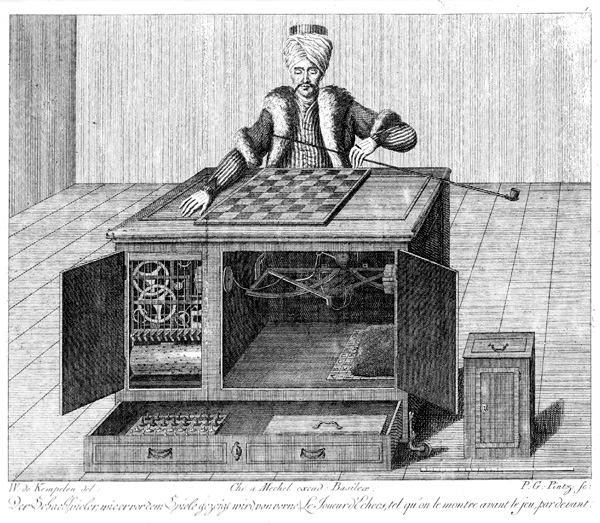
Automaton building was not a career but more of a hobby.  Usually the creators were mostly self-taught and their talents could earn them royal favor.  King Frederick of Prussia was enamored with the mechanical toys and had quite the collection.  Louis XV was quite fond of a mechanical duck which would eat a grain and consequently poop out a very lifelike duck defecation.  A musician automaton that was given to Marie Antoinette miraculously survived the Revolution enough to be repaired in the 19th century and is still in working order (video below).  Antoinette's mother, Empress Marie Theresa was presented with one of the most famous or infamous automata of the century, The Turk.  This life-sized android could play chess against human opponents and was rarely defeated.  Ben Franklin and Napoleon Bonaparte both lost to The Turk although I can only imagine one throwing a temper tantrum about it.  However, as many suspected, The Turk was only a partial automaton and a human operator squeezed into the machine to act as the brains of the operation.


What is perhaps the most interesting about these 18th century androids is that although they could perform a task, their many purpose was to entertain.  So much detail went into their creation.  A scribing boy thoughtfully moves his eyes while writing a poem.  An artist creates portraits in pencil and pauses to blow away the graphite dust.  A silver swan drifts through glittering water, preens itself then catches a fish.  It is easy to imagine a full room of silken courtiers gasping in awe at the robotics and yet those surviving automata on display in museums seem to have the same effect on contemporary viewers.  Their entertainment value is timeless, see for yourself:

The Silver Swan of Bowes Museum


Automata of Pierre Jaquet-Droz(Trailer en francais)


Wednesday, October 13, 2010

Huzzah for Bosoms!

October is Breast Cancer Awareness Month which I always forget about until I pass a TV with football players in pink shoes.  Sad, I know, but breast cancer effects so many people that it is easily something that is thought about on weekly, if not daily basis.  The same is true for people of the past.  Louis XIV who saw himself as an Apollo crumbled when his mother succumbed to breast cancer.  Both of James II's wives, Lady Anne and Mary of Modena, fell victim to breast cancer.  The early eighteenth century feminist writer Mary Astell died following a mastectomy to remove a cancerous breast.

Mastectomies were chancy but not wholly uncommon.  Modern doctors now credit the 18th century for the first successful procedures of delivering women from breast cancer.  The credit is shared by the French doctor, Jean Louis Petit and the Scottish doctor, Benjamin Bell.  Figuring out the connection between breast cancer and the lymph nodes in the armpits, both doctors removed the lymph nodes, breast tissue, and even breast muscles.  Ouch!

While we still don't have a cure, I can imagine our contemporary treatments, however painful, are a vast improvement on a Petit or Bell mastectomy.

Visit TheBreastCancerSite.com to donate a free mammogram and buy some goodies to help support breast cancer research.  Mary Astell would approve!

Tuesday, August 10, 2010

A Fertility Expert of the Georgian Age

Does thought of a Georgian gynecologist make you shudder a little and instinctively cover your nether-regions?  There is good reason for that.  But rather than telling horror stories, I have a triumphal tale today.

The year 1776 saw the first successful attempt at artificial insemination.  A humble draper, born with a deformed urethra and penis, and his wife was having difficulty in conceiving a child.  The couple brought the issue to the esteemed Dr. John Hunter whose advice was to use a warm syringe to inject the husband's semen into his wife's uterus.  Success!  Modern science helped the happy couple become parents.

But like so many scientific topics that tend to be controversial due to moral and religious feelings, Dr Hunter didn't reveal the success of the procedure; in fact he hid it.  It wasn't until after Dr Hunter's death that the successful artificial insemination was revealed.

Monday, March 22, 2010

The Joys of Pregnancy

Being a pregnant woman in the 18th century probably delivers frightening images to most people. But I will state, loosely, it wasn't too bad. New thoughts and inventions made the uncomfortable journey of pregnancy safer than it had been in previous centuries and safer than what pregnant women would face in the following century. The mother mortality rate was lower than the high it would go through in the Victorian era of about 40%. Of course, pregnancy still wasn't all fun and games.

Pregnant women were encouraged to remain active and even exercise rather than remain bed-ridden. Dr. William Buchan, in his 18th century version of What to Expect While You are Expecting, noted how poorer women aren't allowed a day off when pregnant and tend to have healthy births, and therefore recommended walks and carriage-rides for the privileged sect.

Comfort is always a factor during pregnancy and this doesn't hold any less truth for the 18th century woman. Unlike the women of the Victorian age who were given no excuse to go corset-less, Georgian women didn't let their underwear endanger their or their child's house during pregnancy. Pregnancy stays featured lacings on the sides in order to loosen up for expanding bellies. Sarah, Duchess of Marlborough couldn't stand her stays when she was pregnant and opted for a man's waistcoat instead! When her Grace had to go out she stated that she, "never went abroad but with a long black scarf to hide me I was so prodigeous big." But not everyone wanted to hide that belly. Georgiana began the trend for false stomachs during her sister's pregnancy. So many women were walking around with a cork belly amongst real pregnant women who could let it all hang out due to this latest fashion trend. How convenient!

At the forefront of pregnancy scientific breakthroughs was William Smellie. While forceps had been invented previously, Smellie redesigned them to be more efficient in the task of difficult deliveries. This innovation saved the lives of both mothers and children. In 1754 with the help of Dutch artist, Jan van Rymsdyk, Smellie published an atlas of women's anatomy with some graphic images. The book was eye-opening to many and was advantageous to understanding the process of birth.

When a birth began to go horribly wrong, a cesarean section was the last option. This usually meant the death of the mother. There is one story of an American woman who begged for a C-section when she decided her death was imminent. Her doctor/midwife refused but her doctor-husband jumped in right away. He put her to sleep with a large dose of laudanum, opened her up and took out a baby girl, as well as his wife's ovaries in the hope that she would, "not be subjected to such an ordeal again." He then stitched her up and she survived the whole ordeal becoming the first person to survive a C-section in the United States.

Although some of the medieval tactics of pregnancies and birthing were still at large in the form of things such as bleeding a mother during labor, there was an obvious improvement in the process. Of course sweat pants, epidurals, and sanitation are a nicer improvement, but it was a start!

Thursday, March 11, 2010

Those Pearly Whites

When I think of tooth care in the 18th century one of the first images that pops into my mind is David's sketch of Marie Antoinette as her cart was wheeled by on the way to the guillotine. It has been criticized by some as being inaccurate; David was biased in his feelings for the doomed queen and therefore portrayed her as haggard and the opposite of the many colorful portrayals of her during her rein. But in this case I believe bitterness did not fuel David's pen and we see the results of the stress Antoinette went through in her final years. This is most notable in her jawline which looks too haggardly for a 37 year old to our modern eyes. But the truth is that even the queen of France, like many people of the age was missing a few teeth.
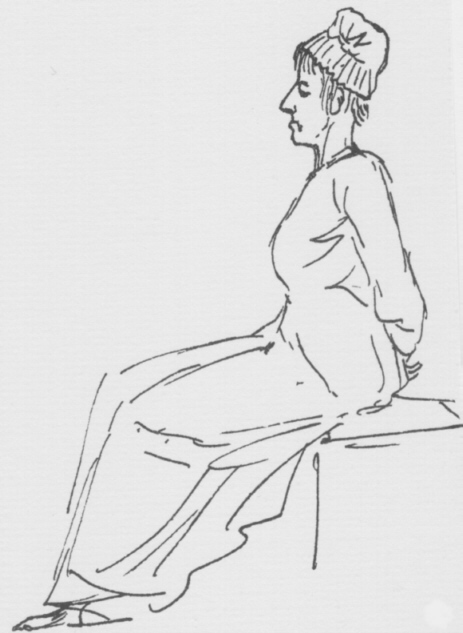
Heads of Nations and Their Missing Teeth
Marie Antoinette was in good company with her dental dilemma. George Washington has long been known for having wooden teeth. The wooden part is a myth (Mr. Washington had ivory dentures) but the lack of teeth is quite true; poor George began loosing his teeth in his 20s. And so was the case for many due to lack of proper nutrients, vitamins (especially in the case of pregnant women) and of course, sweets! While the ancient Greeks were the first to discover the connection with sugary foods and bad teeth, this useful information was forgotten and it wasn't until the 18th century that dentist, Thomas Berdmore was the first to print his hypothesis about sugar being bad for teeth. So, like gout, cavities also plagued the well-to-do due to their being able to indulge in fancy foods.

Tooth Care
It wasn't like George Washington didn't take care of his teeth. He actually brushed them every day! Mount Vernon still has the president's silver toothbrush and tongue scraper. The first mass-produced toothbrush came from England in the 1780s although I can't tell you how popular it was. Bad breath was certainly unpopular and people were criticized for the unbecoming attribute.
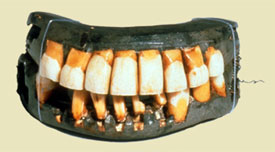
Lack-of-Tooth Care
False teeth were a common solution for those teeth that wouldn't stay in place. They also were probably more ornamental than functional. Another 18th century invention was denture paste which came out of France in the 1790s. Nicholas Dubois de Chemant created the paste to go with his new porcelain dentures which were one solid piece, no separate teeth. Although this sounds quite frightful, the dentures were quite popular. If you were only missing a few teeth, you could have real or fake ones transplanted. Your tooth would be pulled and someone else's would be inserted into its place. A string or silver wire would then be used to anchor the tooth, by tying it to the others. Hopefully the root would take to the new location, in which case, you had to try another tooth.

A Visit to the Dentist
The word "dentist" was still not exactly being used in the 18th century, and it was more of a side-job still at the time. For instance, Paul Revere the silversmith also advertised his abilities in dental work. Why a silversmith? Well, cavities needed fillings after being drilled. The best and most pricey filling was a gold filling. Alternatives were pitch, beeswax, and even lead which I can't imagine as being too successful. Porcelain fillings seemed like a good idea since they were white and but their acidity killed the tooth nerve, leaving the filling white but the rest of the tooth black.
Without modern anesthesia, you might imagine a trip to the dentist to be far more unpleasant than it is today. Jane Austen described one such trip with her nieces in 1813 who had to get their teeth cleaned, filed, and fillings. Austen described hearing her niece's screams from an adjacent room while her teeth were drilled, going on to claim the dentist was "...a Lover of Teeth & Money & Mischief."

Say Cheese
But usually these various treatments were all in vain and people like George Washington's teeth would fall out. This made for an awkward trip to get your portrait painted. Many portraitists found that the awkward dentures made for an equally awkward shape of the face. Padding would be put in your mouth to fill in the cheeks for a more natural, teeth-filled mouth look.

It may be surprising how advanced dentistry was in the 18th century. The century saw the first dental chair, foot powered drill, and even orthodontics. Thomas Berdmore recommended jerry-rigging a wire insert to adjust out of place teeth. At the same time, dentistry was also extremely painful and the improvements came with many risks. Perhaps I would have just let my royal teeth fall out too!

Further Reading:
Time line
A Visit to the Dentist
The 18th century dentist's guide to 'a brilliant smile'

Monday, November 16, 2009

Phrenology

Ever wonder why you are such a good friend, tight with your money, or very religious? Well Franz Joseph Gall has an answer for you! It's all due to the shape of your head.

The German physician developed Phrenology in 1797 to explain people's personalities. If you had some sort of dent on your scalp, and therefore skull, this was connected to your brain which was connected to your mind, which is what determines that personality trait. Or so the theory goes.

Let's see, I have one on the back right of my skull. Let me get out my charts and diagrams...oh, here it is: compulsive shoe shopper and drug addict. Hmm, that only seems half-right.

Phrenology became popular in the mid-19th century and the United States found it especially useful. For the most part today the practice is dismissed as quackery but surprisingly enough it is still used by some some believers all around the world.

Wednesday, November 11, 2009

Gossip Guide Humor in Live-Action Form

Lauren just brought to my attention that a book series I enjoyed in my carefree years, Horrible Histories, is now producing shorts and putting them on Youtube. I totally geeked out. Here is Georgian Doctor and The Four Georges.


Meanwhile, the book series should grace history-phile's library. They mix fact with humor. My copy of The Groovy Greeks is practically destroyed due to frequent reading. Books in the series that are a little more appropriate for this particular blog would probably be England and Gorgeous Georgians.

Tuesday, October 13, 2009

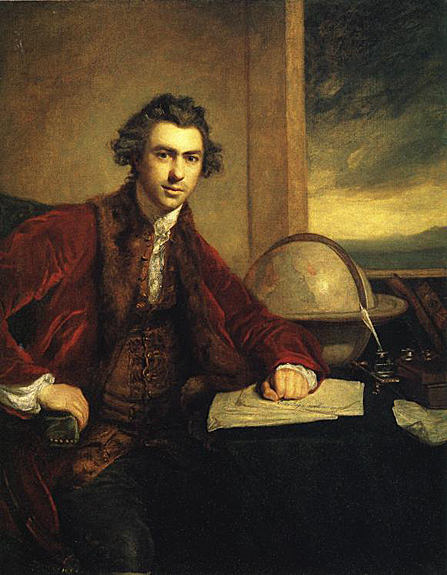
Hunk Alert: Joseph Banks


SWM, Botanist, Naturalist, Explorer, and President of the Royal Society. Looking for a woman with a keen interest in gardening or other such Enlightening activities.
Likes: plants, sea voyages, the Histories and Sciences, and long walks in the park.

Some may describe me as a macaroni but I consider myself a man of science with a zest for adventure. I have just come back from seeing the wonders of the uncharted world with Captain Cook. This voyage has kept me very busy with the fascinating task of identifying and categorizing hundreds of flora that have never been seen in the western world. Despite my love for my job my long years on sea have brought me to realization that I miss the gentle companionship of a lady.

A woman who can appreciate the natural world is the lady for me. I don't need one with the same fervor for plants as I, but an appreciation is necessary. Otherwise, I would love to meet a lady who can discuss any good books, perferably on a long walk; be it on my estate or on the crowded streets of London.

Wednesday, June 24, 2009

To be Fashion-Offensive or to See?

Ah glasses, the burden of many a fashion-conscious and budget-conscious person. I've been shopping around for a new pair and it seems the best deal for an attractive set is $200! Well, would you believe that was about the same asking price for them in late 18th century America as well? Spectacles were pricey!

Spectacles have been around forever but they underwent some of the most important changes in the eighteenth century that have given us the glasses we have today. One of the biggest issues with spectacles was how to keep them on your face. It was in 1730 that a London Optician, Edward Scarlett came up with the genius solution of creating sidepieces that could rest atop a person's ears. Before that there were balancing acts on noses and ribbons going every which way (the Chinese took that Western aspect and added weights to keep them on). By 1752 the glasses now had hinges thanks to another British Optician, James Asycough. With these adjustments, Spectacle sales increased.

Spectacles could be made with clear or tinted glass. After Georgiana went through the trouble with her eyes she would wear spectacles of black crepe to keep the light out of her sensitive eye. Lenses were available in a variety of colors, usually blue or green in England. You might think, with all these fabulous color combinations that Spectacles could be trendsetting, they weren't. People were extremely self-conscious about wearing glasses in public. Think teenagers going to the grocery store with mom in complicated orthodontic headgear. The fashion-conscious French were especially notorious for their hatred of spectacles; they would much rather walk into a door at Versailles than be seen in spectacles. When Princess Sophia needed glasses, she fretted about wearing them to the opera, worried about what the newspapers would say. Her sister Augusta scolded,
"...What...can they say? That Princess Sophia wears spectacles! Well, and what harm can that do her? Would it not be better they should say it, than she loose all sight of the performers?"
I think Augusta and I would get along.

Yet another improvement in spectacles came in 1784 from America when Ben Franklin was getting frustrated reading one night. Franklin had two sets of spectacles, one for his near-sightedness and one for his far-sightedness. He found himself constantly switching from one set to the other. He sliced both sets of lenses in half, glued (so to speak) them together, and thus created the bifocal. Clever Ben!

So it is safe to say that the modern glasses as we know it, is strictly an eighteenth century invention. This invention comes with the same price and the same occasional insecurity about how one looks in their glasses. You would think after a couple of centuries of improvements in ophthalmology we would finally be rid of the glasses stigma!

Monday, May 4, 2009

Georgiana the Scientist

After the Duke of Devonshire banished Georgiana to the continent for her affair with Charles Grey, the active Duchess was left without her children to tend to, London to party in, or politics to involve herself in. She was left to deal with her grief in foreign lands, but luckily, alongside her mother, sister, and an ever-growing entourage. Oh yeah, Bess was there too.

After dealing with the many agonizing emotions of her predicament, Georgiana had to find other things to involve herself in while she was abroad. At first this consisted of the usual English-travelers abroad regime: visit Grand Tour stops, stay with ex-expatriates living abroad, etc, etc. But then Georgiana began actually getting inspired by her visits with expatriates, notably the scientists. Georgiana attempted to better herself with studies of all sorts, but it was chemistry and mineralogy that she became the most interested in. The famous Chemist, Charles Blagden encouraged and motivated Georgiana in her studies. Blagden is given credit for his research in persipitation freezing points in liquid. The two would remain friends for the rest of Georgiana's life.

Instead of political circles and debates it was now scientific circles and lectures. Instead of being a patroness of young actors, as she was in her premiere duchess years, she was now funding scientists. Her return from exile didn't diminish Georgiana's new found interest. She set up a mini lab in Devonshire House to conduct experiments and blessed Chatsworth with one of the finest fossil and mineral collections, which it has to this day. Her new interest also brought her closer to her husband's shy uncle, Henry Cavendish, who discovered Hydrogen. Georgiana couldn't get enough science, and perhaps, if she was born in a different era more open to educated women in this field, she could have made a significant impact on the scientific world.

Thursday, April 23, 2009

Maternal Impressions

Although the Enlightenment strove for scientific advancement, there was still many theories and methods that were simply primeval. One of these was maternal impressions, an idea that would last through the Victorian age. Maternal impression was the belief that a pregnant woman's experiences would affect how her child would come out. It was mostly used to explain why a child was born deaf (there was a loud noise that surprised the mother) or blind (the mother looked at a blind person) or ugly (I just made that one up). One of the most famous cases of birth defects credited to maternal impression was Joseph Merrick, aka the Elephant Man, of whom it was said his mother was scared by an elephant. You mean they couldn't narrow it down to neofibromotosis? Hullabaloo of course, but I would still recommend pregnant women shouldn't eat too much garlic and stay away from circus clowns...just in case!