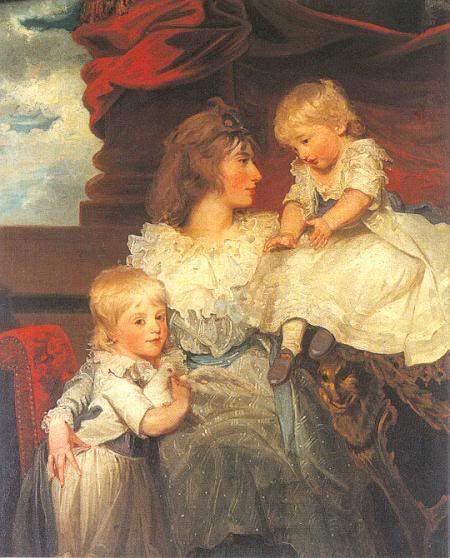
Showing posts with label Enlightenment. Show all posts

Tuesday, June 29, 2010

Am I Not A Man And A Brother?

Josiah Wedgwood was not just famous for being quite the potter, he was also known for being a fervent abolitionist. He managed to use his artwork to bring attention to the cause he was so passionate about. In 1787 the Society for Effecting the Abolition of the Slave Trade formed, their logo was a slave in chains kneeling with the words, "Am I Not a Man and a Brother?" underneath. Wedgwood took the seal and created it in cameo-form, making a large amount to be distributed.

Luckily, the enlightened appeal was a big hit. Ladies would set the medallions in bracelets or set them in hair pins. Wedgwood's cameo was the 18th century version of the Livestrong bracelet, it was fashionable to show your support for a cause.

Like many fashions for a cause, though, the medallion's longevity meant a loss in meaning for many wearers. However, Wedgwood's effort did help in the abolitionist movement and in 1807 Parliament voted to abolish slave trade.

Tuesday, May 18, 2010

Portraits in the Grand Manner

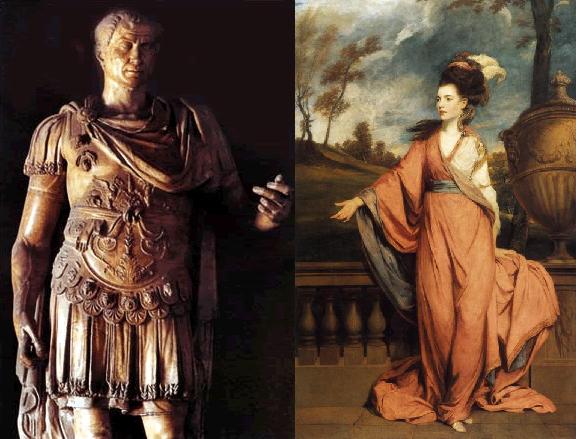
The dominating style in late eighteenth century British portraiture is known as "Grand Manner." Some credit the invention of the style with Joshua Reynolds refined and defined the style in his Discourses on Art and would discuss it in his lectures at the Royal Academy. Reynolds actually would refer to it as "great style" or "great style" but names were not important, it was the concept of the style.

So how we do we know what is Grand Manner? Well, most of the portraits that have graced this blog over the years are done in this style, for the blog's author has a preference to this style which shows her Enlightenment. That is the intention of Grand Manner: to show the sitter's Enlightenment. The sitter is made to look noble, smart, and with purpose. "That isn't as easy as you may think." you might say. Luckily, I have a a quick reference guide to how to piece together a portrait in the grand manner style:

1. Paint a full length life size or larger.

2. Put the sitter in a Classical pose (extra points for a gesture)

3. Paint an Arcadian landscape, more fantasy than reality.

4. Include a Classical prop: urn, fragment of architecture, or even Laocoon statue (if you are in Rome)

5. Dog is a charming touch but optional

Thursday, December 17, 2009

The Foundling Hospital


Establishing a large metropolitan orphanage seems to have marked a city and its society's arrival at their own Renaissance. They came to symbolize a time of wealth and an new found interest in the welfare of its people. During the Italian Renaissance foundling hospitals (remember, hospital-hospitality) sprung up, one even had a large wheel that you could place your baby on and rotate into the building so as not to show your shamed face when your dropped your child off. Amsterdam's beautiful History Museum is housed in the former old Civil Orphanage, established during the Dutch Golden Age. The English were very stuffy about the topic of illegitimate children. They saw orphanages in the same way many people now see giving condoms to teenagers: if we provide a place for whores to put their unwanted children it's condoning bad behavior. It wasn't until the Enlightenment that there was a call to finally do something about the orphan problem.

If a family or individual couldn't afford to take care of their child, it tended to end up in a workhouse; think: Oliver Twist. Only 10% of the children sent here would survive. Those that were too young to work would be on the streets. Dead babies in the street were a common, early-morning sight. This was a sight that Captain Thomas Coram couldn't bear to see. For years he petitioned the king for a foundling hospital with no success. Luckily, King George II ascended to the throne in 1727 and his wife, Queen Caroline had the same concerns as Coram about the children. Coram's petition for a hospital that would turn forgotten children into useful citizens seemed like a good idea to this king and he approved it. The nobility and the wealthy also thought it sounded good and many became subscribers, that is, donated their money to build the hospital.

Those who couldn't spare money were able to help in other ways. The idea of the Foundling Hospital appealed to William Hogarth, who often critiqued society in his artwork. He became one of the hospital's founding Governors and would go on to foster some of the children with his wife since they had none of their own. Hogarth brought artwork to the hospital, donated by himself and other artists such as Gainsborough and Reynolds, and even designed the uniforms and the Coat of Arms. Another artistic supporter was George Frideric Handel. The musician was in the height of his career and used his popularity to his advantage by holding charitable performances in order to raise money for the hospital.

The Foundling Hospital wouldn't take all babies at first, but by 1756 a basket was hung outside its door to symbolize the law passed in the House of Commons deeming that the hospital would turn away any child under twelve months old. Many times, the babies would be dropped off with some sort of token by their mother, perhaps symbols of sacrifice or remembrance. A key, a more pricey and meaningful token of ownership, were often left to symbolize that the mother meant to reclaim the child if fortune ever was to smile on her. Babies' lives began at the hospital with wet nurses, who lived outside the actual hospital. One of Hogarth's duties was to supervise the wet nurses. When old enough, children were tended to inside the hospital, girls and boys on opposite wings as was traditional in orphanages. Here the children were tended to when they were ill, given food and amenities, and an education. There was an apprenticing program, so that when the children became teenagers they became apprentices and began their journey into the outside world.
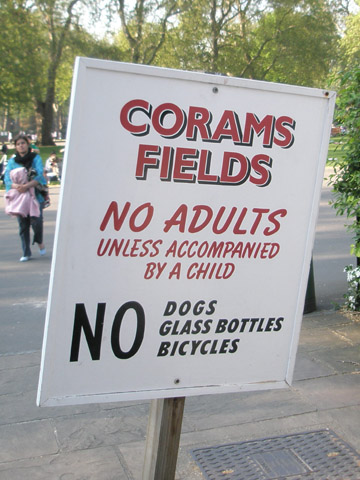
Today the hospital doesn't exist. The 20th century saw the end of orphanages in England and the demolishing of the actual building which was once described as being, "the most imposing single monument erected by eighteenth century benevolence." Traces of this symbol of humanity can still be seen on the former site. A playground sits on seven acres of the site, which is commonly used by children from the modern hospital nearby, Great Ormond Street Hospital. The Foundling Museum stands to tell the Foundling Hospital's story and houses the art collection William Hogarth put together to bring the joy of art into forgotten children's everyday lives.

Tuesday, December 8, 2009

Judaism in England

Those of the Jewish faith were not exactly welcomed to England with open arms. It's a wonder that they were ever inclined to settle there! But throughout the centuries there were Jews in England, and England (being the upstanding Christian country that it was) fighting to get them out. It wasn't until the 18th century that Britain finally warmed up to those of the Jewish faith.

In the Dark ages many Jews were forced to be nomadic due to anti-antisemitism, until King Edward I flat out expelled them from the country. Most left but some remained in hiding. It wasn't until a rabbi approached Oliver Cromwell in 1655 that Jews were finally allowed in England. The Puritan William Prynne and Quaker, Margaret Fell, both from religions who faced prejudice and persecution, were two of the biggest objectors. Hypocrites! Despite the cold welcome, thousands of Jewish people reestablished themselves in England.

The arrival of the 18th century was also the introduction to religious tolerance. For if you were to be Enlightened you must be tolerant of different cultures. It was now fashionable to be open to those of non-Anglican faiths. By the 18th century the Jews were able to establish themselves. During the Jacobite uprising many Jews showed loyalty to the government, and finally the English began looking on them as more than just those responsible for a diety's death. However, when Henry Relham pushed the Jewish Naturalization Act of 1753 which would make Jewish immigrants citizens, there was an outcry, especially among the Tories. The Whigs, in their true character, were all for the act and were happy when it passed.

Jews were an established part of society, especially in London. Sadly though, they were still treated as second class citizens. That treatment, though, could change in the wink of an eye when money was involved. Many of the English Jews showed a knack for money management and became successful money-lenders. So you could be a stuffy aristocrat who looked down on the Jewish but in the future owed s Jewish lender a lot of money. Hmm, maybe it was time to play nice? Mary Robinson was indebted to a Jewish money-lender who she may or may not have given sexual favours to. He later blackmailed her in the height of her celebrity with a tell-all book and fondly nicknamed himself, "The Jew," making light of the negative association of the title.

With the money-lending and other businesses, many Jews established themselves and aided their community. By the Victorian age, the antisemitism was almost forgotten and the Jews had been knighted, titles, and had high positions in the government.

Wednesday, January 21, 2009

Immortal Companion: Carl Friedrich Abel


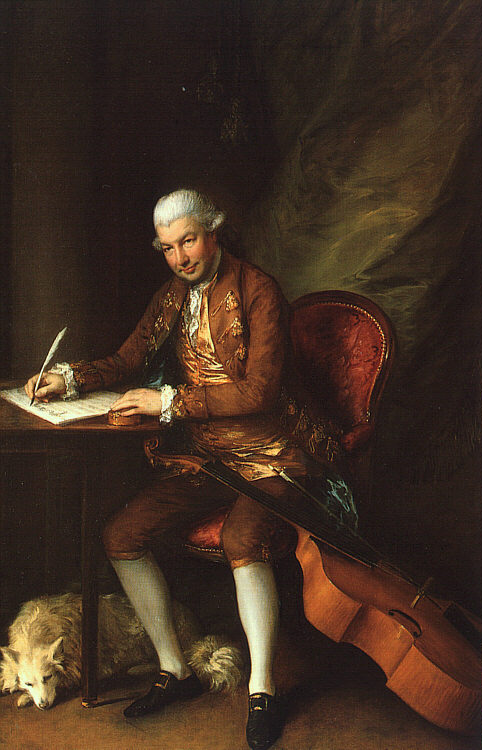
To begin a series on pooches in paintings, I wanted to open with one of my favourite human-dog portraits. Thomas Gainsborough's portrait of the composer Carl Friedrich Abel depicts the music man as if we have just interrupted him in his study. The busy musician looks up from his work that he has been pouring onto paper before the notes leave his head. His cello (musicians, feel free to correct me if I'm wrong!) casually leans against his leg, so he can quickly play the tunes he hears and then go back to recording them on paper. Abel is obviously successful in his musical career. The grandness of his fine chair, the drapery, and even his copper coloured silk vest excrete wealth and success. He is enlightened man because of his connection to music...and nature.

Sleeping calmly at his master's feet is Abel's dog. The faithful companion is the only one allowed in Abel's private study while he works. We can see why, he is a quiet audience. The dog's presence evokes a sense of calm and gives the viewer a sense of comfort about the sitter and his personality. In fact, the dog completes the portrait; it would be unbalanced without him. Gainsborough, a big dog fan, puts a lights source on both Abel's face and the dog's. The rest of his fluffy white body is shadowed under the desk. If you think only a crazy dog-lover would zone in on the pooch in the painting, let me reiterate how much the people of the 18th century loved their dogs. When the painting was exhibited, the St James Chronical reported on "the correctness" of Gainsborough's execution of the dog. Ya know, just in case you were worried that the dog didn't come out right!

If you were wondering about that music Carl was composing in the painting, I put together a sampling of it below. It gave me an excuse to play with the amazon mp3 player! So now you can make like Abel's puppy and relax to the sounds of his strings.


Monday, December 22, 2008

The Bedlam of Bethlam


bed⋅lam [bed-luhm]
–noun
1. a scene or state of wild uproar and confusion.
2. Archaic. an insane asylum or madhouse.

Are the holidays driving you nuts? Inspired by fabulous reader Kristi, who always sends me awesome emails, I thought what better a time to talk about "the mad" then the holiday season.

Because insanity or mental illness were misunderstood throughout much of history the people who suffered from these conditions were usually mistreated. This also meant those with mental handicaps were thought to be "mad" as well. These unfortunate souls would be put in madhouses, hidden away from public view where they spent their lives being beaten or even killed.

In 1247 the Sisters of the Order of the Star of Bethlehem founded a priory on the site of what is now London Liverpool Street Station. Hmm I wonder if I can say that my friend Erin spent a night there since she was stranded at that station overnight. The building went through many changes throughout the centuries. But the Enlightenment brought a new thinking about these castaways and Bethlam Royal Hospital (as it was now called) began attempts to improve the treatment of the inhabitants. The hospital was also called Bedlam which turned into a word to mean [see above] and that's exactly how the old Bethlam was. The screaming and noise that came from the building was said to drive anyone who heard, mad themselves. Now with the Enlightenment the great thinkers set about trying to, perhaps, quiet those inside.

Firstly, they began referring to those inside as patients. After-all, Bethlam was a royal hospital. Then someone realized that the patients actually exhibited different symptoms; most notably, screaming versus not screaming. So they considerately divided these patients from each other. They made "curable" and "incurable" wings and divided the patients by sex. Bethlam was intended for short stays but if after a year the patients remained uncured they were just discharged, unless of course, someone lost track of how long a patient was there. The uncured wing allowed an alternative to giving up on the patients.

Bethlam was commended by Europe for their advancements with the mad, but of course they weren't perfect. As a means of generating more funding, you could pay a penny and view the "lunatics." Crowds peered through iron bars hoping to get a glimpse of the patients unusal looks and behavior, especially if their antics included anything of a sexual nature or violence. They were even allowed sticks to prod the poor patients. Asylum conditions were improving but they still had a long way to go.

The above figures of raving and melancholy madness graced the entrance gate of of Old Bethlam. These two allegories show how limited knowledge was of the different patients' conditions and needs.

Thursday, September 18, 2008

The Enlightened Family Portrait, Part 3 The Enlightened Family

The family portrait is not highly unusual in art history although it is still a rarity; especially in displaying fathers and young daughters together. The new trend in portraying yourself as Enlightened not only began an increase in the family portrait but in depicting the family as actually interacting with each other. This was further proof to the viewer that, here you are in the act of participating in family life, which you enjoy on a daily basis because you are a forward thinking person. Anyone could sit for a formal portrait with their family but a painting of the family being active together is visual proof of their general enjoyment of each others' company...at least for the amount of time it takes to sit for a painter. Here are some of my favourites.


Henry Walton, Sir Robert and Lady Buxton and their Daughter Anne, 1786


Joseph Wright of Derby, Rev D'Ewes Coke, his wife Hannah and Daniel Parker Coke, 1782


Joshua Reynolds, The Marlborough Family, 1777


Joshua Reynolds, George Grenville, Earl Temple, Mary, Countess Temple, and Their Son Richard, 1780


George Stubbs, The Wedgewood Family, 1780


Johann Zoffany, Henry Knight of Tythegston with his Three Children, 177o
(It should be noted that Mr Knight was divorcing his wife at the time of the sitting)


Women and Children
Husbands and Wives

Wednesday, September 10, 2008

The Enlightened Family Portrait, Part 2 Husbands and Wives

Originally when I began this post I intended to do it with a jumble of paintings. But of course, once I got carried away with the portraits I realized I had to divide the paintings up by categories. The portraits of husbands and wives served a new purpose in the 18th century as previously discussed. Instead of showing the man's vast wealth and property (wife included in that) these now displayed the sitter's Enlightened sense of family values and even love for his spouse. With the rise in the sense of woman's rights by ladies such as Mary Wollstonecraft and Mary Robinson, these portraits displayed the new sense of unity between husband and wife. Showing affection toward one's spouse is something that shows one's superior character, not lack thereof. Take into account also how the couples are usually placed in nature; another Enlightenment sensibility.


Thomas Gainsborough, Mr. and Mrs. William Hallett, 1785


Henry Raeburn, Sir John and Lady Clerk, 1790


Thomas Gainsborough, Mr. and Mrs. Andrews, 1750


William Hogarth, David Garrick and his Wife, 1757


Women and Children

Sunday, September 7, 2008

The Enlightened Family Portrait, Part 1 Women and Children

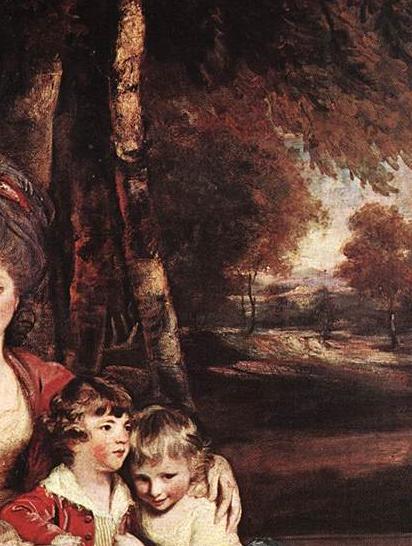
There were many means of expressing a sitter's sense of Enlightenment in portraits. One of the most popular accessories a sitter used was their family. Family portraits in the 18th century weren't necessarily commissioned because the sitter wanted to immortalize their children or save money with a group portrait, it was a means of immortalizing yourself as a creature of Enlightenment. Of course, not everyone had selfish motives by getting a family portrait, but the rise in their popularity can be attributed to this trend. The painters who thought outside the box with the composition and the sitters' interactions with each other produced some of the greatest paintings in this genre. After all, anyone could snap a family portrait at Sears but is that who celebrities go to when they want theirs? No, they tend to want something creative that shows a hint of candour and love. The same concept went for artists in 18th century and it is what made painters, such as Joshua Reynolds. See why these painters made the big bucks:


Joshua Reynolds, Georgiana, Duchess of Devonshire and Her Daughter, 1784

John Hoppner, Harriet, Viscountess Duncannon and her Two Sons, 1787


George Romney, Jane, Duchess of Gordon and her Son, the Marquis of Huntly, 1778

Joshua Reynolds, Lady Cockburn and Her Three Eldest Sons, 1777

Joshua Reynolds, Lady Smith and Children, 1787


George Romney, The Gower Family, 1776-7

Joshua Reynolds, Miss Cocks and Her Niece, 1789

Friday, August 1, 2008

The Art of the Book

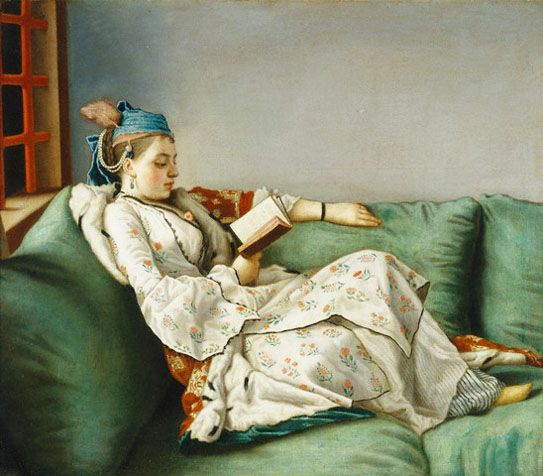
Prior to the 18th century reading was usually done out loud. But with the age of Enlightenment arrived the priority of education. More people became literate, books became more plentiful and available, and with that came the portrait of the reader. These depictions expressed the popularity of silent reading in the era as well as expressed the sitter's sense of enlightenment achieved by the act of internalizing the enlightened word. Finally, a portrait style arrived allowing women to be depicted in a way to display their intelligence. Because of this, many women chose to be portrayed accompanied by a book (Madame de Pompadour was most always depicted with a book). Unfortunately this style remained popular through the following century when the enlightenment was forgotten. The reader portrait took on a different meaning in which it came to be a sort of feminine symbol of idleness. Here are some select images of some enlightened and learned ladies.


Wednesday, July 30, 2008

Flower Power

I have been staring at Lady Skipworth's bosom for a while now trying to decide what kind of flowers she has coming out of it. I won't make any educated guesses due to my lack of a green thumb; that gene must have skipped my generation. I still love flowers, despite my ability to take care of them and the people of the 18th century felt the same way. Foreign wildflowers from the colonies were becoming popular due to their exotic qualities. A fondness for plants was a sign of the owners' Enlightened sense of nature. While roses were a classic, and tulips had been increasing in popularity due to the Dutch, some flowers became more and more popular in the Georgian Garden.


Rhododendrons Hydrangeas


Kalmias Columbine


Hollyhocks Sweet Williams


China Asters Cornflowers


Phloxes Chrysanthemums


Dahlias

Tuesday, July 22, 2008

Pompeo Batoni, the Most English of the Italian Painters

When young aristocrats went on the Grand Tour as their rite of passage into manhood they needed to bring back proof of their journey. Artifacts, antiques, and paintings of Vesuvius usually made their way home to decorate their future estates back in the British Isles. But those souvenirs could be things that just anyone picked up! The young masters needed more proof of their completion of the Grand Tour. For that, they would usually go to Pompeo Batoni.

At the age of 19 Batoni moved to Rome and apprenticed with a few of the city's painters. By the 1750's Batoni had established himself with the British tourists as a skilled portrait painter who cost much less than Reynolds and worked faster too. He is now credited with inventing the Grand Tour Portrait. Sitters were usually placed in a luxurious setting, complete with a classical (and recognizable) statue from Rome such as Laocoon. In the distance there was usually an Italian landscape (further proof), possibly with a recognizable structure such as the Coliseum or Vesuvius. These painting were not only meant to document the proof of the sitters' completion of the Grand Tour but also to express their enlightenment. The sitters' dogs commonly accompanied their owners in the portraits as a display of their sensitivity to nature, another Enlightenment value.

Batoni turned into the most sought after Italian painter among the British elite. Because of his many portraits of them, he is often lopped in with the other great English portrait-painters of the century. His style evolved to express this as well. Many of his soft hues darkened to form the rich darker ones that were so popular in the sitters' native land. However, the soft brush still shows through the dark palette revealing this painter-of-the-English's true Italian roots.

Monday, June 16, 2008

Lennox Loves

Lady Sarah Cadogan had a typical aristocratic, arranged marriage. At the tender age of 13 she was married to Charles, 2nd Duke of Richmond at the Hague (hey, I wouldn't mind getting married there!). Charles was 18 years old and just as unhappy with the match as his child bride seemed to be. The two were only matched up to settle a gambling debt between their fathers. No sooner was the wedding over then Sarah was sent back to school and Charles had to fulfilled his Enlightenment duty of going on the Grand Tour.

Three years later Charles was back in England from the Grand Tour. He had been dreading this return for a while for the simple fact that it meant he would be reunited with his wife. In order to prolong the meeting he decided he would go to the opera last minute, that way he wouldn't have to see Sarah until the morning. While he sat at the opera, anxiously dreading his monster wife he couldn't help but notice the most beautiful woman he had ever seen in the audience. It was love at first site.

Lucky for him, the woman at the opera was Sarah Lennox, his very wife! From then on he treated her with all the love and devotion she deserved. They lived happily ever after, with their 12 children, and were even known to exhibit some major PDA wherever they were.