Showing posts with label Hospitals. Show all posts
Wednesday, February 2, 2011
London Lock Hospital
In such a hedonistic century, STDs were far from uncommon. You could even go as far as saying venereal diseases were a national epidemic. A big statement, sure, but there were actually hospitals dedicated solely to the treatment of these diseases!
Lock Hospitals came to England in the thirteenth century. They were mostly for the treatment (if you could call it that) of lepers and evolved to other diseases that were dangerously contagious, hence being "lock" hospitals, to lock up the disease. By the eighteenth century leprosy wasn't an issue, but syphilis ran rampant. In 1747 the London Lock Hospital opened. Like the modern-day health clinics, sufferers of the neither regions who were short of cash could line up in hopes for some sort of relief. There were thirty clean beds for the patients but this being a time when there was no successful cure of syphilis the hospital probably only served as a place to get out of the rain and a hot meal.
Still, the charity-funded hospital was considered a success in the forward-thinking Age of Enlightenment which had also birthed, the Foundling and Magdalen Hospitals. In 1792 a sister-hospital opened up, Lock Asylum for the Reception of Penitent Female Patients. This was a rescue center for fallen women who were treated at the lock hospital and was meant to get them on their feet again. The lock hospital remained working throughout the centuries, eventually becoming a gynecological center before closing down in the 1950s.
Thursday, June 24, 2010
The Magdalen Hospital

In the effort to better their society, the English instated many state-of-the-art improvements which showed an honest interest in helping society. On the coattails of the Foundling Hospital the Magdalen Hospital was founded in 1758 with the aim of 'curing' prostitutes.
Magdalen hospitals were not a new or English concept. These hospitals had been developed by Catholics in other countries hence being named after the famous reformed prostitute from the Bible. When the London Magdalen Hospital was founded it was created with the aim of giving young women a better life, knowing that prostitution was a last resort in a society with not many opportunities for women.
The establishment was run as more of a rehabilitation center. The penitent prostitutes entered into the hospital and were taught decorum and cleanliness and then given an education. Good behavior and improvement were rewarded with being moved to different wards and then being allowed more independence. Basically, the women were trained to make a living without having to whore themselves. The Magdalen
Hospital was like a My Fair Lady factory: slob streetwalker goes in, civilized citizen walks out. There were even punishments for swearing - 6 hours confinement to your room or more with repeated offense. I have a feeling I would have spent a lot of solitary hours if I was a patient!The hospital was deemed a success which helped in not having to scrounge for charitable contributions. In fact, society was so enamored with the enlightened idea of a penitent prostitute hospital was there was plenty of money pouring in. The chapel collections even drew in more money than the Foundling Hospital. I blame that on the spectacle. Why donate to orphan children when there are reformed whores singing hymns?
Thousands of wayward girls entered the hospital through the years. Soon, some of the patients were just girls who needed a head start and hadn't actually sold their body. Why not? The hospital trained you to start and honest living, out a roof over your head, and fed you.
Although we could never tell you if the hospital was a true success in its ability to rehabilitate, its heart was in the right place. It didn't punish prostitution but gave women a safer alternative to their original career path. Over the years the hospital expanded and changed. Its original location was by Blackfriars Bridge but it was moved to Streatham in 1866. By the 1930s the hospital was transformed into a school for 'juvie' girls. In 1966 what remained of the hospital closed for good with the original 18th century mission having long been forgotten. Although nothing remains of the site today you can still walk down the Magdalen Passage, an alleyway which lays on where the Magdalen Hospital foundation used to be.
Thursday, December 17, 2009
The Foundling Hospital

Establishing a large metropolitan orphanage seems to have marked a city and its society's arrival at their own Renaissance. They came to symbolize a time of wealth and an new found interest in the welfare of its people. During the Italian Renaissance
foundling hospitals (remember, hospital-hospitality) sprung up, one even had a large wheel that you could place your baby on and rotate into the building so as not to show your shamed face when your dropped your child off. Amsterdam's beautiful History Museum is housed in the former old Civil Orphanage, established during the Dutch Golden Age. The English were very stuffy about the topic of illegitimate children. They saw orphanages in the same way many people now see giving condoms to teenagers: if we provide a place for whores to put their unwanted children it's condoning bad behavior. It wasn't until the Enlightenment that there was a call to finally do something about the orphan problem.If a family or individual couldn't afford to take care of their child, it tended to end up in a workhouse; think: Oliver Twist. Only 10% of the children sent here would survive. Those that were too young to work would be on the streets. Dead babies in the street were a common, early-morning sight. This was a sight that Captain Thomas Coram couldn't bear to see. For years he petitioned the king for a foundling hospital with no success. Luckily, King George II ascended to the throne in 1727 and his wife, Queen Caroline had the same concerns as Coram about the
children. Coram's petition for a hospital that would turn forgotten children into useful citizens seemed like a good idea to this king and he approved it. The nobility and the wealthy also thought it sounded good and many became subscribers, that is, donated their money to build the hospital.Those who couldn't spare money were able to help in other ways. The idea of the Foundling Hospital appealed to William Hogarth, who often critiqued society in his artwork. He became one of the hospital's founding Governors and would go on to foster some of the children with his wife since they had none of their own. Hogarth brought artwork to the hospital, donated by himself and other artists such as Gainsborough and Reynolds, and
even designed the uniforms and the Coat of Arms. Another artistic supporter was George Frideric Handel. The musician was in the height of his career and used his popularity to his advantage by holding charitable performances in order to raise money for the hospital.The Foundling Hospital wouldn't take all babies at first, but by 1756 a basket was hung outside its door to symbolize the law passed in the House of Commons deeming that the hospital would turn away any child under twelve months old. Many times, the babies would be dropped off with some sort of token by their mother, perhaps symbols of sacrifice or remembrance. A key, a more pricey and meaningful token of ownership, were often left to symbolize that the mother meant to reclaim the child if fortune ever was to smile on her. Babies' lives began at the hospital with wet nurses, who lived outside the actual hospital. One of Hogarth's duties was to supervise the wet nurses. When old enough, children were tended to inside the hospital, girls and boys on opposite wings as was traditional in orphanages. Here the children were tended to when they were ill, given food and amenities, and an education. There was an apprenticing program, so that when the children became teenagers they became apprentices and began their journey into the outside world.
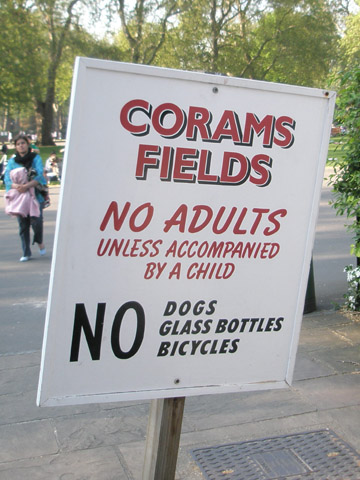
Today the hospital doesn't exist. The 20th century saw the end of orphanages in England and the demolishing of the actual building which was once described as being, "the most imposing single monument erected by eighteenth century benevolence." Traces of this symbol of humanity can still be seen on the former site. A playground sits on seven acres of the site, which is commonly used by children from the modern hospital nearby, Great Ormond Street Hospital. The Foundling Museum stands to tell the Foundling Hospital's story and houses the art collection William Hogarth put together to bring the joy of art into forgotten children's everyday lives.
Subscribe to:
Posts (Atom)
