I love 18th century history, absolutely everything. I spend days searching the internet, I love historical movies, and for the books... don't even mention it!!! I don't know much about Georgiana, my speciality is Marie-antoinette and her relations, and that is why I'm following your blog - to know more about Georgiana.
Anyway, this is what is happening. People just don't approve my passion. By this, I mean several things. Sometimes they mock me. Sometimes, they say I read to many non-fiction historical books. Sometimes they roll their eyes when I talk about it. Sometimes they're horrified when they learn that I want to have History in University, and go around screaming "Are you mad, don't you see there is just NO jobs in History?" (let's say that I live in Portugal, and there is basically no job anywhere, but that's another thing!).
The worst is that there are almost no historical reenactments here. I love to talk about History, but not if I'm just the one who's talking and the other's listening. You know, who doesn't like to share interests with someone who is fascinated by History too? But I never met anyone like that. Some people just like to listen to me talk about Marie-Antoinette... Sometimes it's absolutely desperating, I feel alone. Your blog's a blessing, really. So, what would you (or what would Georgiana do?!) in such a case?
Júlia
Well, one of the things that I have always admired in Georgiana is that she dared to go against the grain and do things different. Luckily for her, she had good taste and her risks usually resulted in others following her lead. When Georgiana was in exile on the continent she began to explore geology and other sciences, a hobby that she would have for the rest of her life. It was also a hobby that not many women were even interested in, especially her old friends. So how was she able to cultivate this hobby? She networked, and found others who shared her love. She held scientific discussion groups at her house and attended lectures.
The most important thing you can learn from Georgiana is that it is okay to try something different, even if you are criticized by others. The worst that can happen is you fail, and then you just have to get up on your feet again. It happened many times to her and it just made her all the more interesting of a personality!
Júlia
Well, one of the things that I have always admired in Georgiana is that she dared to go against the grain and do things different. Luckily for her, she had good taste and her risks usually resulted in others following her lead. When Georgiana was in exile on the continent she began to explore geology and other sciences, a hobby that she would have for the rest of her life. It was also a hobby that not many women were even interested in, especially her old friends. So how was she able to cultivate this hobby? She networked, and found others who shared her love. She held scientific discussion groups at her house and attended lectures.
This task is even easier for us in this fantastic age of the 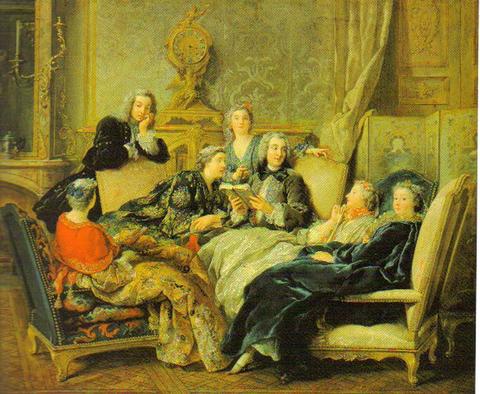 internet. We can connect with those who have a similar interest from all over the world; as you have discovered! If Georgiana was here today would she have a blog or twitter? Absolutely! I think you are doing the right thing by finding an internet community. If you want to participating in discussions on Marie Antoinette rather than giving them I would recommend joining a Forum. If you google 'Marie Antoinette Forum,' you shall find plenty! That way, you are in more a salon setting than a classroom.
Never underestimate the power of becoming a member of a museum or signing up for their newsletters. Many museums and colleges have open lectures you can go to and also network in. I've never paid a cent to hear a lecture and I've seen (and learned) from some amazing people.