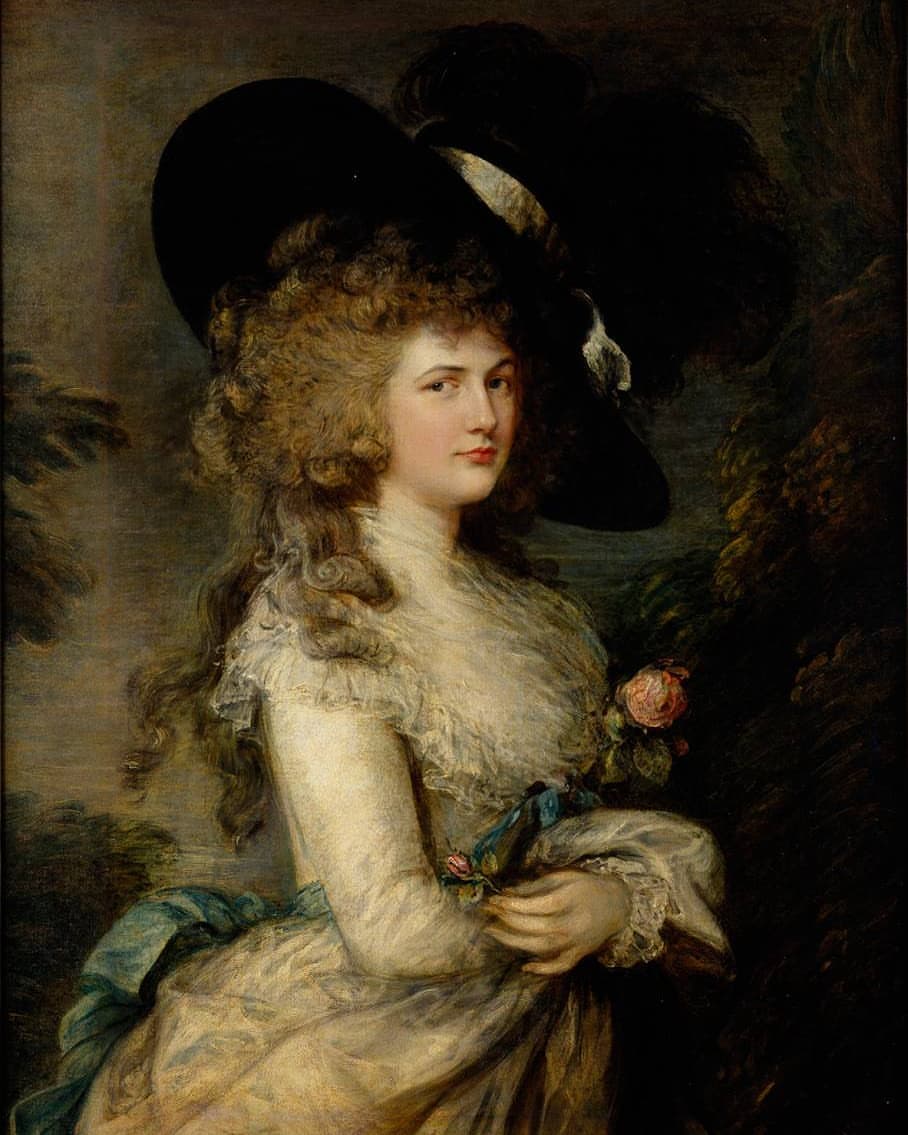
Showing posts with label Charles James Fox. Show all posts

Wednesday, March 16, 2011

Quotables


"I long ago made a determination never to be out of humour with Sheridan, to which I have rigidly adhered and will adhere even now..."
-Charles James Fox

Wednesday, December 9, 2009

Quotables

“He that is conscious of guilt cannot bear the innocence of others: So they will try to reduce all others to their own level.”


-Charles James Fox

Monday, June 22, 2009

Georgiana's Gossip

"You cannot imagine, my dear Dss, how much obliged to you I am for what you call your gossip, and which you will delight me if you repeat often."


-Charles James Fox

Monday, March 30, 2009

The Death of a Duchess

Today marks the 203rd anniversary of Georgiana's death. Much of Georgiana's 48 years of life were marked with health issues and in the second week of March 1806 it appeared that she had contracted jaundice. Rather than her health improving over the next few days, Georgiana grew worse and everyone became more and more concerned. The yellow/orange colour of skin was not due to jaundice but another liver ailment. Unbeknownst to the doctors an abscess had formed on her liver and was killing her. Harriet moved into Devonshire House to tend to her sister and "crowds" of people came to inquire daily after the state of Georgiana's health. Doctors felt that the sickness would pass but her friends and family were gravely concerned.

By the 26th, Georgiana was seizing for eight hours. The doctors shaved off all her lovely hair and put blister plasters on her skin which did nothing but cause her more pain. Amanda Foreman writes that,
"By the twenty-seventh everyone in Devonshire House knew that Georgiana was dying. The family, friends, and servants waited for the end to come. The crowd outside the gates grew in size."
Harriet watched as her sister struggled to speak and constantly seized for days, feeling as though she was dying with her. At 3:30 in the morning of 30 March Georgiana died surround by some of the most important people in her life, her husband, mother, sister, Bess, and Little G.

Reactions
The loss of Georgiana shook everyone. The crowds continued to visit Devonshire House to pay their respects, but those closest to Georgiana were the most effected. Charles Fox sat by himself at his former canvasser's home with big, fat tears rolling down his cheeks. Little G wrote that she wished she could strew violets over her dying bed as Georgiana had strewn sweets over her life. The Prince of Wales was in a state of shock, almost not believing that she was gone. Lady Spencer had to deal with watching her favourite child die. Bess was devastated as well and also concerned that her friends' death meant that she had no valid reason to be living with the Cavendishes. She and Harriet bonded to each other in a means of support for the devastating loss

But perhaps the most affected person may be the most shocking. The Duke of Devonshire was inconsolable. In the final years of Georgiana's life the two had finally become close, and dare I say, even loving. Of course they would have their typical married-people bickering but it was if the calmer, more matronly Georgiana was the wife that Canis had always wanted. Her loss was a blow that the Duke, with his famous countenance, never really recovered from and put him in a sort of numb state until his own death. Guilt as well as the realization that Georgiana would not be holding his hand on his deathbed ate away at him. He locked himself in his room and then one night snapped. Bess stayed up all night with him and described the Duke as "hysterical." He never truly recovered from the blow.
"A woman more exalted in every accomplishment of rapturous beauty, of elevated genius, and of angelic temper, has not adorned the present age..."

The Morning Chronicle, 31 March 1806

Friday, February 6, 2009

Tart of the Week: Caroline Fox Baroness Holland


The Lennox sisters were an infamous quartet of siblings with good upbringing and gossip-worthy lives. Which might make you wonder why you haven't seen their names grace this blog yet. The truth is because of Stella Tillyard's book, there is a lot of information on them which can be quite intimidating to the humble blogger!

The eldest of these Lenoxes was the first to dapple with scandal. Lady Georgiana Caroline Lennox was born in 1723 to the uber-adorable couple, Charles Lennox and Lady Sarah Cadogan. Just as with Georgiana and Harriet, Caroline's lucky family situation instilled in her the belief that marriages should contain love. Unfortunately, this was commonly untrue in aristocratic marriages. Her parents' high sense of rationality and politeness was also instilled upon her. Her family life accustomed her to lots of fun company; so Caroline developed a taste for entertaining and being surrounded by friends. Soon enough Caroline was a prim and proper model of an aristocratic daughter. She was also a bibliophile with an interest in self-improvement. It was only a matter of time before her reputation would be tarnished.

Enter Henry Fox. This ugly squat little man was a a Whig politician and bonafide bad boy. Well, perhaps "boy" isn't the best phrase considering that Henry was 37 when when the 19 year old beauty met him. Not only that but he already had a reputation as a womanizer and gambler. Henry was an unlikely threat to teenage daughters' hearts. Yet, under the layers of fat and bushy black eyebrows was a sentimental book lover and poet looking to settle down. When he met Caroline, the stubborn little man decided that she was his future bride, no ifs ands or buts.

He proposed to Caroline who neither said yes or no and then promptly asked her father for her hand. According to Henry, Caroline had eagerly agreed to his proposal. The Duke of Richmond liked Fox, but only as company that went home at night, not as an in-law. Henry's bold declaration left the Duke furious; Caroline deserved better! Her parents forbade the marriage and figured the whole event would quickly blow over. Henry though, was irate about his marriage plan being ruined. Long story short, Caroline secretly slipped out of the safety of her parent's home one night to secretly wed Henry. She immediately returned to admit the elopement to her parents. She never expected their reaction. They banished her from her childhood home and forbade her of seeing them or her sisters ever again.

This was a devastating blow to the close family. It would be years before Caroline would be united with her beloved sisters. While her scandalous marriage did turn out to be a happy and fruitful one Caroline still felt empty and guilt-ridden for her uncharacteristic act that seemed to have damned her. Still, her doting husband who loved her dearly and treated her as an equal helped her cope. With the birth of their children the Foxes, as Tillyard put it, fell in love all over again. In fact there was a little too much love going on at their house. The spoilt children ran amok and got away with it while the parents watched fondly and the guests looked on, horrified. There is even a story of their son Charles James destroying his father's valued pocket watch in front of guests with no repercussions. Guests got plenty of opportunities to see the Fox circus since people were always over. The household would transform into a gentleman's club by night; picture the frat house from Animal House except with Lady Caroline and two crazy little boys.

By 1774 Caroline's health was failing miserably. Against all expectations, Caroline rallied and continued to survive despite looking worse and worse for wear. Suddenly, during her illness, Henry died peacefully in his sleep. Perhaps, his passing is what made Caroline give up her fight. She died a very gruesome and slow death shortly afterword, complete with swelling and smelling and all those awful aspects. However many were astonished how alive her mind and conversation were in her final moments. Despite her condition, Caroline always had a light about her that shone until the very end.

Tuesday, November 4, 2008

The Westminister Election of 1784


Every liberal mind revolts at the wretched abuse now leveled at the most amiable of our country women! The base and blurring hand of calumny, however, is raised in vain against the lovely DEVON and her SISTER PATRIOTS, who at this juncture, so much resemble the fair celestials of the Grecian bard, whose attributes of divinity never appeared so brilliant as when forming a shield for the HEROIC LEADER of the OPRESSED PEOPLE!
The Morning Herald and Daily Advertiser, 24 April 1784

As the world watches in anticipation of the US election (I know that sounds pompous but unfortunately is true), I thought today would be an appropriate day to talk of an election that was very important to Georgiana. This election went down in infamy because, for the first time, it appeared as if women could make an impact in politics.

The 1783 election of Pitt as Prime Minister sent the Whigs scrambling to secure a dominance over the the Tory MPs. Charles Fox, perhaps the biggest Whig of all, decided a good way to do this would be to run for a seat in the borough of Westminster. Westminster was perhaps the most coveted borough due to its voter size and the fact that it could boast that every male homeowner could vote, unlike other boroughs. Two seats were up for grabs, and there were only three candidates: Fox; the naval hero, Lord Hood; and the rich landowner, Sir Cecil Wray. It was one Whig verses two Pittites and Fox needed all the help he could get.

Of course, this is the 18th century, so things were done a little differently...and maybe, were a little more fun. If you went to the theatre at this time you may have gone just for the circus of the elections. On one side the Duchess of Rutland would be screaming from her opera box, "Damn Fox!" while Lady Maria Waldengrave would retort with, "Damn Pitt!" Ladies, ladies, please; I am trying to enjoy La Reine de Golconde! Obviously, aristocratic women were getting more passionate about politics, despite not being able to vote.

Georgiana loved this circus and decided to put herself right in the middle of it. One can only wonder if she knew what she was getting involved in. She became the ringleader of aristocratic ladies canvassing night and day for Fox. Walking through the cobbled streets with foxtails in her hat, Georgiana would hand out medals to those who professed their support to Fox. Sometimes she would even go door to door into the middle and working class homes to talk to the voters who were on the fence. Her Grace was even known to thrown down a beer with Joe the Plumber Butcher and talk politics. The people of Westminster found that the tall, fashionable, celebrity wasn't all just feathers and faro; she actually presented some really good points. In the process the new mother worked herself to absolute exhaustion.

Georgiana wasn't the only one working her butt off. The person who was by her side almost every day was her devoted sister (to both her and the Whigs), Harriet. Other canvassing team leaders were Mrs. Crewe and Mrs. Damer. The women/tarts who made up these teams consisted of, The Duchess of Portland, the three Ladies Waldengrave, Lady Jersey, Lady Carlisle, Mrs. Bouverie, Lady Worsley, Mrs. Robinson, and Lady Archer.

Of course, being a woman in a man's world and a man's race made Georgiana the target for scathing lies about her methods of securing votes. When rumours came about that Georgiana had exchanged a kiss with a butcher for a vote for Fox, the press ran away with it. Although, Harriet (and maybe the other canvassers) did this, Georgiana always fervently denied doing it. In fact, a bunch of Hood supporters cornered her when she was in their shop canvassing, and demanded kisses of the frightened duchess. The male-driven press and opposing party just couldn't accept that Georgiana's wit and charisma were winning votes, and not her sexual abilities. In satirical prints, and all-out war erupted, with one side criticizing her for kissing butchers, and the other hailing her as an allegory for politics and justice. Hundreds of these prints were published (and are on my broken laptop) but what was and is noticeable is the absence of criticism of the few Tory women-canvassers. Apparently, the campaign was also a celebrity-competition.

After all the criticism and exhaustion Georgiana retired from canvassing. But the votes were so close she was begged to come back. Against her mother's wishes, she returned to canvassing and not a minute too soon too, Fox won the second seat over Wray by 200 votes. Georgiana and the other ladies' efforts did not go to waste.

I will make the argument that without these patriotic women's help, Fox would not have won the election. He was criticized for being quite lazy in the process while his canvassers blistered their feet campaigning for him. He also was behind in the polls many times, and would sulk and become a recluse at Brooks as a reaction, all while his supporters tireless converted voters. The 1784 Westminster Election upset many because it proved that women (shock!) could change the results of an election.
Friday, October 31, 2008

Tart of the Week: Elizabeth Armistead


This week's tart is a very special and notorious tart of the late 18th century. She enjoyed a celebrity as the most famous courtesan and slept with just about every famous man in England during her career. Please just try to wrap your mind around that! Not much is known of Elizabeth Cane's humble beginnings except that she was born July 11, 1750. Elizabeth's beauty was able to secure her a career as a model for a hairdresser when she first arrived in London. It has even been rumored that she had been Perdita's dresser when she was an actress at Drury Lane. Either way, her beauty (and large breasts) attracted the attention of well-known madam and soon Elizabeth was a working out of a brothel. So much for the hair modeling business! It was around this time that Elizabeth began going under the name Mrs. Armistead in order to protect her family.

Elizabeth's success as a courtesan can probably be attributed to the fact that she wouldn't let herself get too attached to her clients. Most of them being rakes anyway, Elizabeth saw no need to be bothered with love. Some of her long list of lovers include, the Duke of Dorset, Duke of Ancaster, Earl of Derby, Viscount Bolingbroke, Lord George Cavendish (The Duke of Devonshire's brother), and, of course, the Prince of Wales. Elizabeth must have been very good at her craft! She was even good enough to buy herself the Armistead House. A famous story the Devonshire set like to joke about (along with everyone else) was when Lord George Cavendish came to Elizabeth's house one night after a few too many drinks. When he was refused admittance he barged in anyway. He went straight to her chamber, opened her door and, candle in hand, discovered the Prince of Wales cowering behind the door. Lord George burst out laughing, made a low bow and walked the whole way home, laughing. He had a much better sense of humor than his brother.

One person who was certainly not laughing was Perdita. She was very upset that the prince had spurned her love for that of "The Armistead."* Since both women were both celebrities, the papers capitalized on Perdita's anguish by gleefully supplying stories of the two women's rivalry. Luckily for Perdita, the prince broke things off with Elizabeth and moved on to Grace Dalrymple Elliot. Elizabeth herself moved on to bigger and better fish. That fish just happened to be a Fox.

After a string of lovers later, Charles James Fox was now the sad, rejected lover of Perdita. He somehow found consolation in the arms of Elizabeth. But neither politician nor courtesan thought that they would end up falling in love. For the first time it appeared that Elizabeth was in love with one of her clients, and he loved her back. However, years of drinking, gambling, and womanizing didn't leave Fox with enough money to sustain Elizabeth's pricey lifestyle. She resisted his advances but finally gave in and by 1783 she settled down to a monogomous relationship with Fox. In 1795 they secretly wed. Who would have thought that these two party animals could settle down and become models of marital bliss? But there they were in their cosey London home, hosting dinners and gardening. Yes, gardening!

Fox surprised everyone in 1802, including his best friends, when he revealed that he and Elizabeth had been married for seven years. His true friends, like Georgiana, warmly accepted the "fallen" woman knowing the strength of the couple's love. When Fox lay on his deathbed four years later his last words were to his beloved wife, "It don't signify my dearest, dearest Liz." Although, heartbroken, the ever-independent Elizabeth went on to live for many years, watching many of her and her husbands friends pass into the next world. She died at the ripe old age of 91 in 1842.

For more information on Elizabeth and Fox's love story check out Scandalous Women.


*The papers liked to refer to courtesans as if they were boats, because many men boarded them. This is how the nickname for Elizabeth came to be.

Tuesday, August 12, 2008

Dr Graham and The Sex Machine

There have been many quack doctors in the past but the most notorious of the 18th century is arguably Dr James Graham. It’s hard to even know where to start with this character so I will just introduce him as a typical celebrity. Like our contemporary celebrity doctor, Dr Phil, Graham didn’t entirely know what he was talking about, and people didn’t necessarily believe him yet he still had flocks of people flooding to his practice, mostly the rich and celebrities.

The Scottish doctor had a rather nomadic start. After going to medical school (notice I didn’t say ‘graduating’) he moved to the American colonies where he learned some electricity basics from Ben Franklin’s friend. He turned his tail and ran at the first hint of revolution and ended up in a variety of European cities, gaining a name for himself along the way. His specialty: sex therapy.

TEMPLE OF HEALTH
By 1779 Graham had acquired enough press and money and in 1780 he was able to open his infamous Temple of Health. It cost a crown for admittance and modest ladies were given masks at the door so their privacy was preserved and gossip could not be spread about infertility. Among gaudy gilded decorations and soft playing music, guests would listen to Graham’s pretentious lectures in his auditorium. This usually ended with a sharp electric jolt from their seat which was supposed to cure impotence and infertility. Graham employed lovely assistants as his ‘Goddesses of Health’ and they dressed scantily in Classical drapery. It has been rumoured that Emma Hamilton was one of these Goddesses but her biographer Flora Fraser argues against this gossip.

THE CELESTIAL BED
The Temple was a success and allowed him to build the Temple of Hyman in Pall Mall which in 1781 housed his invention, the Celestial Bed. The electro-magnetic bed was available to desperate couples attempting to conceive who could afford the £50 charge; about £3,000 today. Gilt dragons adorned the bed along with the saying (in Latin) “It is a sad thing if a rich man has no heir to his property.” To the sounds of music, a couple would make love on the bed while “magnetic fire” was pumped into the room. While the couple watched themselves copulate from the mirror on the bed’s canopy a tilting inner-frame helped position them in the best stance for conceiving.
Of course on top of using this bed, customers were urged to buy Graham’s special products to further aid in conceiving an heir.

CELEBRITIES
Celebrities were drawn to the temples like moths to the flame. Even ones like the Prince of Wales, who obviously didn’t need any help conceiving, were known to frequent Graham’s creations. It was just the “in” thing to do. After years of miscarriages Georgiana and the Duke went to the temple in hopes of producing an heir, to no avail. Other celebrities who were associated with the temples were Charles James Fox, Elizabeth Armistead, the Duke of Richmond, and John Wilkes. Mary Robinson’s reputation began to disintegrate after it became public knowledge that she was a patron of the quack. Not because he was a quack but because he was a sex-quack!

Like with most celebrities, what comes up must come down and this was the case with Graham as well. He went bankrupt in 1782 with the help of The Morning Herald and James Gillray’s campaigns against his quack-practice. Plus it probably didn’t help that his methods didn’t actually work either. He was imprisoned for debt and then went insane and died in 1794.


In this satirical print, Graham is flanked by his famous customers including Fox (center), Mary Robinson and Grace Ellitot (top)

Monday, August 11, 2008

The Whig-Tory Lovechild

Has anyone been watching the Olympics? I have, and as I am currently watching Equestrian, and a certain name has caught my attention. One of the UK's horsey-Olympians is William FOX-PITT. The two rival politicians have united to produce this guy. See any resemblance? I don't know if he can trace his family back to either Charles James Fox or William Pitt but I couldn't help but share this discovery.

Wednesday, June 25, 2008

Righty and Lefty

Now artists and politics are notorious for not mixing well. Two great examples of that would be David and Hitler. While artists should never give up their day job for politics, they historically can be successful involving themselves minimally in politics. Of course I am specifically thinking of Gainsborough and Reynolds when I say this.

The two artists were notorious rivals and actually quite opposite of each other. Gainsborough was rather reserved and tended to side with King George on political issues, therefore he was associated with the Tories. On the opposite spectrum was Reynolds, who was more outspoken and bold. He was the head of the Royal Academy and therefore left King George no choice to name him as the royal painter. Reynolds' political views tended to be more liberal and his friends tended to be Whigs, creating a further polarity between him and the quiet Gainsborough. The royal family actually always preferred Gainsborough, and continued to commission works from him even after naming Reynolds the royal painter.

I find that comparing both artists' depictions of their politician counterparts produces some interesting results. Charles James Fox and William Pitt the Younger were political rivals just as Gainsborough and Reynolds were artistic ones. Judging from their portraits, the individual artists' aesthetic styles aren't the only things separating the sitters. Fox's girth strongly contrasts with Pitt's narrow frame. Fox sloppily wears blue while Pitt favors a neat black. Reynold's cakey application of paint accurately displays the psychological boldness of Fox. The wispy strands that distinguish Gainsborough's strokes meet in a cohesive and neat form to display Pitt, who devoted himself to peacing together a neat infrastructure of government out of the surrounding chaos. The amazing contemporary artist, Julie Heffernan theorizes that every painting an artist creates is a self-portrait because it shows the artist; these examples make truth of her statement.

Despite being rivals, both artists remained successful. Aristocrats such as Georgiana were rich enough to be painted multiple times by both artists. I think Reynolds' esteem and general fondness for her shines through in his images of her in comparison to Gainsborough's, which seem seem to falter usually for him. However I should note that Gainsborough did throw down his brush in frustration upon his dissatisfaction of being able to portray her likeness. Ah, the price of perfection!

Left: Gainsborough, 1783 Right: Reynolds, 1776

Monday, June 16, 2008

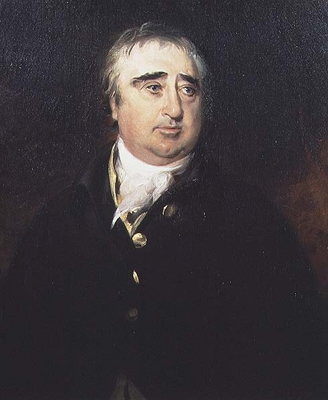
Charles James Fox

I've been putting off profiling Fox for a while, don't ask me why. He is a key player in this blog seeing as I have already mentioned him here, here and here; heck, he already has his own tag.

Fox was the result of the scandalous elopement of Henry Fox, 1st Baron Holland the politician and Lady Caroline Lennox, one of the Lennox sisters, daughter of the Duke of Richmond. He and his brothers were raised in a libertine Whig household with little to no boundaries. Despite not inheriting a title, Fox became a favorite of his father and therefore extremely spoiled. There are stories of Fox burning his father's speeches and smashing his watch, with no consequences.

Fox grew into a fat macaroni, with a taste for gambling, politics, and women. He also liked fashion and in the macaroni tastes, powder his hair different colors every day and wear multi-colored shoes embellished with velvet frills. He was just plain outrageous! Fox began his career in parliament at the tender age of 19. Being a Whig, he tended to oppose anything the monarchy liked and vice-verse. He supported both the French and American revolutions.

Despite his outrageousness, he was extremely well spoken and when he came into contact with Georgiana in 1777 a friendship bloomed that last until both their deaths in 1806. The two friends (and possibly lovers) found in each other a certain understanding and camaraderie that they couldn't find with others in their circle. Both were huge celebrities and common characters in political satires. For the Westminster election of 1784 Georgiana made history by being the first woman to canvass when she canvassed Fox.

King George III and Queen Charlotte hated Fox, so naturally the Prince of Wales was drawn to him. I was about to list other friends of Fox, but the list would be never-ending. So I will just leave it at, if you were a Whig, such as the Duke of Devonshire, you were friends with Fox. Not only did Fox have a lot of famous friends but famous, or infamous, girlfriends. And they were all gorgeous! Aside from rumors about Georgiana, he had relations the most notorious tarts such as Elizabeth Armistead, Grace Dalrymple Elliot, and Mary 'Perdita' Robinson. He was a notorious bachelor, but toward the end of his life suddenly everyone was surprised to find out he had been married to Elizabeth Armistead (a notorious...well, you know) for years. His last words were to her: "It don't signify my dearest, dearest Liz."

Thursday, June 5, 2008

Macaronis and Dandies

Not to be mixed up, Macaronis and Dandies are two very different breeds of flamboyant males.

Macaronis came about toward the late 18th century and were dubbed as such due to their taste in anything "exotic" including rare Italian cuisine. They remind me of the Emo boy of today in that they traveled in groups; wear extremely tight, feminine clothing; are extremely egocentric, and basically annoyed everyone else with their flamboyant presence. They rivaled the ladies with their tall wigs and were even known to powder it different colors like blue, pink, purple, etc. The hung out in gentlemen's clubs such as The Macaroni club and gambled, womanized, sodomized, gossiped, and wasted countless pounds of frivolous things. Charles Fox was once known as a macaroni, despite him being a tad too overweight to look decent in his tight clothing. Fun Fact: Oh course we all know Yankee Doodle's sad attempts at becoming a macaroni but more interesting is that Macaroni Penguins received their name from these fops.


The Dandy was a much rarer breed that appeared at the very end of the 18th century and into the regency period. Dandies were much more mysterious and good-looking. They were the dark, handsome, unobtainable male. Not just anyone can be a dandy it takes a certain "cool" dexterity to pull off. He's always wearing something unique but very fashionable, never says anything to make himself seem weak, is always calm and collected, and never appears to falter. The Dandy makes you fall in love with him although he is untouchable and impenetrable to love, which of course in the literary sense always happens. Two great examples of Dandies are Mr. Darcy and Johnny Depp (as well as his role of the Earl Rochester in The Libertine). Fun Fact: Lauren and I spotted a Dandy in Barcelona and just about melted. Fun Link: www.dandyism.net

Tuesday, June 3, 2008

Because We All Love Dogs...

I could go on forever about dogs. I could go on about my dog, who has nothing to really go on about. I watch dog shows, preach the word of Cesar Milan, and annoy Lauren by announcing the breed of each dog that passes. So I'll try to keep this entry to the minimum because, just about everyone in the 18th century was as big a fan nerd as me when it comes to the canine so there's a lot to go on about.

Take this painting for example. This is Tristam and Fox by Gainsborough. All of London society was paying hundreds of thousands of dollars (in today's terms obviously) to be painted by Gainsborough, this one was on the house. Not only that but it was this painting that was placed in the coveted spot above the mantel. These were Gainsborough's dogs, Fox (center) and Tristam (right) were honored members of the family. Whenever Gainsborough and his wife fought, he would apologize in a letter signed, "Fox" and Fox himself would deliver the letter into Mrs Gainsborough's hands. How adorable is that! I might just have a crush on him, even if he is a dirty Tory.

Speaking of Tories, Fox was named after Charles James Fox, the infamous Whig politician who Georgiana canvassed for in 1784. Given that Gainsborough probably hated Charles Fox's guts it was a name given in humor. Tristam was more literary, he was named after the hero from The Life and Opinions of Tristam Shandy, Gentleman by Laurence Sterne. Based on the title of that book I think thats a great dog name too. My dog is named after Luke Skywalker.