Showing posts with label Art. Show all posts

Friday, July 13, 2018

British and French Print Media's and the Death of Marat

On this day in 1793 a young French woman named Charlotte Corday sought a meeting with the prominent French revolutionary, Jean-Paul Marat, promising information on an future uprising.  After being turned away in the morning, Corday was admitted in the evening to Marat's bathroom, where he conducted business now due to a debilitating skin disease that kept him submerged in his bathtub.  Corday recited the names of dissidents while Marat wrote them down, proclaiming that they would soon be guillotined.  This was Corday's cue; she drew out a kitchen knife hidden in her clothing and stabbed Marat in his chest, killing him almost instantly.  She then calmly waited for the police to apprehend her and was guillotined four days later.

Corday hoped that this act of violence would put an end to the violence of the French Revolution which she felt was now out of hand.  She blamed Marat for the excessive and repulsive bloodshed and she was not alone in this sentiment.  A search in the British Museum's collection of prints reveals a stark contrast in how France and Britain interpreted the assassination. 

Anonymous, 1793

Paul André Basset, 1793

Corday is often portrayed in French prints as a savage (though well-dressed) beast of a woman.
Isaac Cruikshank, 1793

William Holland, 1793

Whereas in British prints she is often depicted as a pretty young woman stabbing a buffoon.  One example is my favourite image of Corday, by James Gillray which portrays her with the dignity and grace of an eighteenth-century heroine. 

There are many depictions of the event by French and British printmakers that survive and of course, not all of them can fit within these two categories.  Notably this French print which is thought to have been printed a few years after the dust had settled and seems to give an accurate representation of Corday's arrest.  She sits patiently, next to victim while men rush in to apprehend her.

Jacques Swebach-Desfontaines, c. 1793-8

Monday, September 11, 2017

The Devonshire Children's Portraits

Henry Howard, Harriet Cavendish, 1798
Henry Howard was a well-known portraitist and history painter in the late- eighteenth and early- nineteenth centuries, who unfortunately doesn't get as much notice nowadays.  Luckily, his visit to the Devonshire family around 1798 resulted in three portraits of Georgiana's three [legitimate] children, Little G, Harryo, and Hart.  Though, I must apologise for the not-so-great quality of the photos of these portraits which now hang in the King William bedroom at Althorp, you can still decipher a certain je ne sais quoi quality to these portraits.  What is it...what is it...oh I know!

Awkward adolescence.


Henry Howard, Georgiana Dorothy Cavendish, 1798
These three portraits were painted when the painfully shy Little G was about 15, the painfully awkward Harryo was about 13, and Hart (who, perhaps, doesn't look totally uncomfortable) was about 9 or 10.  The ages of the daughters, specifically, is of interest because, outside of the rare family group portrait, adolescence is rarely commemorated in portraiture.  Baby and childhood portraits were common enough, and young women were often painted before they were married, or at least when they were in the marriage market.  However, this strange and, somewhat brief, period of youth was rarely portrayed in individual portraits.

 You can almost imagine adult Little G and Harryo cringing every time they passed these portraits; cursing their hair do and choice of headband.  While Little G's posture hints at a discomfort in sitting for her portrait, Harryo's somewhat more confident pose is mismatched with her still childish appearance.  ...and yeah, um, Hart just looks like any elite little boy-heir of the time in his portrait, so I'm just gonna leave that here as a contrast to his poor sisters.  In conclusion, rich eighteenth-century teenagers, they're just like us.  That would make the Devonshires similar to our camera-weilding parents and grandparents, snapping photos of their teenagers out of love, blind to any awkwardness.   When Howard was commissioned with these portraits, by either the Devonshires, or Lady Spencer, the children had already endured a two-year absence of their mother, after she was exiled to the continent by their father upon discovering her pregnant with Earl Grey's child.  It may be safe to say the separation of family members influenced commissioning such portraits.
Henry Howard, William Cavendish, Marquis of Hartington, 1799

If you would like to see these portraits, they are on display in Althorp House, amongst other lovely family pictures of Georgiana and her Spencer siblings as children.  However, if you can't make it to the glorious home, Althorp's website now has an amazing virtual tour.


Friday, July 28, 2017

Sue Williams A’Court

This blog is guilty of regularly featuring glorious artwork from long-dead artists, but sometimes, just sometimes, it ventures into the land of the living [artist].

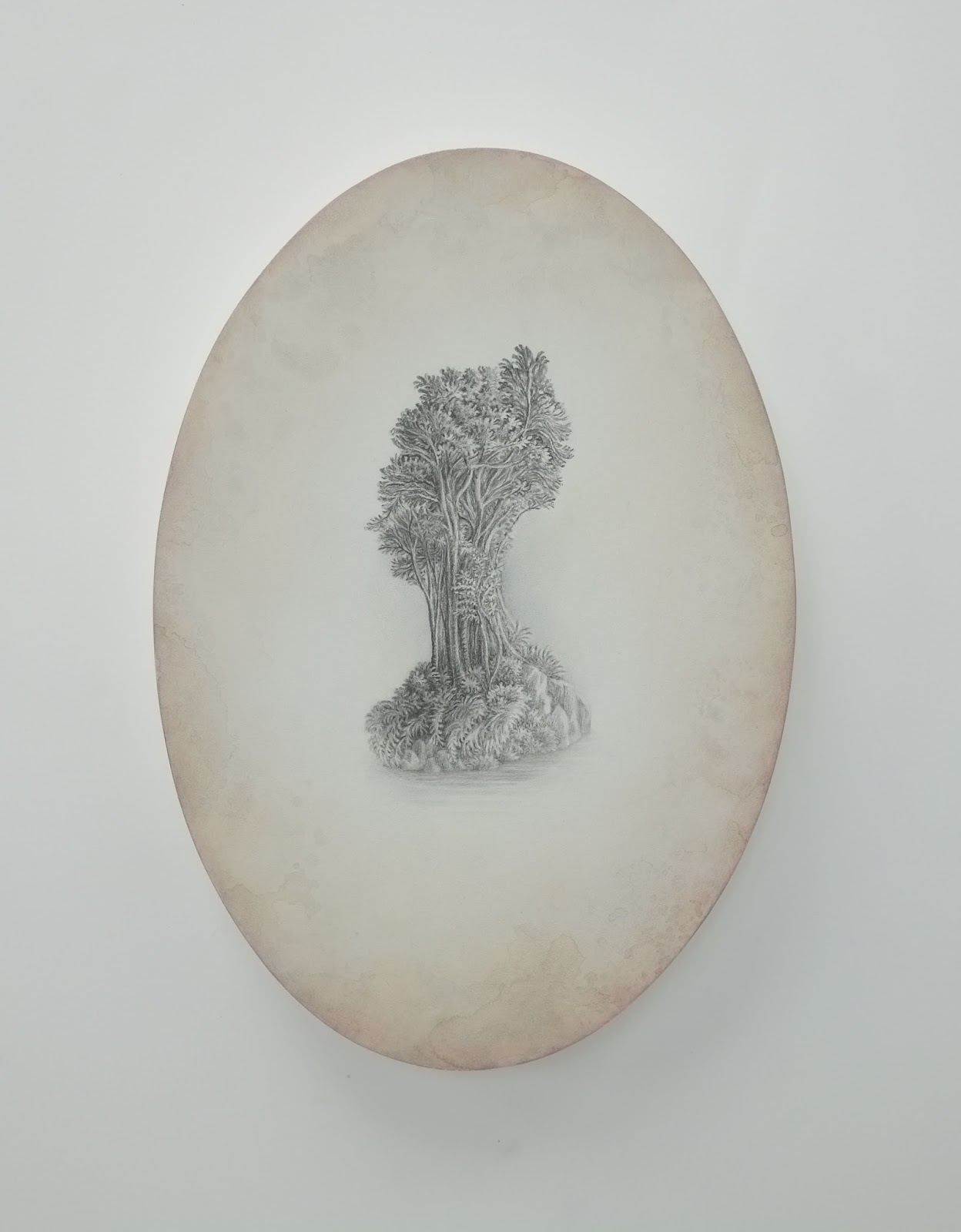
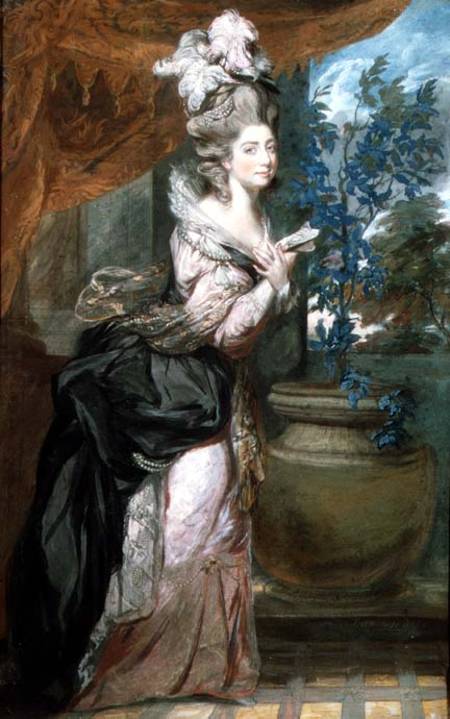
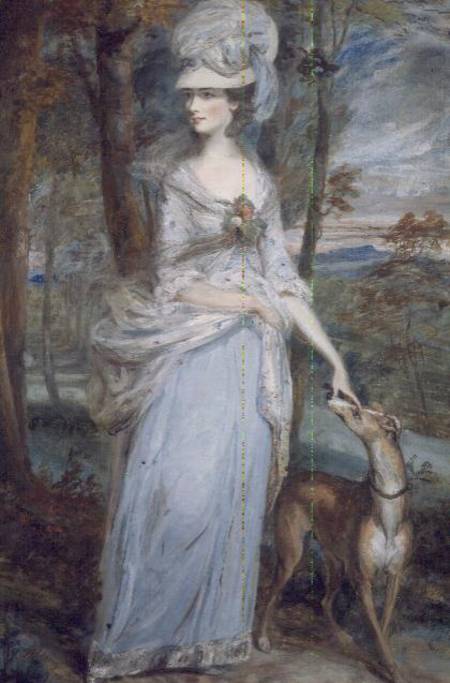
Sue Williams A'Court for example, is an artist whose work is very much inspired by those from the eighteenth century.  Her paintings are reminiscent of Gainsborough landscape prints and I am particularly reminded of them when I look at A'Court's pastoral trees.  Her most recent series blends famous portraits with natural formations.  In the spirit of Giuseppe Arcimboldo, the sixteenth-century painter who formed heads out of vegetables, A'Court transforms tufts of Arcadian landscape into imagery reminiscent of famous portraits.  See if you can pick out the portraits from these works.

After the Duchess of Devonshire

After the Hon Mrs Graham

After Marie Antoinette


The Escape fro Eden series will be exhibited at START Saatchi Gallery, London, 14-17th of September. Her work is currently on view at 'Only Connect' Curated by Prof. David Remfry RA Royal Academy The Keepers House.

Tuesday, July 2, 2013

Charlie Billingham

Another contemporary artist who has come to my attention lately is Charlie Billingham whose paintings are just plain glorious.  Billingham appropriates British satirical prints from our favourite century into his paintings.  Cropping the famous prints, sometimes stretching them, and using bright, exciting colours and loose lines, Billingham takes out the old social and political message (and context all together), adding mystery to these images which, if you've never seen them, could be quite indecipherable to begin with.  Let's take a look.


Billingham has recently had shows at Saatchi Gallery, and I am sure there will be more to come so keep your eyes peeled!

Wednesday, March 13, 2013

The New Phaeton


As women's hair grew bigger and bigger in the the 1770s, many satires honed in on the comedy of these women actually getting to their fashionable events that required such sartorial extravagance.  The New Fashioned Phaeton (1776) was one print which had a suggestion for how society could accommodate such fabulosity.

Sunday, October 7, 2012

Talks on Daniel Gardner's The Three Witches from Macbeth


In a bit of shameless self-promoting news I will be giving papers in both the US and UK on Daniel Gardner's amazing portrait of Georgiana, Lady Melbourne, and Anne Damer; The Three Witches from Macbeth

I'll be in Middleton, CT, USA on October 13 at the NEASECS conference chatting away and then on December 3-4 I will be at Cambridge University for the very exciting conference, Charming Intentions: Occultism, Magic and the History of Art.  If anyone is in the neighborhood I would love to see you there!

Tuesday, June 26, 2012

Hoppner's Drawings of Ladies

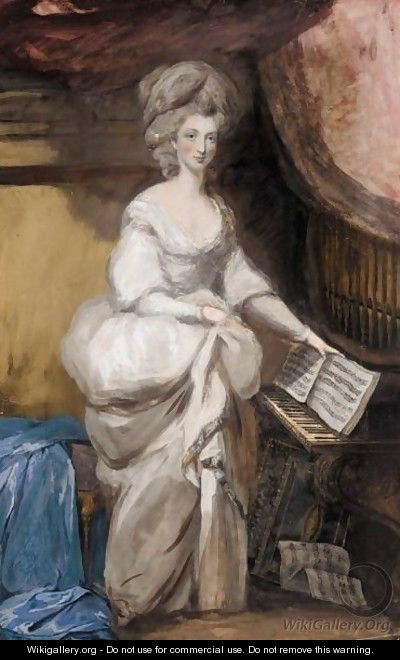
I haven't written extensive on John Hoppner before, which is a shame because he is one of very talented artists to come out of the late eighteenth century.  His parents emigrated to England from Germany to be attendants in the London palaces of Hanovers.  Hoppner's talent as a tot gained the notice of George III who continued to encourage the boy and was his first patron.  George's interest in the boy caused whispers to fly that Hoppner was an illegitimate son of the king, but it is highly unlikely.  Hoppner painted some of the great personalities of the time but it is his drawings that I find particularly captivating. 

Georgiana Duchess of Devonshire, 1784
Sarah, Countess of Tyrconnell, 1792
Mary 'Perdita' Robinson, c1783
Unknown Lady, 1785
Lavinia Banks
Catherine Bulteel, 1781

A Standing Woman
Mrs Houlton, 1801
Lady Charlotte Maria Waldegrave, 1780
Jane Douce, 1804-6

Thursday, April 12, 2012

Favorites

Anon. The breeches in the Fiera Maschereta, 1775

Thursday, March 8, 2012

Yinka Shonibare

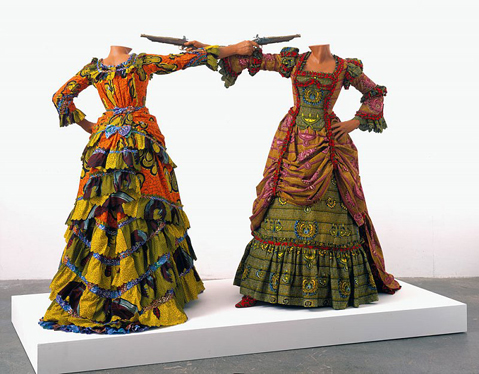
I'm long overdue in a post on the amazing contemporary artist Yinka Shonibare whose work is as breathtaking as it is thought-provoking.  Shonibare is a London sculptural and instillation artist who deals with the theme of class and globalization, more specifically the complicated relationship between Africa and Europe.  So you will often seen African-style textiles on his sculptures which take the form of something commonly European. 

Long before he had his giant Ship in a Bottle sculpture in Trafalgar Square, Shonibare was playing with eighteenth century imagery, with astonishing results:

Here are some of his work that reference eighteenth century paintings.  Can you recognize all of them?


Others are just plain fantastic:

Monday, October 3, 2011

Daniel Gardner

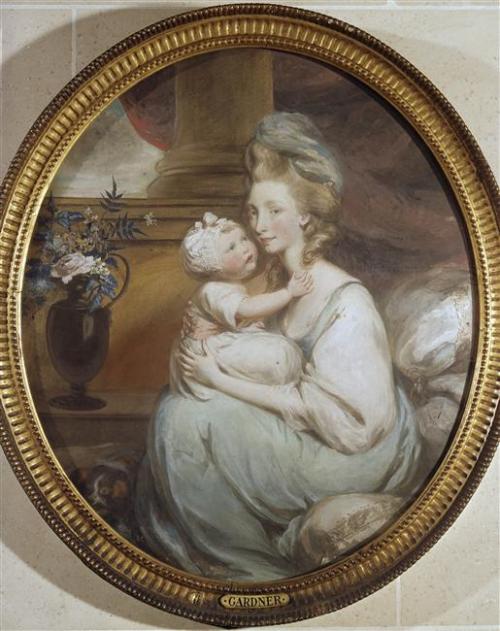
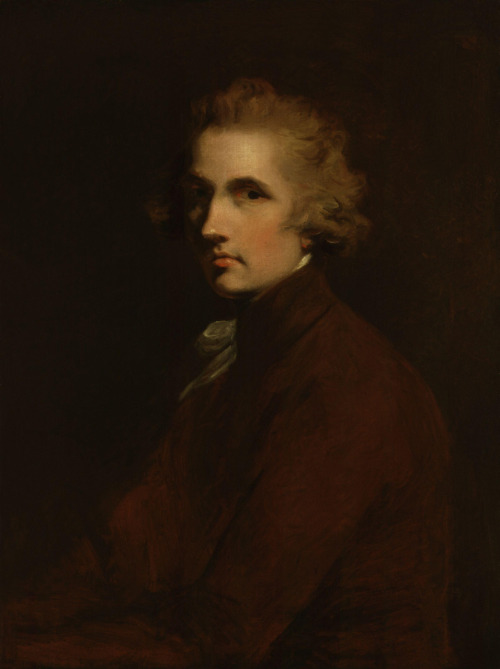
I've become obsessed, as of late, with the lesser-known artist Daniel Gardner.  Gardner is an interesting individual; anal-retentive by nature, his artwork, by contrast, is characterized by a freedom of brushstrokes and a dismissal of proportion rules.  Gardner had some training with Joshua Reynolds and may have even worked on some of the leafy backgrounds of some of Reynolds' work.  However his technique is all his own and a bit mysterious since he only allowed the sitter in the room with him while he painted and wouldn't allow them to see the work in progress.  He also is said to have been pretty experimental with his painting, even going through the woods picking up odds and to make shades of paint. The results of his short-lived career (he retired comfortably during the peak of it) are stunningly beautiful.  He can be characterized by his unique shades and creative group portraits.

Sir William Heathcote, Rev William Heathcote, and Major Gilbert out Hunting
Mary Unthoff
Albinia Countess of Buckinghamshire
The Taylor Family
Mrs A Clarke
Miss Elliott as Circe
Lord Halifax and his Secretaries
Emma Countess Tankerville with her Daughters
Mrs. Paul Prickett
Portrait of an Actress, 1775
Lady Auckland and her Daughter
Elizabeth Elstone
Elizabeth Farren later Countess of Derby
Lady Rushout with her Three Elder Children, c 1773-5
Lady Melbourne the Duchess of Devonshire and Anne Damer as the Witches from Macbeth, 1775
Self-Portrait, c 1770