

Showing posts with label Crime and Punishment. Show all posts
Showing posts with label Crime and Punishment. Show all posts
Tuesday, July 26, 2011
Voices from the Old Bailey
Monday, March 28, 2011
Fashionably Late
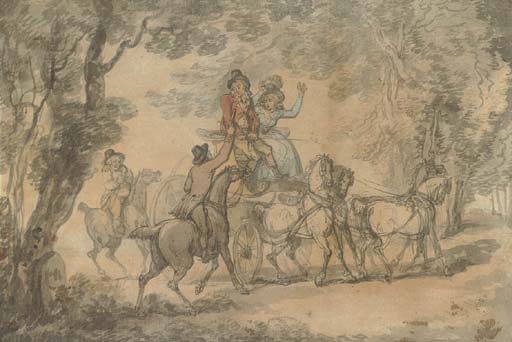
The Duchess of Atholl and her sister, Mrs Mary Graham were attending a party with Mary's husband Mr. Thomas Graham. The coach came to a sudden stop on Park Lane and the three passengers were shocked when the person opening the door was not the footman but a highwayman wielding a gun. Two other ruffians held the horses while the pistol-wielder demanded jewels and money. Unbeknownst to the robber, Mr. Graham had a history of heroism when it came to his wife and her jewels. He had once ridden all night to retrieve her jewelery box for a ball she was attending, so a brute waving his pistol in the face of his wife was certainly not going to get away with it. The robber also didn't see Mr. Graham in the corner of the coach amongst all the puffy skirts of the ladies. With jedi-like reflexes Mr. Graham lept across the ladies and dove for the surprised thief and proceeded to wrestle the pistol away from the thief on the ground. The two men holding the horses wisely ran away when they realized the coach contained an action hero. The comontion of the scuffle and the women's alarm drew the attention of the watch who relieved Mr. Graham of his heroic duties and took the purpetrator into custody.

When everything was straightened away the group realized that this unneccesary affair had made them late for the party. They proceeded to their destination where Mr Graham bashfully shadowed the ladies the whole night. He wasn't being overly protective, he simply meant to use his wife's skirt to hide his muddy shoes and stockings that he had aquired in the fight.
Thursday, March 18, 2010
The Watchmen
 I hope everyone was good last night and there were no altercations with the authorities while you were out celebrating merrily! Now if this was the early 18th century, the banter of St Patrick's Day would be just another night on the streets of London which were polluted not only with garbage, but noise and shady characters. All this, and no police force! So how was justice upheld on the dangerous streets of London?
It may be hard to believe now with police officers' 20 years and then retirement incentive, but those who patrolled the streets of London were volunteers. You could compare them to a neighborhood watch today. At the head of this operation was a constable. This man or woman was assigned the year-long post, without pay and without usually knowing exactly what they were doing. No prior experience needed. The constables set up the night watch or The Watch which would patrol the streets and apprehend any wrong doers and put them before the Magistrate or Justice of the Peace. The Watch would act as our police do now, but did so without pay. By 1737 George II began paying some watchmen for their much needed services.
Believe it or not, this system was not without its imperfections. One of the people taking note of the shortcomings was author Henry Fielding, who had penned Tom Jones. When Fielding was elected London's Chief Magistrate in the late 1740s he took the position seriously and attempted to implement a better system of keeping London safe. Using Magistrate money supplied from the government, Fielding paid a small group of men to police London. They operated out of his Bow Street Magistrates office so they were given the name The Bow Street Runners. The monetary incentive seemed to make fo
 r a better night watch than The Watch. The Bow Street Runners are sometimes created with the title of the first professional police force. They even went on to undertake missions that would take them across the country to make arrests.
The Watch and Bow Street Runners remained up and running into the 19th century. It wasn't until 1829 that the a government funded official police force appeared, although I suspect both of the prior enforcement organization hadn't completely diminished everywhere. You could always use some veteran crime-fighters to show you the ropes!
Friday, September 18, 2009
A Murderess' Tale
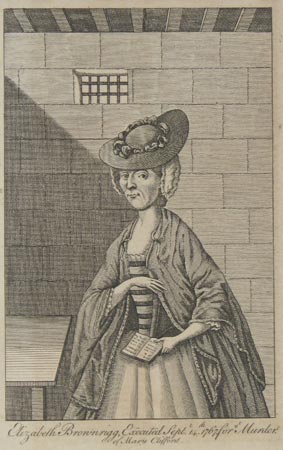 Every so often a story surfaces of such a horrible case of abuse that a nation is shocked by the tale. We are memorized by a person's cruelty and continue to retell of the abuse in the form of books or movies.
Such was the case of the orphan servant girl, Mary Clifford.
When the Foundling Hospital (more on that later) opened it's doors to the orphans in London, it did so with the idea of teaching and reformation, in order to better society. Children would be apprenticed when they reached the appropriate age so that they could learn skills that would earn them a living. So that is how Mary Clifford and Mary Mitchell came to be in the service of Elizabeth Brownrigg as domestic servants.
Elizabeth had a good reputation as a working class woman. She was a respected midwife and her husband a successful plumber. Because of this she was chosen to overseen children training to be servants. One day the Foundling Hospital found a girl on their doorstep who they had entrusted to Elizabeth's care. She was frightened and had run away from her employer, complaining of abuse. After a medical examination the Governors found the girl was telling the truth and issued a warning to Elizabeth's husband, that if he didn't curtail his wife's violence upon her servants they would be forced to take action.
 Instead of heeding the warning, Elizabeth seemed to grow more abusive, taking her anger out on Mary Clifford and Mary Mitchell. She punished the servants for my minor infractions by stripping them naked and tying them to a ceiling beam so she could whip them. Mitchell, like the previous servant, ran away to seek refuge but was brought back by Elizabeth's husband. The abuse continued and grew even worse for Clifford. Mary Clifford was stripped of her clothing, forced to sleep in a coal hole, and whipped for long durations, sometimes up to a whole day, while being strung up from the ceiling rafter. She was leashed around the neck with a chain to assure that she wouldn't try to escape. Because of the constant abuse, the girls' wounds never healed and became infected. Finally, the Brownriggs' neighbors reported their suspicions of the abuse to the Foundling Hospital. Now it was Elizabeth's turn to run away. She left with her son while her husband stayed behind and was consequently arrested. The girls were rescued and hospitalized, but it was a little too late for poor Mary Clifford who died within a few days from the infections.
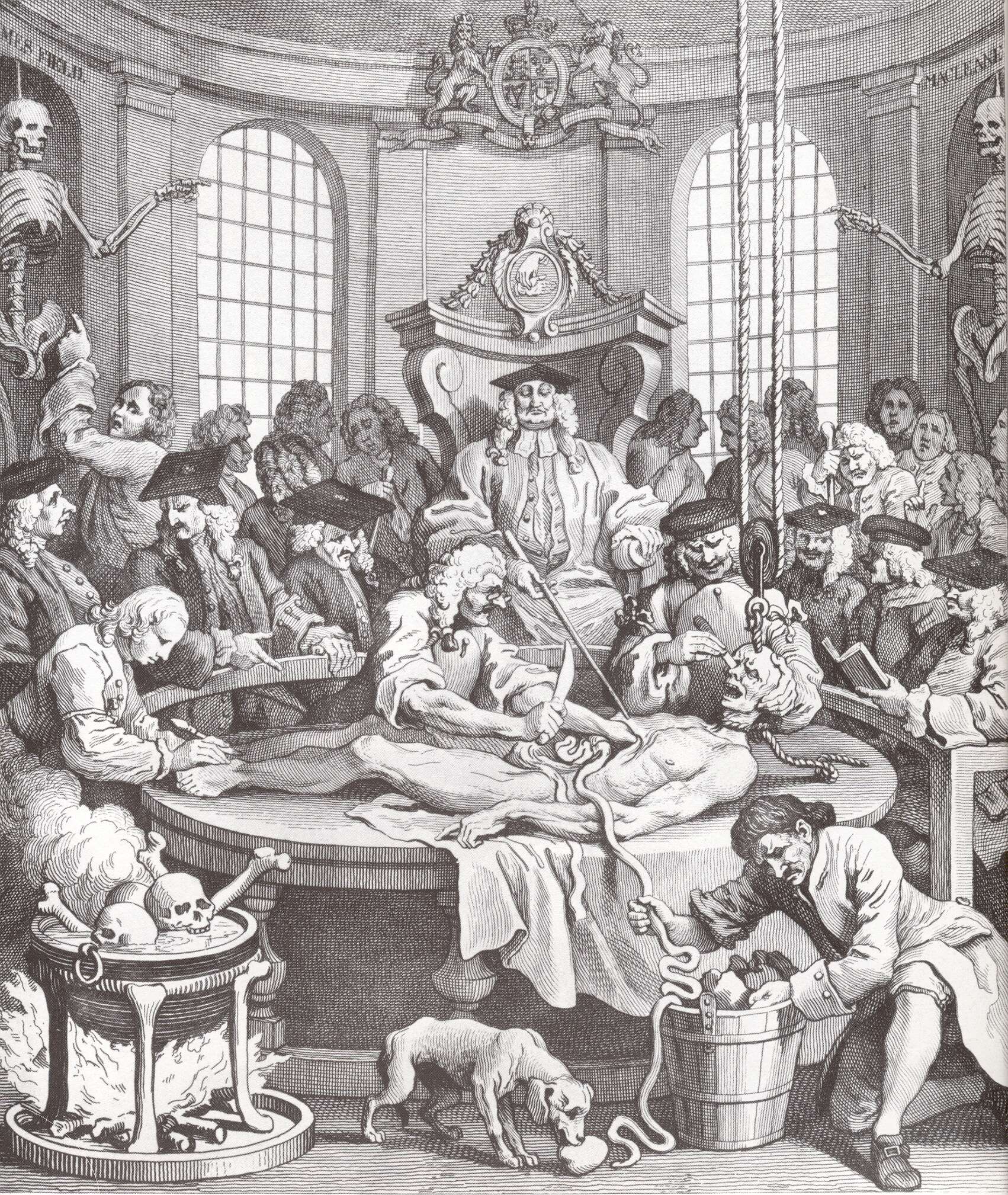
Shortly afterward a man was reading about the case in the newspaper when he realized his latest lodgers matched the description of Elizabeth and her son. He immediately contacted the constable and the Brownriggs were sent back to London to be brought to justice. The two Mr. Brownriggs were found guilty of misdemeanors and sentenced to six months in prison. Elizabeth did not get off so easy and was sentenced to death for her crimes of torture and murder. She was hanged at Tyburn and her body dissected for science (just as this Hogarth print shows, crime gets your body dedicated to science) and her skeleton was hung on display in the Surgeon's Hall as a reminder of the justice system.
Friday, May 15, 2009
Tart of the Week: Margaret Caroline Rudd

Now when I write my weekly discourse on our lovable tarts, I try to take a neutral or even positive standpoint, unless they're Bess Foster. But this tart, well, she's just despicable. Her abilities at deception, bitchiness, and being a total slut go beyond the normal tartly powers.
Raised in suburban mediocrity in a town outside Belfast, Margaret Caroline Youngson was born around the year 1744. As with most young girls of suburbia she dreamed to get away and live in the big city. After all, she was meant for bigger things. Caroline also lived with the delusion that she was descended from Scottish gentry, her mother's maiden name being Stewart. Although this was highly unlikely, she managed to acquire some papers tracing her family back to the Stewarts and would constantly brag about her genes. She also managed to cause a stir wherever she went. While at school she caused so much trouble that the other students' parents threatened to remove their children if Caroline wasn't expelled. She continued to scandalize the people Lurgan by being quite popular with the young men of the town. Already as a teen Caroline was not being received in polite society because of her actions. Time to move on.
Caroline saw her opportunity to escape when a regiment of foot soldiers were stationed in her town. Ten days after meeting with the dashing lieutenant, Valentine Rudd, the two announced their engagement. The town of Lurgan rejoiced, they were finally rid of her! But alas, they didn't move immediately. This wasn't what Caroline had planned at all. What's the point of getting married if you can't get out of your po-dunc town? She continued to flirt with the other officers.
When the Rudds finally moved to London, Caroline let loose. She racked up debt and trouble immediately. Rudd found he had his hands full with his young wife. Then suddenly she was no longer there. She ran away with another man. You may think that this news would cause Rudd to put up his hands and say "forget that troubling wench." But oh, it wasn't that easy. To add to his already acquired debts, Caroline would just send her bills to her husband, forcing the poor guy to go on a wild goose chase to find his wife and her lover before she put him in debtor's prison. The authorities found Rudd before he could find his wife and that is exactly where he was put. She continued to bill him to ruin. After his release from prison Rudd was forced to flee the country in order to live out the rest of his life a free man. Caroline brought him to ruin...but there were more lives to destroy.
Enter the brothers Perreau. Identical twins who could not be more opposite in personality. Robert was an enterprising apothecary and businessman. He had a good marriage with his wife Henrietta and loving children. Daniel on the other hand was more rakish and would rather gamble than work. He was constantly running and the wrong crowd and in debt. So of course he met Caroline and the two began a relationship. Soon she had moved in, was calling herself Mrs. Perreau and pregnant with Daniel's child. All was fine until Caroline, always short of cash, decided to forge a bond and have the honorable Robert attempt to cash it in instead of her boyfriend, Daniel. It is highly illegal to write a document stating a rich guy will cover your expenses, when he has no idea who you even are.
For brevity's sake, this caused quite the problem. Questions were asked, investigations initiated and both Perreaus and Caroline were thrown in jail for forgery while the courts tried to figure out who was responsible for the forged bond. It was time for Caroline to use her cunning skills to save her own butt. Screw the man she lives and has a child with, and his innocent bystander brother who thought he was just doing a favor by delivering what he thought to be genuine bond. Operating from her office in JAIL Caroline manipulated both the press and the courts to be in her favor. After all, how could a mere woman be possible of this level of deception? The Perreaus' trial was first and they were found guilty and sentenced to death by hanging. Caroline's trial consisted of her writing notes to her lawyer throughout and getting off scott-free. Despite people (including Daniel) publicly appealing to the King for Robert's release from the hangman's noose and even his wife beseeching the queen woman to woman, the two brothers were sent to the gallows. Caroline let the two brothers hang for her crime.
Caroline laid low for a while, but unwisely didn't disappear from public. She next preyed on James Boswell who gleefully dove into a full-fledged affair with the "diablo lady." It took him a while, but Boswell, along with the public began to realize that Caroline should be avoided at all costs. The only way to destroy her was cut her off from the attention she thrived on. Caroline made a few more attempts at schemes, but no one trusted or liked her anymore. After ruining the lives of many, she finally died in obscurity on 4 February 1797.
Wednesday, December 3, 2008
Debtor's Prison
 Gambling and debt were quite rampant in the 18th century. But no one really cared. That is, until they ended up in debtor's prison. Debtor's prison was like banking overdraw fees: you don't have any money left so we will charge you for it. One of the biggest debtor's prisons was Fleet Prison, and it was a money-making machine.
Prisons such as Fleet, worked differently than our contemporary prison. First of all, whole families would live there with their imprisoned head-of-the-household. They could also come and go as they pleased...as long as they paid the turnkey. In fact, the prisoners had to pay for everything: food and lodging, to get out of shackles, etc. If you were lucky enough to be given living quarters with window-access to the street you could beg money from passers-by. Fleet even had a grille built in to a wall so it was easier for prisoners to beg. I'm sure Londoners knew to avoid going down Farrigdon Street to escape the pleas for alms. Like our modern-prisons, Fleet
 had an exercise yard called the racquet ground, so prisoners and their families could get some fresh air.
Although, more freedoms were allowed in these prisons compared to what we have today, debtor's prison was no holiday in the sun. The living conditions were sub par at best, the company was not always good, and staying there did not necessarily get you out of debt. As soon as prisoners were able to get released, their first stop was the gaming table. Stays in prison just taught debtors not to get caught next time!
Subscribe to:
Posts (Atom)