Showing posts with label David Garrick. Show all posts

Wednesday, September 28, 2011

On Georgiana

"Her Grace of Devonshire is a most enchanting, Exquisite beautiful Young Creature.  Were I five and twenty I could go mad about her, as I am past five and fifty I would only suffer martyrdom for her."
-David Garrick to Henry Bate

Sunday, February 21, 2010

Yay or Nay? David Garrick

Another Yay it was for Mrs. William Moseley, but then again that should be expected since it is a rarity to find someone who doesn't enjoy a good riding habit! Still, enough of this girly-wear, we have been without a male model for some time. Let's get things more masculine while still keeping it simple.


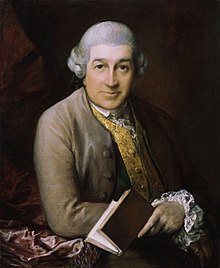
Thomas Gainsborough paints a young David Garrick (1742) in fawn and ivory with simple embroidered details, a high neck, and extra large coat cuffs to show off some sleeve flounce. Yay or Nay?

[Private Collection]

Friday, April 17, 2009

Tart of the Week: Kitty Clive


Catherine Raftor was born in 1711 to a family neither well-off, nor poor. Her Irish father actually served Louis XIV in the french army. However, a soldier's salary was not great means of income so by the age of seventeen Kitty was pursuing acting since she seemed to have a knack for it. It also didn't hurt that she was pretty as well. Kitty was blessed with a light complexion, dark hair, and light eyes. But underneath the pretty facade Kitty had a bad temper that would become slightly notorious.

Kitty, being a Londonite, quickly secured a job at Drury Lane. Her story is similar to many other tartly actresses. Being young and full of life, she quickly grew in popularity and had an affinity for comedic acting. So of course, Kitty decided to put a deterrent on her fame by getting married to a George Clive. What is interesting about Kitty is how she was able to keep most of her private life under wraps. Her marriage quickly disintegrated but instead of George abusing or abandoning her, the two agreed to a mutual separation. They probably just grew sick of each other!

Luckily for Kitty, her dappling with marriage didn't seen to hurt her career. She continued on stage as Mrs. Clive. Of course, Kitty had her dalliances with men, and the press was always suspicious; but Kitty was always clever enough to manage to keep her affairs under wraps. Soon she was beginning to get noticed for a singing talent as well. One of the people who noticed her was Handel who she became close friends with. Another person whose friendship couldn't be avoided on Drury Lane was David Garrick. He also noticed Kitty's talent. She became one of his original company members in 1747. Kitty's temper tried Garrick's patience many a time, but she stayed with the company for twenty-two years.

After over forty healthy years on stage Kitty decided it was time for her to let the new pretty little actresses try their hand in the business. She retired to a cozy house in Twickenham that her friend Horace Walpole had secured for her. He called it Clive's Den but she dubbed it "Little Strawberry Hill" after his estate. Kitty died in 1785, after 75 happy years of life.

Friday, April 3, 2009

Tart of the Week: George Anne Bellamy


No, George Anne Bellamy isn't England's version of the Chevalier d'Eon. George Anne was very much a woman and was born in eastern Ireland in 1727. Her mother was the very unfortunate Miss Seal who was not only a Quaker but a mere schoolgirl when she discovered she was pregnant by Lord Trywaley. Miss Seal had already conducted an affair with the Irish aristocrat which resulted in a son. Trywaley went away looking for a rich wife before he returned to the old fling. However, Trywaley still needed a wife and he went to Lisbon in search of one, inviting Miss Seal to come with him. When she realized his true intentions in Portugal, Miss Seal quickly returned to England and married a sailor by the name of Bellamy. But when baby George Anne was born not long after the wedding Bellamy soon disappeared too.

The series of unlucky events continued at George Anne's christening. The hard of hearing priest didn't quite get the name of "Georgiana" when her mother said it. For whatever reason he heard "George Anne" and so became the girl named George.

Unlike many bastard daughters of aristocrats, George Anne had a a privileged upbringing. Her father sent her to France to receive her education like every other proper young English lady. Given this upbringing you would think George Anne would try to nab herself a rich husband and settle down to a wealthy lifestyle. But no, she took a path she was born into rather than the opportunity her father presented to her. She moved back in with her mother who convinced her to pursue acting, figuring George Anne's beauty could make some fast cash. After playing Monimia in The Orphan at Covent Garden George Anne met with the success her mother hoped for and many parts soon followed.

Success was sweet for "Mrs. Bellamy." She caught David Garrick's eye which, of course meant instant success and celebrity treatment. She also became his leading lady since the position was now open due to his recent breakup with Mrs Cibber. George Anne would be seen around town partying it up with her male-friends. Naughty! Not only did she make many friends but enemies as well. There was a notorious rivalry between her and fellow Irish actress, Peg Woffington that supposedly began when they were both in the (appropriately named) Rival Queens. The rumour mills cited jealousy and gowns as to the cause of the rift, but who could know for sure. The rivalry ended when Peg was on her deathbed and she called George Anne so they could kiss and makeup.

Of course, the good life couldn't last forever. George Anne's dapples with men led to pregnancies without marriages. She also was cursed with faded beauty. George Anne's wilted beauty meant no one was interested in seeing her on stage anymore. Meanwhile, debts from her frivilous celebrity days were piling up and debtor's prison loomed in the distance.

In an act of desperation George Anne wrote her revealing memoirs, An Apology for the Life of George Anne Bellamy. As the title implies, the book was an autobiography of degregation at the author's social expense. Although the books sold, it was a little too late to save her from monetary ruin. George Anne died not too long afterwards, a fallen woman, her last moments spent hidden in shame.
Friday, November 14, 2008

Tart of the Week: Susannah Maria Arne


Susannah was born into the musical household of the Arne family in 1714. Actually, the household wasn't that musical at all, Susannah was the daughter of an upholster who was the son of an upholster. Her brother, Thomas, who was four years older than her, had an aptitude for composition and managed to escape the family business when a composer noticed his talent and took him under his wing. Thomas' escape must have inspired both of his siblings, who followed him into the music business. Susannah was noted for her beautiful contralto voice so it was no contest that her brother cast her in his first opera, Rosamund, which debuted her to the London stage in 1733.

Susannah and her voice quickly caught everyone's attention. One person who was especially impressed by the young talent was Handel who wrote in parts in Messiah and Samson especially for Miss Arne. He even took it upon himself to tutor her in music and perfect her voice for her rolls. Since Susannah could not read music, Handel would tirelessly teach her her parts note by note.

In 1734 Susannah married Theophilus Cibber the actor-progeny of theatre big-wig Colley Cibber of Drury Lane. As you may have guessed already, the marriage turned out to be a disaster. Cibber's spend-thrift ways led him to sell some of his wife's possessions in order to settle his debts. Mrs Cibbers was happy with her successful career on stage but her incompetent husband was making her miserable.

In order to relieve some of their debts the Cibbers took on a tenant by the name of William Sloper. However, this did little to lift the escalating debts and Cibber began scheming more ways to acquire money. Sloper not only had to pay rent but also full maintenance for all three of them. It was possibly at this point that Mr Sloper was beginning to look really good to Susannah. Not only was he well-off, he wasn't stealing her clothes and making her miserable. Susannah began a relationship with the tenant which her husband seemed to endorse. That is, until he slapped Sloper with a crim con. (divorce/adultery) lawsuit in 1738. As you can imagine, the trial was the talk of the town. But as the charges were brought forth, evidence also began to appear that was not in Cibber's favour. It seemed as thought the affair may have actually been a ménage à trois between all three parties. In fact, some gossip suggests that Cibber initiated the affair between his wife and tenant by forcing her to sleep with him at gunpoint. The jury was not impressed and awarded Cibber a measly £10 instead of the £5,000 he expected.

After the trial Susannah ran away with Sloper and the two had a child together. Meanwhile, Cibber was out for blood and filed a counter-suit. This time he was awarded £500 of the £10,000 he expected. His reputation was forever ruined and he later died in a shipwreck on his way to Dublin.

Although Susannah's reputation was now tarnished she continued to be successful on stage and still worked with Handel. She lived in Dublin until the gossip died down and then moved back to London to continue with her career on Drury Lane. Here she was able to leave her nasty past behind her and work alongside David Garrick as a tragic actress. When she died in 1766 she was honoured in death by being one of the few actresses to be buried in Westminster Abbey.

Friday, October 10, 2008

Tart of the Week: Peg Woffington


Margaret Woffington's career began began at an early age when her bricklayer father suddenly died. She roamed the streets of Dublin singling for money or selling watercress door to door to support her family. It was in these humble beginnings that she was 'discovered' at the age of ten, and given her start on the stage.

For about 10 years Peg acted and danced in various theaters around Dublin in order to get by. Her big break came in 1737 (probably age 17) when her Ophelia met great acclaim in a production of Hamlet. This allowed her the prestige and money to travel to London in 1740 to attempt to make it big there. She luckily was immediately met with success, although this could be because she took a breeches role. It never hurts to show some skin in showbiz!

Not only did Peg show a skill in playing breeches roles, which she was given quite frequently, but she took to playing aristocrats well. An interesting fact considering her voice was described as "harsh." Peg quickly gained the reputation of being a leading comic actress and began having friends in high places such as the Gunning Sisters and one of the most famous actors in history, David Garrick. In fact, a love bloomed between the two thespians and they lived together (in sin!) for a while. The couple had planned to wed but Peg ended up dumping him.

She went on to have numerous public affairs with men in high places such as the Earl of Darnley and MP Charles Hanbury Williams but managed not to have any children. A smart tart, I say! Actually she was known for being a kind, genuine person, however tart-like. In fact, she was so well-liked she was even the president of Thomas Sheridan's Beefsteak Club in Dublin. Normally clubs were a place for men to gamble and and be debaucherous so women were not allowed. Peg was actually the only woman member in the Beefsteak Club as well as President. It was whispered, however, that Peg didn't get along with fellow popular actresses George Anne Bellamy and Kitty Clive. Many heated arguments are said to have erupted between the actresses up until Peg's death.

Like any good actress, Peg left with a dramatic exit. While playing Rosalind in a Covent Garden production of As You Like It, she suddenly collapsed and was said to be paralyzed. Although she recovered from her accident, it forced her retirement. She spent the next three years in ill-health under the care of an army officer, until she died in 1760 at the age of 40.