Showing posts with label Death. Show all posts

Tuesday, July 12, 2011

The Hamilton Burr Duel: A Tale of New York Politicians Suitable for MTV Reality Programing

Many know that Alexander Hamilton was killed by Aaron Burr in duel and yet do not know the particulars of the circumstances.  For example, Burr was actually serving as vice president at the time when he killed Hamilton in the duel which sheds some light on just how far a political squabble can go.

The Duelers 
Alexander Hamilton- Federalist, Guy on $10 bill, New Yorker, Columbia graduate, war hero, politician and first ever Secretary of Treasury. 
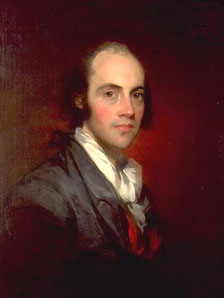
Aaron Burr- Republican, Jersey boy, New York politician, Princeton graduate, Mary Wollstonecraft fan and femenist, and third Vice President.

The Deal
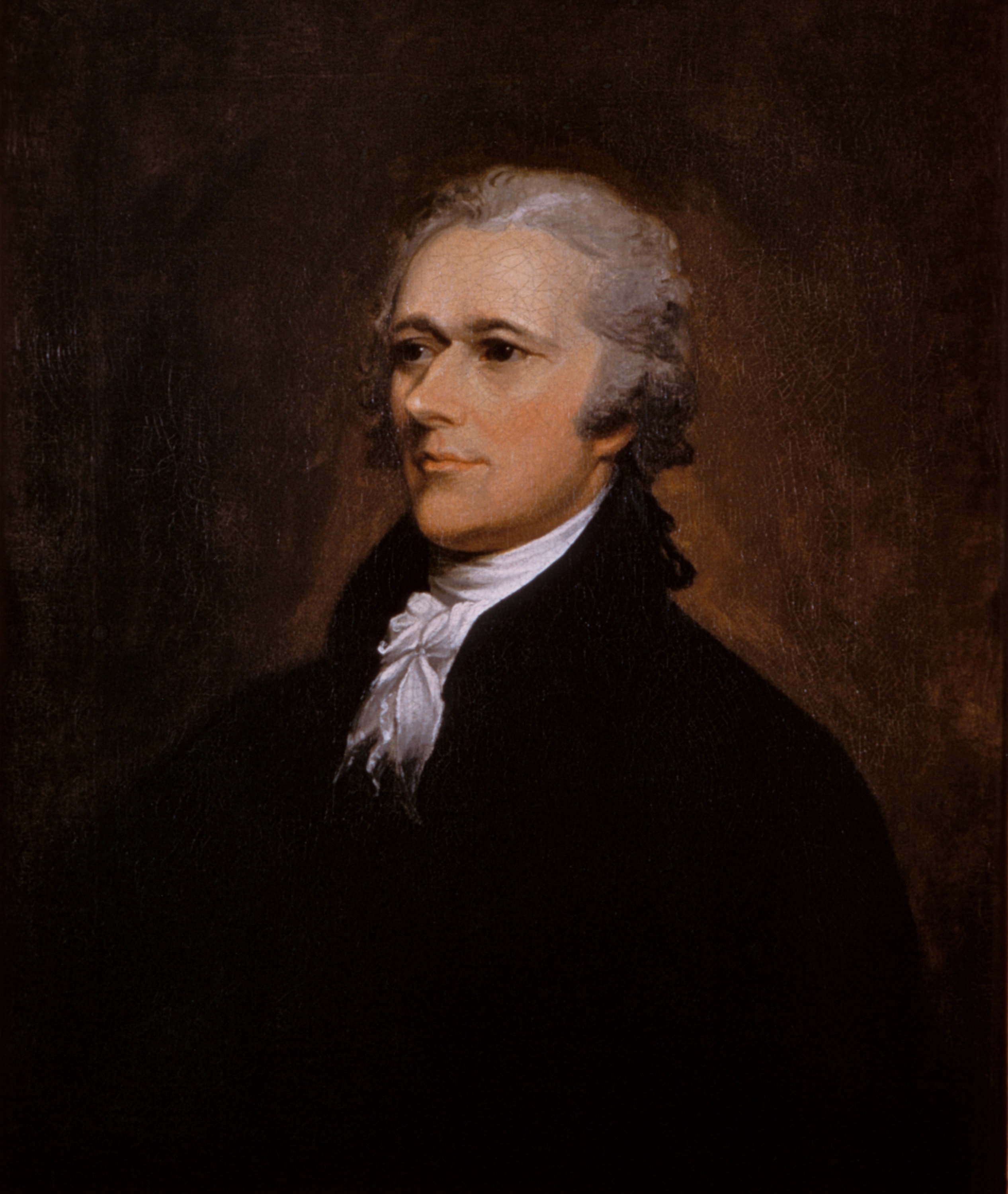
Here's the skinny.  Aaron Burr, like Benedict Arnold gets painted in impressionable little American children's heads as this bad guy when they learn their fundamental history.  Yes, you can easily counter with the fact that he is a murderer but one must look at the background before they cast any stones.  Burr and Hamilton had it out for each other from the start.  The two New York politicians were very competitive with each other and had a long history of taking (figurative) punches at one another.  Burr saw that Hamilton's true opinion on John Adams was published (obtained from papers that were supposed to be secret) and Hamilton saw that Burr didn't receive the presidency when he tied with Thomas Jefferson in votes.  So both founding fathers had questionable conduct in the workplace but outside it were pretty decent guys (Burr loved Wollstonecraft so much he had her portrait hung above his mantel and had his daughter taught based on her teachings, along with how to shoot on horseback, so he was actually quite awesome.)

The Duel
Everything came to a head more than a decade after the two began officially hating each other.  The year was 1804 and the race for New York governor was on.  Burr wanted the position so badly that he ran as an independent and the thought of Burr running his beloved New York state was sickening to Hamilton.  Once again Hamilton did everything in his power to dissuade the voting in favor of Burr and was pleased when things turned out in his favor.  But Hamilton couldn't just leave things as they were; nope, he was just as much of a grudge-queen as I, and continued to bad mouth the defeated Burr.  These ramblings were published in an Albany newspaper.

Embarrassed, ticked-off, and hoping that a duel would revive his political career, Burr demanded satisfaction.  Hamilton didn't want to fight, but what could he do? If he didn't duel it would be like saying Burr was right, and he (Hamilton) had no honor.  No that wouldn't do at all!  So at dawn on July 11, 1804 the two met on the dueling grounds of Weehawken, New Jersey on which, three years previously, Hamilton's son had died in a duel.  The two shot, Hamilton's bullet hit a branch above Burr and Burr's bullet hit Hamilton.  Much debate has carried on through the ages about whether Hamilton misfired on purpose (a common dueling practice) but Burr would tell you that would be, "Contemptible, if true."

Hamilton died of the abdominal wound the on the following day, July 12.   Burr was charged with two counts of murder and treason.  Needless to say, after his term as Vice President ended he never held a political office again.  Burr shot his career dead along with Hamilton, so one could easily argue that Hamilton got the last word in this famous political rivalry.

For a drunken recap of the story check out the 4th video on this post.

Tuesday, August 3, 2010

Tyburn, the 'Triple Tree' of Death


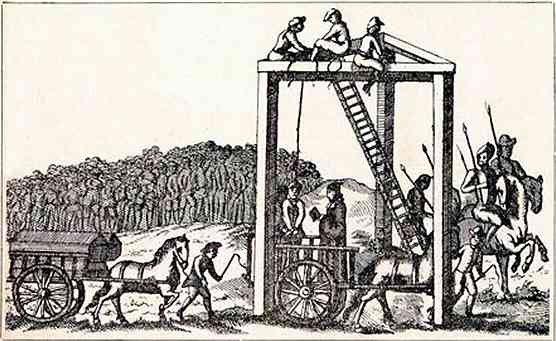
For those familiar with London, "Marble Arch" is a familiar facet of the city, whether you know it by the tube stop or by the randomly placed monument.  But long before tourists were wandering the area to gaze on the triumphal arch they were gathering by the hundreds to witness public executions.  For the current location of Marble Arch is roughly located in the same place as the Triple Tree, the massive gallows designed for multiple and very public hangings. 

While many an 18th century highwayman met his end at Tyburn the site had been used for hangings since the medieval period.  At first people would be lynched on the trees bordering the Tyburn river (a lost river which supposedly now flows underground).  In 1571 a more efficient gallows was constructed, its unique form came to be iconic.  Three posts eighteen feet high reached to the sky and met at the top to form a triangle.  The horizontal crossbeams were nine feet across allowing for multiple people to be strung across.  Not only was this design meant to be efficient in executing multiple people (rarely was there only one person executed at Tyburn) but it was also created with public viewing kept in mind.

Public executions were always a popular event to attend and Tyburn hangings always drew in a big crowd.  William Hogarth immortalized the Tyburn crowds in his Industry and Idleness series.  Monday was the big execution day, and for a fee you could get a seat in the stands specially built just to attend the hangings.  Other spectators had to push and shove in the crowd to get a glimpse while pickpockets and prostitutes made use of the spectacle to get some money in their pockets.

Although the posts were extremely high, the condemned wouldn't fall far.  The long fall, resulting in a broken neck from hanging wasn't utilized in public hangings until the mid 19th century.  Criminals were drawn up to the gallows in a cart with a noose around their neck.  The horse would be then be whipped so that the cart would be drawn away from the condemned and they would be left to swing and suffocate to their death.  A tip to the carter would hopefully get the horses going slightly faster...not that it mattered much.  Family members or hired persons would then grab on to the hanging bodies to add their weight in order to make the death swifter, otherwise a long agonizing death was imminent.

After the execution was performed the hangman would get your clothing, so choose your last outfit wisely (a nice waistcoat could mean a quicker execution).  The bodies would then be given to the family to be buried or the hospital to be dissected. 

The legendary triple tree was taken down in 1759 because it obstructed the roads.  The large gallows was replaced by a movable one yet the spectacle of the hangings was still causing traffic problems in a city already burdened by traffic jams so public hangings at Tyburn officially ended in 1783 and were moved to Newgate Prison (where the condemned came from anyway). 

While a nice marble triumphal arch is not as much of an eyesore as the Tyburn Tree, London still gives a nod to the legendary place where so many died and so many more were entertained by the criminals' demise.  In the sidewalk, in front of gorgeous white-stone homes, a memorial stone lies on the site beside three bronze squares marking where each of the iconic eighteen foot posts once stood.

Tuesday, March 30, 2010

Georgiana's Death

March 30 marks the anniversary of Georgiana's death. After battling with various health issues for years the Duchess of Devonshire succumbed and faded from the world at 3:30 the morning of March 30, 1806. If anyone had any doubts as to how beloved Georgiana was in her lifetime, the many reactions to her death speak for themselves.

"For no less than 33 years have we seen [The Duchess of Devonshire] regarded as the glass and model of fashion , and amidst the homage which was paid to her, she moved with a simplicity that proved her to be unconscious of the charm which bound the world to her attraction."
Morning Chronicle, March 31, 1806

"I am no longer calm, no longer soothed. I cannot describe my own feelings."

"You have never known what it was to loose a friend to whom your whole heart was open, to whom you loved with all the strong ties of natural affection and choice, habit, similarity of character added to it."

"The best natured and best bred woman in England is gone."
The Prince of Wales

Georgiana's body lay in state in the Great Hall of Devonshire House for five days. The same room which held many balls and grand social events now held her open casket among dismal black drapes adorning the walls. Thousands lined Piccadilly in order to pay respects, many of which had never known Georgiana, but still wanted one last glimpse of their favourite celebrity. On Easter Day the coffin lid was closed and people such as Harriet and Bess were overcome with emotion. The funeral procession would go through the throngs of onlookers of Piccadilly on its way to Derby Cathedral. Bess wrote her observations of Hart at his mother's funeral procession which bring back memories of the John F. Kennedy and Princess Diana funerals,
Never shall I forget Hartington's look & figure as I saw him in the Great Hall as if to attend on her poor Mother there & then on the steps, fixed without his hat, his innocent interesting countenance & looks bent to the last on the Coffin as it was carried slowly down the steps & on the Hearse as it was placed within. He did not appear to weep, but his whole soul seemed absorbed by what was passing. The morning just began to dawn, all was reviving to light & life, but her, her! who was our light & life.

Monday, March 30, 2009

The Death of a Duchess

Today marks the 203rd anniversary of Georgiana's death. Much of Georgiana's 48 years of life were marked with health issues and in the second week of March 1806 it appeared that she had contracted jaundice. Rather than her health improving over the next few days, Georgiana grew worse and everyone became more and more concerned. The yellow/orange colour of skin was not due to jaundice but another liver ailment. Unbeknownst to the doctors an abscess had formed on her liver and was killing her. Harriet moved into Devonshire House to tend to her sister and "crowds" of people came to inquire daily after the state of Georgiana's health. Doctors felt that the sickness would pass but her friends and family were gravely concerned.

By the 26th, Georgiana was seizing for eight hours. The doctors shaved off all her lovely hair and put blister plasters on her skin which did nothing but cause her more pain. Amanda Foreman writes that,
"By the twenty-seventh everyone in Devonshire House knew that Georgiana was dying. The family, friends, and servants waited for the end to come. The crowd outside the gates grew in size."
Harriet watched as her sister struggled to speak and constantly seized for days, feeling as though she was dying with her. At 3:30 in the morning of 30 March Georgiana died surround by some of the most important people in her life, her husband, mother, sister, Bess, and Little G.

Reactions
The loss of Georgiana shook everyone. The crowds continued to visit Devonshire House to pay their respects, but those closest to Georgiana were the most effected. Charles Fox sat by himself at his former canvasser's home with big, fat tears rolling down his cheeks. Little G wrote that she wished she could strew violets over her dying bed as Georgiana had strewn sweets over her life. The Prince of Wales was in a state of shock, almost not believing that she was gone. Lady Spencer had to deal with watching her favourite child die. Bess was devastated as well and also concerned that her friends' death meant that she had no valid reason to be living with the Cavendishes. She and Harriet bonded to each other in a means of support for the devastating loss

But perhaps the most affected person may be the most shocking. The Duke of Devonshire was inconsolable. In the final years of Georgiana's life the two had finally become close, and dare I say, even loving. Of course they would have their typical married-people bickering but it was if the calmer, more matronly Georgiana was the wife that Canis had always wanted. Her loss was a blow that the Duke, with his famous countenance, never really recovered from and put him in a sort of numb state until his own death. Guilt as well as the realization that Georgiana would not be holding his hand on his deathbed ate away at him. He locked himself in his room and then one night snapped. Bess stayed up all night with him and described the Duke as "hysterical." He never truly recovered from the blow.
"A woman more exalted in every accomplishment of rapturous beauty, of elevated genius, and of angelic temper, has not adorned the present age..."

The Morning Chronicle, 31 March 1806

Thursday, February 5, 2009

Did you know?

Elvis wasn't the only king to die on the throne. On 25 October 1760 King George did his usual old man routine. He got up early, had breakfast then went to take a dump. While sitting on the john George was struck with a massive heart attack and died. This should be a warning to all future kings: every time you enter the bathroom you run the risk of heart failure!

Wednesday, January 7, 2009

A Harlot's Progress: Plate 6


I wish I could say that our journey with Moll ends happily, but unfortunately I can't. This is a Hogarth series after all! We now find Moll at her own wake which anyone would be proud to call their own. Look, there's a nice crowd, a parson, a decent casket...which is being used as a bar. At second glace, the parson's hand seems to have disappeared under the skirt of the prostitute next to him. This is an awful wake! It appears as if no one even cares about our heroine's passing. All the other mourners/prostitutes are distracted at their co-worker's wake. One bar-tends, two gossip, another is checking her hair in the mirror while one more steals the undertaker's handkerchief. One prostitute is oblivious to Moll's dead body in front of her as she shows another mourner her injured pinky.

Even Moll's little son seems to not care about his own mother's passing. Whether this is because of her mothering skills or childhood ignorance, we can only guess. He sits under Moll's coffin and plays in front of the rosemary that is traditionally brought to funerals.

There does seem to be one person generally sad about Moll's passing and that is her madam who weeps by a bottle of booze. Maybe it's the booze talking? Or maybe, just maybe, someone does feel the loss of this gentle soul. Considering that this is a procuress we are speaking of, she is likely just mourning one less income to go into her pocket. If so, that means no one actually misses poor Moll who died at the age of 23 in 1731.

This may seem like a harsh satire that Hogarth presents us with but there is some truth in his assertion. Although the path to prostitution may have been a quick fix to poverty, the profession contained many dangers and sadness. Successful and celebrated prostitutes such Kitty Fisher existed, but were still rare. Today still, many young women are faced with the same options as Moll Hackabout and choose the same lifestyle. Like the fictional Moll they fall victim to substance abuse, sexually-transmitted disease, imprisonment, and poverty; not to mention many other awful things. Therefore, Hogarth's humourous satire also contains a frightening warning that should still be heeded to this day, as poor young girls are still forced into this dangerous way of life.


A Harlot's Progress Plate 1
A Harlot's Progress Plate 2
A Harlot's Progress Plate 3
A Harlot's Progress Plate 4
A Harlot's Progress Plate 5

Thursday, October 16, 2008

Vatene in Pace Alma Beata e Bella

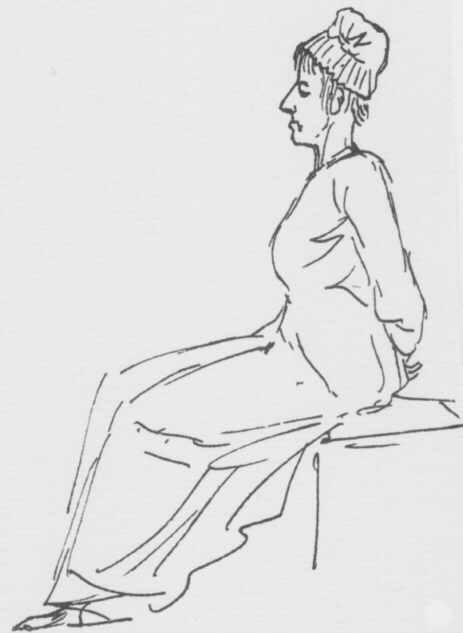
As Lauren reminded us today, it is the sad 215th anniversary of Marie Antoinette's execution. For the best visual of how horrible this experience was for her I would recommend reading, My Lady Scandalous by Jo Manning, who paints a horrifying picture of how awful this execution really was (blood, guts, stink, the whole bit).

As you can imagine, Georgiana was distraught when she heard of her friend's death. She was haunted by the image of her final moments:

"The impression of the Queen's death is constantly before my eyes, how anxious I am to know how my dr sister will bear it.* Besides the admiration that is universally felt for her and the horror at the barbarians, her answers, her cleverness, composure, greatness of mind blaze forth in double splendour, and the horror of making the child appear against her is what one shd have hop'd that the mind of man was incapible of..."


*Harriet met MA while she got her education in a French Convent and was also close to the queen.