Showing posts with label Movie Review. Show all posts

Friday, March 4, 2016

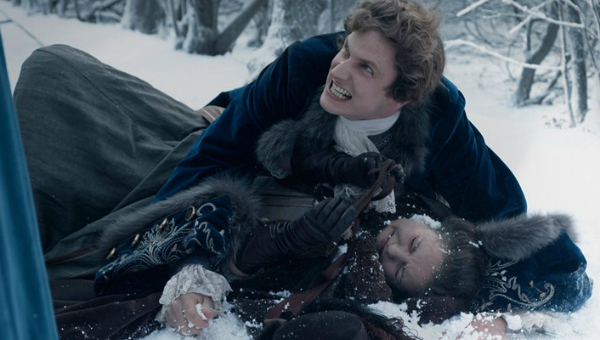
Movie Review: Pride and Prejudice and Zombies

Ooo this looks cool
Those of you who read this blog when Jane Austen and Seth Grahame-Smith's Pride and Prejudice and Zombies first arrived in books stores, spawning a series of 'mash-ups' such as Sense and Sensibility and Seamonsters, may recall my delight in the book.  After numerous casting rumours and mishaps the film version finally arrived nearly 7 years (goodness!) later and I was eagerly looking forward to seeing it.  Pride and Prejudice and Zombies the book was clever, witty, and funny.  Pride and Prejudice and Zombies the film was not. 

I suppose what I liked the most about the book was that it took a genteel saga of mistaken first impressions and sprinkled zombies into it.  The plot line remained the same, there was just, let's say, some further hurtles to get in the way of Lizzie bennet and Mr Darcy's love.  Those hurtles happened to be a zombie infestation which forced Regency Britons to be very skilled in martial arts whilst still following the rhetoric of etiquette.  The film, decided this plot line was too familiar and perhaps wasn't enough, and like the horrible, Sense and Sensibility and Seamonsters tried to overcompensate by adding new plot lines that failed miserably.  But there's a reason that we still read Austen's books 200 years later: that plot works!  You can jazz it up with some zombies lusting for brains, but don't confuse it with extra plot lines.  Sometimes this came off as downright sloppy: for example, Wickham shows up to the Netherfield Ball just to tell Lizzie he isn't afraid of Darcy, and then he doesn't feature again in that scene, leaving me going 'why? what?'
Hollywood loves anachronistic pantaloons, doesn't it?

Perhaps the greatest offense was in Sam Riley's role as Darcy - admittedly, big boots to fill; even Colin Firth said that when he got the part for the 1995 miniseries his brother questioned his ability to be sexy enough for the role.  Riley tackles the challenge by speaking in a husky Christen Bale Batman voice which was hilarious at first and then sad for the remaining hour and 45 minutes.  There also seemed to be more of a focus on Mr Darcy - excuse me - COLONEL Darcy, as he kept insisting in the film, as a terminator of zombies than the protagonist, the plucky (and rather angry) Lizzie Bennet (Lily James).  My feminist alarm bells really went off though during the confrontation between Lizzie and Lady Catherine de Bourgh (Lena Headley).  Grahame-Smith extended this verbal garden confrontation in the book to an all-out battle royale, with the two gift sword-women fighting each other for honour.  Although the film tells you Lady C is the most formidable foe, you never actually see her in action.  She has a male crony fight Lizzie instead - so disappointing.

The only redeeming quality I felt the film had was Matt Smith as Mr Parson Collins.  He provided some much needed comic relief but alas, it wasn't enough to save this flaming zombie limb of a movie.

Friday, July 4, 2014

Movie Review: Belle

I feel as though I am possibly the last person to see Belle so this review is late in coming.  Luckily it just came to my local theatre recently so I was finally able to see it.

In summary, Belle is based on the true story of Dido Belle Lindsay, the mixed-race daughter of the Navy officer, John Lindsay.  The film opens with Lindsay, a melodramatic man of feeling 'rescuing' Dido (Gugu Mbatha-Raw) from a slum and dropping her off at his uncle's (Tom Wilkinson) house after being very, very preachy about family duty.  She is thus raised with her sister-cousin, and fellow-unwanted daughter, Elizabeth Murray (Sarah Gadon).  The film centres around issues of race, class, and privilege.  The plot thickens when Dido's father (who she never met again) dies, leaving her an heiress.  Meanwhile her sister-cousin must find a husband or risk being penniless.  Moral of the story: it sucks to be an elite, eighteenth-century woman.
My love interest: that green gown

I enjoyed the movie: it was a good story, full of pretty, and the historical inaccuracies were at a minimum.  However the writing was very black and white, which left me wanting more nuance.  So many things were explained blatantly, as if it was in a school report.  This meant there was very little character development.  Dido and Elizabeth's close relationship was established through a shot of them laughing together and then substantiated by a lot of conversation about how close they were; yet it was rarely felt (from a viewer's point of view).  Dido's close relationship with her adoptive parents was much in the same way.  The love story was very 'meh,' possibly because her love interest (Sam Reid) was in the same ilk as Dido's father, a man of feeling.  If you haven't gathered already, that meant I was not in love

with him either.  Boyfriend needed to put a little more effort into his hair as well.  There was also an overarching issue of race vs illegitimacy.  Throughout the film Dido is told her race has put her in an inferior state of limbo, however many of the social issues she faces realistically stem from her illegitimacy. 
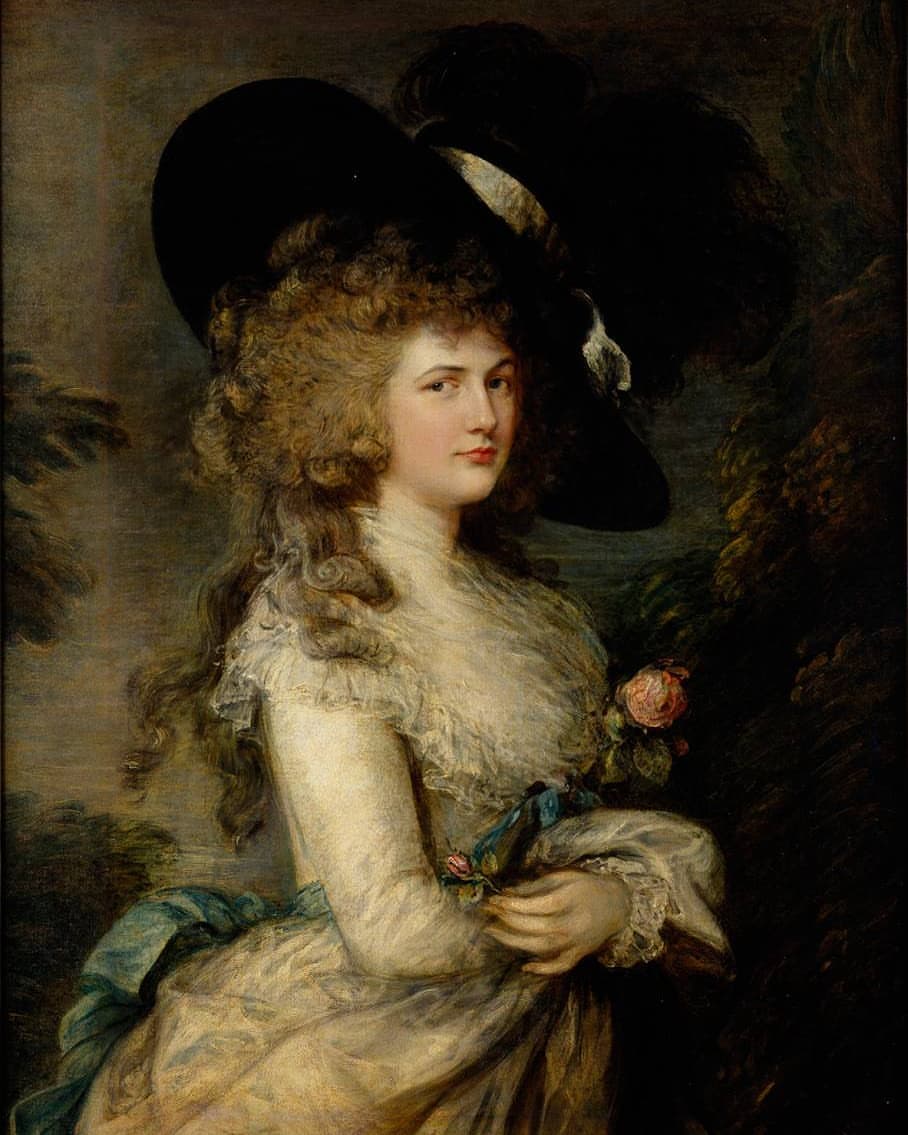
Lord Malfoy the Devonshire doppelganger

The acting was great from the more senior members of the cast.  I found Reid's performance melodramatic and although Mbatha-Raw was very talented, she definitely studies under the school of Kiera historical acting.  Oh and did I mention that the baddy in the film was played by Malfoy?  I kept waiting for him to spit 'Potter!' at Dido.  Lord Malfoy's brother was also the spitting image of Batoni's portrait of the Duke of Devonshire.

Belle was a lovely film in which you could easily lose yourself however it left me wanting more in terms of the writing.  What did everyone else thing?

For those who have already seen it you may be interested in this article, What Happened to Dido After the Film Ended?

Monday, August 5, 2013

Movie Review: A Royal Affair

It has been, what seems too long in my mind since I have had a movie to review. Thank goodness for the Danish film, A Royal Affair, which came out last year and even won an Oscar for best foreign film.  It tells the story of  that old tart, Queen Caroline Matilda (sister to King George III) and her (royal) affair with Dr Struensee.  It had to be spicy and scandalous and good, right? Right?  Sigh...I have to admit, I didn't quite care for it.  Perhaps it was mostly because I felt I had seen it before?
Wait, haven't we seen gossiping at court dinner tables in the beginning of a film before?

The movie begins with young Caroline excited about the prospect of being Queen of Denmark.  After riding in a beautiful carriage she meets the king in the woods of her new home country and the initial meeting between the couple is awkward, but Caroline tries to ignore it.  When they arrive at the palace the king jumps out of the carriage to shower affection on his dog.  Upon her arrival, Caroline is robbed of her precious books and told they have plenty, more suitable Danish books for her to read.  Is it just me, or does this sound like a mash up of The Duchess and Marie Antoinette?  There was even the same camera shot of a birds-eye view of the carriage going under and arch to enter what would be Caroline's new home.
Oh Christian, you so crazy

Like Marie Anotinette and Georgiana, the enthusiastic young Caroline finds herself miserable in marriage, complete with problems in the bedroom, distance in the relationship, and as an added bonus, a mild bout of royal insanity.  However when the dangerous Rousseau-reading Dr S enters the picture the king's schizophrenic episodes subside under his guidance and a strong friendship blooms between the two men.  Soon the lonely queen also succumbs to the doctor's charms and the two use the king as a puppet to pass their enlightened improvements to the country.  Obviously, this can't last.

Bath time is when queens get to delve into self-reflection
Oh but it does! On and on and on, continues the dull tale.  Now I love this century and its scandalous women but can't we find a different tale to tell? I was disappointed that Georgiana's affair is what her biopic chose to focus on when she has such and exciting and multifaceted life.  A Royal Affair is an example of this same sad storyline being done to death in a short period of film-making.  The interesting aspect, in my humble opinion, is the relationship between the doctor and his royal patient and how the king's mental instability was handled; or in reality, ignored as if it wasn't actually happening while Caroline's own brother was strapped into a straight jacket in England around the same time.  The overbearing dowager queen too, such a forceful figure in the actual historical event is pushed to remain a shadowing figure waiting in the wings.  I think fashion buffs will also be disappointed by the jumping anachronistic costumes and the absolute lack of hair powder on the women.  But maybe Denmark was different (I don't think Denmark was different).

One big happy, menage a trois

Overall the movie had some good qualities but this eighteenth-century biopic just wasn't going to do it for me! Time for something new, original, and of course, fabulous.

Wednesday, September 7, 2011

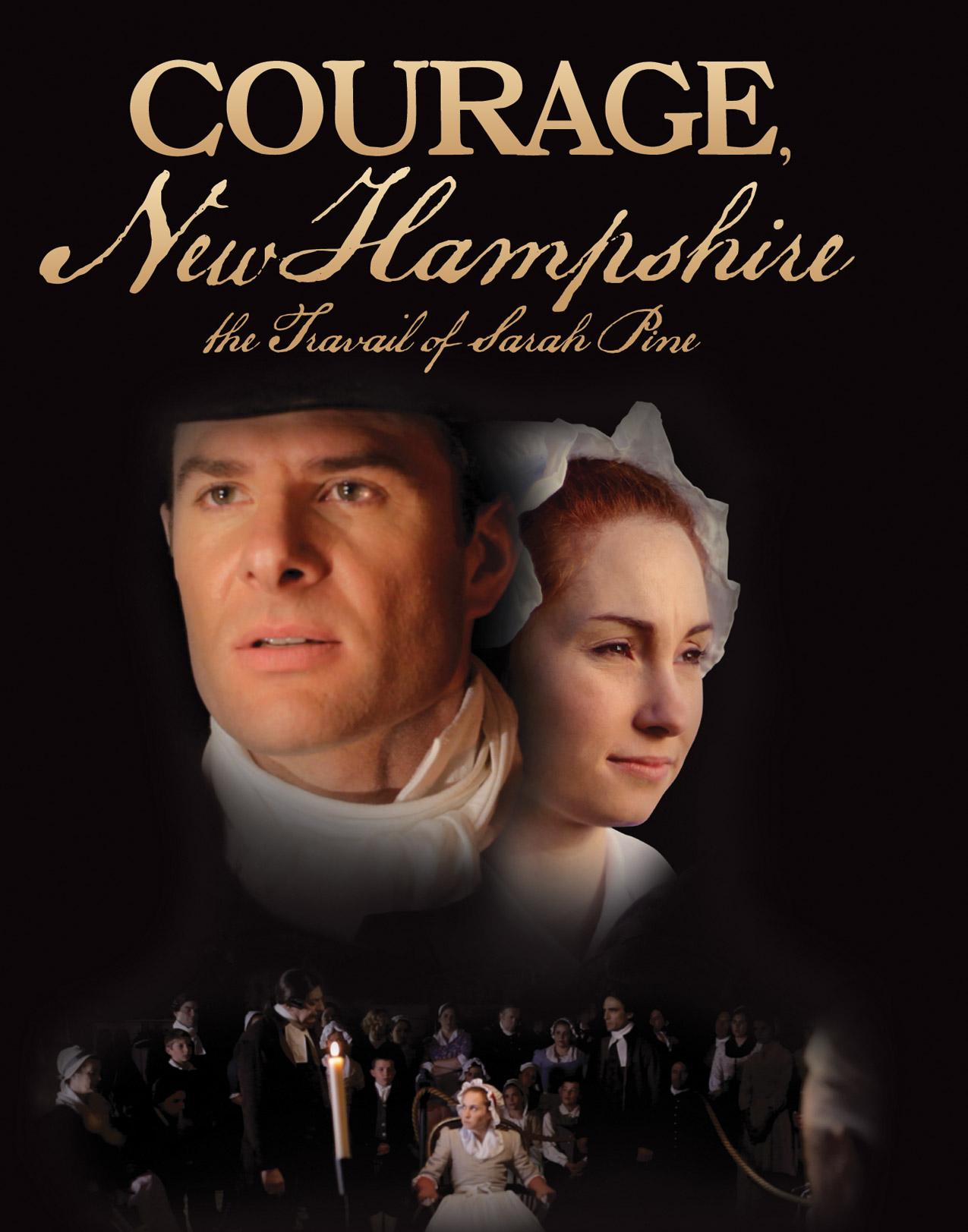
Movie Review: Courage, New Hampshire

It is a truth universally acknowledged that there aren't nearly enough series set in the 18th century.  Well, maybe it isn't universally acknowledged, but it is certainly acknowledged by me!  That is why I was pretty excited when I received a kind email from a producer from the Colony Bay Productions asking if I wanted to check out an independent historical film that they had made, Courage, New Hampshire.

Courage, New Hampshire is the chronicle of a small colonial town in the years leading up to the revolution beginning with the first episode, The Travail of Sarah Pine.  As with most small towns, everyone knows each other, a secret is seldom a secret, and dashing redcoats moving through the town will certainly cause a stir.  When one of those dashing redcoats finds himself in Courage he is greeted with an accusation of fathering a child out of wedlock.

The production company's goal in making Courage, New Hampshire was to create a historically accurate series that could engage its audience and give viewers a renewed interest in this great time in history.  Uhoh, that's almost like an open invite for historians to nit-pick at it!  I did find though, for the most part, the movie was very accurate despite some strange wording every once in a while.  The story was not a sit-on-the-edge-of-your-seat sort of tale, but it was enough to make me curious about the next part of the series (not to mention blog production stills add to the curiosity!).  What I really enjoyed the most about Courage, New Hampshire was the gorgeous filming.  There were so many beautiful shots of notoriously beautiful New England and the sets and lighting also gave a lovely sense of the time period.  The production was also very impressive given the independent nature of the company: high quality sets, costuming, music, and editing.  However, you won't find me swooning over the acting which wasn't as impressive as I hoped.  Still, I am curious as to where this series will take us as it continues.

So how does one check out this series?  You can order the episode here or you have the very cool option of renting it from their site for $2.95.

Thursday, August 18, 2011

Movie Review: Sense and Sensibility (1981)

To conclude my Sense and Sensibility Bicentenary Challenge from Austenprose I chose to check out the movie adaption from 1981.  Perhaps the movie is a victim of being dated due to being viewed thirty years after it premiered on Masterpiece Theater.  Or perhaps I am the victim, for I feel it is adaptions such as these that stereotype Austen's work as stuffy and uninteresting because, frankly, that's how this movie came across. 

Many know the story of Jane Austen's 1811 classic, Sense and Sensibility, and those who aren't familiar with it, would do best to avoid this as an introduction.  While the screenplay doesn't stray far from the storyline, with minor exceptions such as there only being two Dashwood sisters, it is is not presented in an engaging way.  It is almost as if there is a wall between the audience and the characters that prevents you from relating to their plights. 

One of the aspects of the movie I did find interesting what the actors' interpretation of the characters particularly Elinor (Irene Richard) and Marianne (Tracey Childs).  Richard's Elinor is not as submissive as she is usually interpreted.  Childs also was more believable as a teenager which I liked.  The sisters also squabbled and butted heads more in this versions than others I have seen. 

As for the superficial elements (hot men and good costuming) those were also a disappointment.  However I did enjoy noticing all the ladies on the screen were given little purses to hold at all times.

My advice is to skip over this one unless you are a true S&S aficionado with some time on their hands and a strong curiosity. 

Friday, May 27, 2011

Movie Review: Prada to Nada

Normally a contemporary-set movie review doesn't grace this blog however I found out about From Prada to Nada from my participation in the Sense and Sensibility Bicentennial Challenge at Austenprose.  This chick flick is a modern adaption of Sense and Sensibility and follows the same basic story: two sisters are left with nothing excluding the hospitality of friends after their father's untimely death.  But while they are adjusting to their new lives they must also adjust to the complications of dealing with the new cute boys who walk into them.

Sisters, Nora (Camilla Belle) and Mary (Alexa Vega) are both used to living the good life in LA and are totally unaware of their Mexican roots that their father is so proud of.  However when he is suddenly killed by a heart attack Nora, a law student, and Mary, a shopaholic must live with their aunt and her Spanish-speaking brood in East LA.  Instead of the sounds of the seaside like the Dashwood sisters the unfortunate Dominguez sisters are destined to the sounds of gunshots ringing through the air.  How ghastly!

From Prada to Nada is marketed as a Latina Sense and Sensibility which is apparent but not heavily so, because while it follows the same plotline familiar to Austenites, it is also laden with the theme of being connected to your culture.  While Elinor's gentle, stoic personality makes her such a silent main character in the book, her equivalent, Nora is more silent in regard to experiencing life.  She is focused on being a law student but at the same time has the Elinor quality of being devoted to family.  Interesting enough, while Marianne's ups and downs seem to take a major precedence in the book due to Marianne's loud personality, From Prada to Nada focuses more on the ups and downs of Nora and Edward Ferris' (yes that is his name) relationship.  I found that especially interesting because it seems like the Willoughby not writing back in London drama could write itself (he hasn't been texting me!) but the movie was totally void of that altogether. 

You won't find any monumental acting in the movie nor any great writing; it's up to par with the kind of acting/writing you would expect from any girls' sleepover movie.  I had seen Camilla Belle before in The Ballad of Jack and Rose with Daniel Day-Lewis and she did a much better job in that at a much younger age.  So I am inclined to think the director had every intention for the movie to take on a simple, light-hearted feel.

From Prada to Nada is silly, unrealistic, and far from winning any Oscars.  However I thought it was very cute, and appealed to my inner girly, I-love-happy-endings side.  Which is probably what drew me to Austen to begin with!  The word to describe it is "cute" and it would be a good movie for a girls' night in or for a relaxing night to yourself.  Anyone with high expectations or a jaded inclination should probably avoid this movie; but then again I would categorize myself as that so perhaps just a cheesy movie mood will prepare you for this one.

Tuesday, November 30, 2010

Movie Review: Farinelli

Ah the life of a rock star: the fame, life on the road, the women, and no balls?  Alarming perhaps; but it seems to be the revolving theme of Farinelli (1994), the story of the famous castrato*, known as the best soprano in history. 

The movie opens dramatically with a nude choir boy warning the future Farinelli to not "let them do this to you" and then leaping to his death in church.  Young Farinelli (Stefano Dionisi) is understandably traumatized and begs his father not to be castrated.  Fast forward and adult Farinelli is  pleasing crowds with his soprano voice, instantly making you wonder, what happened in-between?  Did he change his mind, why the change of heart?  Farinelli's singing talents win him fame across Europe so he is constantly on the road performing in ensembles that would make Prince Poppycock swoon.  Always at his side is Farinelli's elder brother, Riccardo (Enrico Lo Verso), a lackluster composer riding on the coattails of his brother's success.  The two brothers share everything, including the endless stream of groupies seeking to be Farinelli's bedfellows.  But it isn't long before Farinelli tires of his brother's manipulation and that's when things get extremely complicated.

Although slow in a couple of sceanes, I really enjoyed Farinelli.  I was fascinated by the relationship the Broschi brothers had with one another and happy that the subtle love story didn't take over the film.  As I mentioned before, the filmmakers wouldn't allow you to forget what Farinelli was lacking although Farinelli himself seemed to be at peace with the idea, a far cry from when he begged his father not to be castrated in the beginning of the film.  Despite that ever so slight flaw, Farinelli was a great movie: a great story, talented actors, and wonderful set design.  I would recommend this movie to both 18th century enthusiasts and music lovers.  Although those who are repelled by subtitles should be aware that this is a French film so there is a certain amount of reading required.  Perhaps my favorite aspect of the movie, though, was the ending which was both satisfying and sweet.

*Castrati were male soprano singers who were castrated before they hit puberty in order to preserve their sweet voices

Monday, March 1, 2010

Why Amadeus Rocks

Those who have seen this older post know that I am quite the fan of Amadeus. Recently I was on IMDB looking up fun facts about the movie, which was adapted from the play by the same name, and they just confirmed the fabulosity of the film. Let me share!

Sets and costumes for the operatic productions were based on sketches of the original costumes and sets used when the operas premiered.

The entire film was shot with natural light. In order to get the proper diffusion of light for some scenes, the DPs covered windows from the outside with tracing paper.

The performance of "Don Giovanni" in the movie was filmed on the same stage where the opera first appeared.

Prague was ideal as a stand-in for Vienna, as modern television antennas, plastic and asphalt had rarely been introduced under Communist rule.

Only four sets needed to be built: Salieri's hospital room, Mozart's apartment, a staircase, and the vaudeville theater. All other locations were found locally.

Several professors of music stated, after studying all of the musical keys struck on pianos throughout the film, that not one key is struck incorrectly when compared to what is heard at the exact same moment. In other words, what you see is exactly what you hear.

During the opening scene, where Salieri is carried through the snowy streets, he is carried past a large extravagant mansion-like building where a party is in progress. According to Milos Forman, this building is, in reality, the French embassy in Prague.

The screen-writer and creator of the play, Peter Shaffer shares his name with the original set designer (for the premier) of Mozart's opera Die Zauberfloete (The Magic Flute).

When shooting the scene in which Salieri is writing down death mass under Mozart dictation, Tom Hulce was deliberately skipping lines to confuse F. Murray Abraham, in order to achieve the impression that Salieri wasn't able to fully understand the music he was dictated.

Meg Tilly originally was cast as Stanze but tore a leg ligament in a street soccer game the day before she was to film her first scene. Elizabeth Berridge replaced her.

Now go watch the movie with your friends and impress them with your knowledge of the film!

Monday, February 22, 2010

Movie Review: Bright Star

Long have I waited to see Bright Star, the story of John Keats (Ben Wishaw) and his muse/love, Fanny Brawne (Abbie Cornish). The movie looked absolutely dazzling and was critically acclaimed and is now up for an Oscar for the fabulous costumes. Despite my excitement for the film, it left me a little disappointed, and where it held strength in visual imagery and acting I felt the writing lacked what I needed for a fantastic film.

The film opens when the Brawne family visits the two Romantic poets of the town, Charles Brown and the already published yet struggling, John Keats. You will not find your typical Austen heroine in Fanny, for she may share the wit and brazenness of Lizzy Bennet, she also contains the rudeness and brattiness of a stereotypical teenager. She also has high aspirations of being something of a fashion designer, although I found many of her creations not to be aesthetically pleasing. Still, Keats falls in love with her and with her dutiful brother and sister always following, the two take long walks and talk poetry until nothing can keep them apart. Of course, as with all love stories, there are many hurdles to keep them apart, such as his lack of money.

As I stated before; I thought the acting was very well done and there were many familiar faces in the cast. The costumes deserve to be commended and the scenery was stunningly filmed. The art direction made each and every scene an a piece of art. There was one scene where the regency bedroom was filled with butterflies which played off the simplicity of the surroundings beautifully. But I just wasn't sold. First of all, the film just kind of begun, with no introduction, leaving you looking for a grip to hold on to the story. There were many holes throughout the beginning of the story just leaving you confused as to why the person was saying this or what the characters' relationship was with each other. The main character, Fanny, was difficult to like (but not all main characters should be liked, example: Scarlet O'Hara) which I felt made it difficult to see what starry-eyed, easy going Keats saw in the drama-queen teenager. Right off the bat, Fanny despised Keat's friend Brown, but there was no complete explanation why, so it seemed as if she was simply a judgey snob. Still, the actors did the best with the script, and there was a nice chemistry between Cornish and Wishaw in between strange lines and a lack of initial narrative.

My ending consensus is Bright Star is a beautiful movie, but don't expect your typical historical romance film. What it lacked in storyline it made up in imagery so it is up to you to decide which is more important to you. If you are looking for a complete and well laid-out regency romance, I would pass this one up.


[For those who have seen the flick and would like to know what actually happened to Fanny Brawne, there is a great write-up here.]

Friday, November 6, 2009

Movie Review: That Hamilton Woman

I finally had the opportunity of seeing the classic film, That Hamilton Woman (aka Lady Hamilton) starring Vivien Leigh and Laurence Olivier. The 1941 British film has only recently been re-released and is now available on DVD, or in my case on TCM, what luck!

First of all, I'll begin by saying I am biased toward Leigh, since I became a Gone With the Wind fan at the same time as I was watching Disney Movies. The lady can do no wrong.

That Hamilton Woman portrays the legendary romance of Lady Emma Hamilton (Leigh) and war hero Lord Nelson (Olivier). The movie opens with a lady-street urchin walking into a wine shop in Calais (wow Calais hasn't changed much in 100 years) and sneakily stealing a bottle of wine. The authorities spot her and a fight breaks out, resulting in the culprit and a woman who came to her defense landing in jail. Once in jail, the clepto reveals herself as Emma Lady Hamilton and tells her tale beginning with her arrival in Naples. You know how it goes; teenage Emma gets dumped with Sir William, they marry, she meets Nelson, they fall in love and conduct their affair in front of everyone.

Like I said, I am biased. I love Leigh, even though her British accent (which is real) is very similar to her southern drawl. I love the chemistry between her and Olivier; very steamy. They are convincing in their affection for each other and stay true to their characters. Leigh portrays a strong Emma Hamilton, and at the same time makes sure to include the elements of Emma's poor background. The costumes on the other hand are disappointing in the sense of accuracy. If you are a fan of early 40s movie fashions you will not be disappointed, but otherwise they didn't even try to be accurate like they did in the 1938 Marie Antoinette. I was even delighted to see that Georgiana's brother plays a role and, of course, wears a Spencer!

One of my favourite scenes of the movie is when Emma introduces Nelson to the Queen of Naples (Norma Drury), whom Emma was close with. The two enter a room of chaos: screaming children, barking dogs, and fretting servants. Among all this is the glittering blonde vision that is Queen Maria Carolina who is rapidly yelling in Italian, adding to the chaos. If it weren't for all the glitz and glam you would have thought you ran into a family in a trailer park. No wonder Emma and the queen bonded so well.

As a whole the film is great. It doesn't stray too far from the truth and keeps your interest. It has the classic flair, complete with running in giant dresses and emotional embraces. So take advantage of its release and enjoy the nice, clean film restoration.

Friday, October 23, 2009

Movie Review: Muppet Treasure Island

Based on Stevenson's classic novel, Muppet Treasure Island takes some liberties in veering from the original story. This is made up with the illustrious and star-studded cast which includes, Jennifer Saunders, Kermit the Frog, Billy Connolly, Miss Piggy, Tim Curry, Gonzo the Great, Kevin Bishop, Fozzie Bear, and the list goes on and on.

The story begins with the young and girly-voiced, Jim Hawkins (Bishop) who is an indentured servant for the sharpe-eared and husky, Mrs. Bluberidge (Saunders) who owns the local tavern. Hawkins craves adventure and after listening to regular, Billy Bones' (Connolly) pirate tale's of adventures, is even more keen to sail the high seas. Everything changes when the black spot is delivered to Billy one night at the tavern and the old pirate is struck with a heart-attack and in his final moments, bequeaths a treasure map to Jim. With his companions, Gonzo ans Rizzo, Jim leaves the tavern as it is being attacked by pirates and leaves Mrs. Bluberidge to defend it herself (she needs no aid). Soon Jim and his friends on a ship destined for the treasure where they meet Captain Smollett (Frog) and the ships cook, Long John Silver (Curry) whom they befriend. But when the crew finally arrive at the island it is discovered the whole crew was in fact pirates and that a lady from Captain Smollet's past resides on the island.

Believe it or not, this epic adventure-film is considered a comedy! It has both the elements of a musical or an oscar-worthy drama. Although many commended Kermit the Frog's performance I was most impressed with Tim Curry and Same Eagle. Miss Piggy should have been a shoe-in for best supporting actress in 1996. As for the costumes, they aren't always accurate but are still impressive. The music, being by the amazing Hans Zimmer makes for a great soundtrack. A must-see, especially for those in touch with their inner-child or perhaps those who have a child!

Tuesday, September 15, 2009

Movie Review: A Harlot's Progress

When reader, Cheryl W informed me that there was a movie based on Hogarth's series, A Harlot's Progress, I instantly updated my Netflix queue. The film was a 2006 made-for-TV movie which follows Hogarth, a struggling artist, as he becomes infatuated with a prostitute and the life she leads.

The movie had a very distracting start for me. First of all I instantly recognized the lead, Toby Jones, as the perverted little page from Ever After. He may have had only three lines in that movie but I still had a hard time getting past the fact that he was the short, odd-shaped little man Angelica Houston strung along to get info on a match for her spoiled daughter (Duchess of Gordon, anyone?). But that's beside the point. The other thing distracting me was the sound/audio. Given, that could have been the DVD I had but it gave me a new found appreciation for why there's an Oscar category for sound editing. In every scene you could hear the street sounds or brothel groans or people chatting which was a fabtastic idea for giving you the true feel of how incredibly loud 18th Century London was. However, this audio was sometimes so loud I couldn't hear the actual dialogue. So, major points off in sound editing.

Some of the things I did like is that the movie followed the same basic story as the famous series, except with Hogarth involved in the Harlot's life, and documenting it in his paintings. Scenes would be broken up by showing the paintings in the series and zooming in on those great Hogarthian details. They were also able to seamlessly incorporate captions with fun facts about 18th century London such as, "Twenty people died of starvation in London every week." The acting was also very well done; I especially like Sophie Johnson's portrayal of Jane Hogarth. Sadly though, this was a small production movie so the sets were lacking sometimes.

As for the actual story, I went back and forth on whether I liked it or not. I am still undecided...which makes for me to be an excellent reviewer, right? I thought that the part of the Harlot was portrayed very true to that of which Hogarth intended. I loved how they expanded on her story in the film and used it as a window to how the lower classes lived at the time. What bothered me was the character of Hogarth's personal involvement with the Harlot. I like him as an observer but not a part of her life because those parts appeared awkward and just didn't mesh well.

Like I said, I'm on the fence about this flick. It shouldn't be avoided, but it's nothing to shout about. I would recommend it for any Hogarth fans or anyone who enjoys the gritty portrayal of the past. Perhaps Ever After fans should just stay away!

Monday, February 9, 2009

18th Century Movie Favs

There are both not enough and too many films set in the 18th century. I say "a few" because I want more and I say "too many" when I find ones I need to see. I know we all have our likes and dislikes, but here are my top three.

The Last of the Mohicans (1992)
What can I say, I'm an upstate New York girl, and both sides of my family have been there from the same time as this movie takes place and where it takes place. It still tickles me whenever they talk about desperately trying to get to Albany. The area has a rich history and it's well portrayed in this interpretation of Cooper's novel. But the big draw would probably have to be Daniel Day Lewis.

Mmmm. Not only do you need your fan handy for this multi-lingual trapper's shirtless scenes, but whose to deny he's one of the best actors. To prepare for the film, he grizzly-adamsed it in the wilderness with no contact to the modern world. To top off the great story, romantic sub plots, gorgeous scenery and cinematography, and amazing acting, the flick has one of the best soundtracks to boot. This is hands down, my favourite.


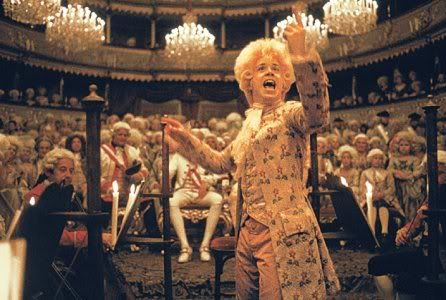
Amadeus (1984)Perhaps this was the movie that turned me onto this most awesome of centuries. This play turned movie just has all the appealing elements a movie should have: humor, drama, and some fabulous costumes. Isn't that what the 18th century is all about? Mozart was the first rock star so it is only right that there is a movie to document (even if a fictional portrayal) his life. Bonus: Mozart's works are adapted into English so for of us who are uncultured, we can now understand what they're singing. My favorite aspect of the movie would have to be Katerina What a diva. This scene captures it all.


Marie Antoinette (2006)
I know, this movie gets bashed a lot but hear me out. When it first was advertised I was deathly frightened. I never cared for Kirsten Dunst's acting, and it's still sub par in this movie. I really thought it would be a disaster. But when I sat down to watch it, I got the movie. I like Coppola's interpretation of the story and the different view she was going for. It was an aesthetic masterpiece; filmed in Versailles and the Paris Opera House, complete with stunning costumes. It focuses on Marie Antoinette's day to day lifestyle which explains her naivety and ignorance to the world around outside her palace. The soundtrack was also a risk, but it also makes sense in that in connects the 18th century with our very similar time. In fact Coppola relates our centuries together to show that they're not that different...maybe we should take heed to that warning.


So what are your top three? Or top 300? It is so difficult to choose!

Tuesday, January 6, 2009

More Tess

I hope you all enjoyed Tess of the D'Urbervilles last Sunday on PBS. The second part will air this Sunday, and it is not to be missed. Also check out Lauren's input on the film on PBS's blog, Remotely Connected, where she talks about the D'Urberville Gaze; which is a little more alluring than the Cavendish drawl!

Sunday, January 4, 2009

Tess of the D'Urbervilles

I had the privilege of reviewing Masterpiece's presentation of Tess of the D'Urberfields for PBS.org. Although this film is set in late 19th century England, I just had to write about it here, because it really is a fantastic film.

[Uhoh, there may be some spoilers after this!]

First of all, the whole production is wonderful. Gemma Arterton puts on a great performance as Tess and you find yourself getting emotionally involved in her life. The story is of a young working-class girl who suffers through a series of unfortunate events mostly due to her naive trust in men. But one of the things constantly on my mind was what prudes Victorians were! Then again, that was always my favourite aspect about them.

When Laura Liney introduces Tess of the D’Ubervilles she talks of how it was so difficult for the author, Thomas Hardy to get the book published without censoring the “sexual improprieties.” What were these sexual improprieties you silently ask Laura Liney. She doesn’t tell you but the answer is Tess gets raped by her employer, Alec. As you come to find out, in Victorian society this misfortune puts the woman to blame for the man’s disgusting actions. Hardy sympathetically points out the injustice of blaming a woman for being raped. Ironically, the same act fictionally portrayed in the book is what kept it from being published. Publishers didn’t want sympathy for a “fallen woman.” How crazy is that!

My first reaction while watching the many awful things that befalls Tess is, “thank goodness it isn’t like this anymore!” How can you blame a victim for the crime? But then my mind begins to wander to my favorite century. The 18th century was like a nonstop frat party compared to the Victorian era. However, it had similar literary exploits. Clarissa by Samuel Richardson was published in England about 150 years prior to Tess of the D'Ubervilles. This story is similar in that a young, naive woman who always tries to do the right thing falls victim to a dangerous man. Just as in Tess, Clarissa is raped and becomes a fallen woman. Richardson's book was first published in seven volumes, the longest English-language novel. It was a massive success, was not censored, and the character of Clarissa was almost canonized for her commitment to virtue despite the misfortunes that befell her. So why, 100 years later, did it not become okay to write about this racy subject?

There are many theories as to why the Victorians were so prudish, but one can be attributed to new knowledge of diseases, especially venereal diseases. The eighteenth century was like the swinging sixties compared to nineteenth century which was similar the 1980’s safe sex campaign but to the extreme. I have a feeling that if Tess was published 100 years prior, it would have been seen for what it is, a great story chronicling the social limitations. Hardy would have been hailed for his conscientious approach to the gentler sex. Or perhaps, Tess would have been left by the wayside, forgotten because the subject was not so unusual.

Either way, I most heartily recommend you check out Tess of the D'Urbervilles which premieres tonight at 9:00 on PBS. Don't miss it!

Saturday, October 11, 2008

Movie Review: The Duchess (Part 2)


WARNING: After you pass this line you run the risk of reading about aspects of The Duchess you may not want to know until you see it for yourself. If you have seen the film, by all means please continue and be sure to leave your opinion as well. If not, please move on to other conversations of gossip unless you don’t mind spoilers!

If you have rejoined me here after my long review of The Duchess, I am impressed! I am glad you haven’t been scared off just yet. This part of my review is separate because it is a review based on The Duchess’ adaption to Amanda Foreman’s book, or the movie’s accuracy to the portrayal of Georgiana Cavendish. And for that I will give it:

The Film as a BioPic
Rating: 1 Star

Yup, it was not that accurate at all. In fact, while I was watching it I think I was able to enjoy it because I couldn’t connect Gee with Georgiana, the 5th Duchess of Devonshire. They are two different people. I won’t go through every minute little inaccuracy in this post, I will just touch about the main ones that really bother me. Now that leaves me with the dilemma of where to begin this review. I suppose I should begin at the beginning.

The movie opens with 16 year old Georgiana playing at Althorpe with her friends. One of these friends includes age-mate Charles Grey. If Grey had known Georgiana at this point in her life he would have been about 9 years old. She did not meet him until he became involved in politics in his 20’s. I didn’t see the point in them writing him into her early life.

This brings me to my next big qualm. The time frame was all over the place in this film! First of all, it appeared that Georgiana got pregnant right away, no problemo. Part of her struggle in bearing an heir was the fact that it took her about 9 years in order to have a child. The film then has a “6 years later” caption and shows Gee introducing her huge hair tower and feathers. No, no, NO! Fashion faux-pas to the max! She did that at the beginning of her marriage and by 1789 (when the movie shows her introducing the fads) that was extremely out of fashion. In fact, regency fashion was blooming at that point. Did anyone else notice how the children never really aged either? Wasn’t it strange?

Yes, the family dynamics were all off. Lady Spencer went past assertive, caring, mother to just plain mean. In reality she was very protective of Georgiana and was known to occasionally boss the Duke around too. She was one of the people to go to France with Georgiana when she gave birth to Eliza Courtney.
I was very much bothered by the lack of Harriet. Harriet was such an important part of Georgiana’s life and always portrayed next to her in prints. She was also an amazing woman who was overshadowed by her celebrity sister. Did they exclude her in order to emphasize the isolation of Gee?

This brings me to a huge flaw in the film. The writers were so obsessed with creating this victimized heroine who lives in a prison of isolation that they created a major contradiction. I was commenting to Lauren in our post-viewing meeting about how I was alarmed that Gee was alone most of the time. There are letters from the time discussing Georgiana’s day hour by hour (she was a celebrity remember, and people were obsessed with her) and she was rarely alone. In fact, she usually was surrounded by a group of women (the ton) who were noticeably absent. I think they could have been more convincing of her celebrity and fashion-icon status, and instead they were just mentioned. For example, at one point Bess says “Everyone is staring at you,” and the women in the background didn’t actually appear to be looking at Gee. Georgiana was bombarded by crowds while walking in the park. Lauren and I were remarking that just mentioning her friendship with Marie Antoinette was an obvious and easy way of showing her celebrity and status to the audience. Then Lauren brought up how it is probably confusing to the audience when Gee’s celebrity is mentioned, but it is not actually proven. Basically you are supposed to believe it because you are told, but given no examples.

Two huge aspects that are very prominent, and therefore important, in Georgiana’s life are her role in politics and her addiction to gambling and battle with debts. She was shown giving speeches on the platform and gambling (with a sourpuss on her face) but that is about it. I thought it must have been confusing to viewers that she was promoting Grey with Charles Fox (where were his eyebrows??) paraphernalia: fox tails and FOX clearly written on a ribbon on her hat.

That brings me to my last major gripe, our favourite tart, Bess. I wish they portrayed her as more of a sweet little manipulator. I DID NOT like how they implied that her husband beat her. Give me a break…OH that was one of the cheesy lines that bothered me, “it is legal for a man to beat his wife as long as the stick is smaller than their thumb,” yes thank you Bess, we learned that in Boondock Saints. But seriously, that line was out of place, and it was unnecessary for Bess to be a battered wife. But what bothered me was Gee screaming at William that she wanted Bess out. The importance of portraying Bess as a manipulator was that when Georgiana discovered the affair, she was so dependant on Bess that she swallowed her pain rather than loose her beloved Bess. Maybe that is hard to conceive for our modern audience, but it is what made the situation so unique.

There were a few things I did appreciate the film including. One was the sudo-lesbianic scene between Bess and Gee. Although this may have been for titillation or making sure male companions are still paying attention, it alluded to her bisexuality. I also did like how they showed the scum-baggery of Grey getting engaged fast after the affair. So the writers did pick up on some details but for the most part, just used Georgiana as a gateway to tell a love story.

Movie Review: The Duchess (Part 1)

WARNING: After you pass this line you run the risk of reading about aspects of The Duchess you may not want to know until you see it for yourself. If you have seen the film, by all means please continue and be sure to leave your opinion as well. If not, please move on to other gossip unless you don’t mind spoilers!

Synopsis
The Duchess begins with a young Georgiana or Gee, as she is known throughout the film, when she finds she is about to leave her childhood home and marry the “most powerful peer,” the Duke of Devonshire, hereafter known as William. After an awkward wedding night, Gee quickly discovers that married life is disenchanting with her socially-awkward and cold husband who only sees her as a vessel for heirs. He immediately forces her to accept his bastard daughter Charlotte whom she eventually loves as her own. Two daughters quickly follow, much to William’s chagrin. We are then introduced to Bess Foster, the sassy dark enchantress who Gee instantly feels a connection to after seeing her interact with William at a ball. The two instantly become friends and Bess moves in with the Devonshires but Gee’s world crumbles when she discovers that William and Bess are having an affair behind her back. This leads to Gee having her own affair with Charles Grey, a childhood friend. When their affair is discovered, William gives her the option of choosing between Grey and her own children and she picks her children. Unfortunately at this time she finds she is pregnant with Grey’s child, whom she has to give up in a heart-wrenching scene of motherly pain. Then she comes back home and goes to a party. The end.


The Film as a Film
Rating: 4 Stars

I did like this movie. However, when I was watching it I didn’t see my Georgiana or Amanda Foreman’s Georgiana, or maybe even the real Georgiana. But I will get to that later. The movie as a movie was pretty good.

Saul Dibb proved he could play with the big boys of costume dramas. I found his art direction to be well done especially in giving the viewers a window in the emotions of the characters. This comes with the exception of the wedding scene in which we have a close up of Gee's head as she takes a five minute walk up the hour. At this point my companion, Cac went "I'm getting kinda uncomfortable being this close to her for this long." The relatively unknown Rachel Portman composed the score and did a phenomenal job with the music. If only the soundtrack was longer!

The writing did not impress me but still managed to be entertaining. There were at least two lines that had me burst out laughing due to cheese-factor. They escape me now, but I recall the Duke saying one of them. It made me wonder if there were more silly lines that just escaped me because of the actors’ performances. Why does every English 18th century flick lack what the French ones include: frivolousness. It was a time of gaiety, parties and gambling, people weren’t so stuffy. There should have been many scenes of gambling and parties and fun-drunken Georgianas. As for the choice of scripts, Amanda Foreman has discussed how she was presented a variety of scripts based on her biography and how she hated them all, but liked this one. I feel like, the writers, Jeffry Hatcher (Casanova) and Anders Thomas Jensen (many German movies) chose a small portion of Georgiana’s amazing life that portrayed her as Marie Antoinette or any other aristocratic woman from the period (married young-bad marriage-no kids-angry mother-rise to fabulous-affair-downfall), with no unique aspects to make her stand out. But that is what drew us to Georgiana initially! As Jezebel, likes to point out, many Oscar-worthy films, or films in general, seem to portray female leads in three categories: Hookers, Victims, and Doormats. Gee is definitely a victim; there is no victory for her. And yes, this chapter of Georgiana’s life did leave her the victim, but she is a phoenix and there was a rebirth. But in every minute of this film Gee is portrayed as this isolated prisoner. What about her true-life victories? She was a female-pioneer in politics, a loved celebrity, a fashion guru, and a wife who did eventually overcome past marital problems and teach her husband to love her. Indeed, the Duke was inconsolable when she passed away.

Ralph Fiennes STOLE THE SHOW. Seriously, how amazing was he? He was spot on in his portrayal of a very difficult character to interpret. Due to the lack of personal letters from the very introverted Duke, it is hard to give voice to this character. But Fiennes took what little he had and turned out a great performance. Hayley Atwell did well in her portrayal of Bess but it was not the Bess described by Foreman. Atwell was a strong seductress, whereas Bess played the part of a meek woman in order to manipulate.
I will never call Miss Knightly a bad actress, because she is not. But I knew that the part of Georgiana would be too complex for a 23 year old, and I still stand by this. I saw a lot of Elizabeth Swan and Bennett, etc in her Gee. One of the aspects of Georgiana's personality that Foreman emphasized was her naivety through most of her life, and her many attempts to please the Duke. I felt that this lasted for about five minutes in the movie. Also, she played an unconvincing mother, Georgiana was very devoted and in love with her children. Knightly’s hugs and coos seemed superficial. However, she put on a convincing performance in the scene where she had to give up Eliza Courntey.
Cooper's Grey was forgettable, but what he excelled at was chemistry with Knightly. The duo did extremely well in their convincing portrayals of affection. Plus the love scenes were pretty hot.

I will end this review on a high note. FASHION! The costumes surpassed my expectations. Well done Michael O’Conner! I was pleased to see many that I hadn’t seen in stills. As Lauren has pointed out already, there seemed to be strength in the jewellery as well, especially the earrings. The hair was particularly well done, although I missed the lack of powder. I loved every coiffure, and yearned to see them from every angle because the backs of the doos were particularly well done in curls. Like a nice, neat bow on a fabulous present.

I intended to write on the accuracy of the movie to Georgiana’s life, but I will leave that for the next post since I, obviously, have a lot to say and you may need a breather after that rant. Stay tuned!


What the Ton Says:

Marie Antoinette's Gossip Guide
Scandalous Women
Mythosidhe