Showing posts with label Divorce and Crim Con. Show all posts

Friday, July 25, 2014

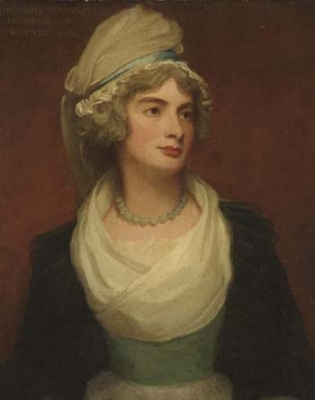
Tart of the Week: Eglantine, Lady Wallace

Like many little sisters of celebrated big sisters, Lady Wallace was stuck in the shadow of her elder sister, Jane, Duchess of Gordon.  However, just like the Harriet to Jane's Georgiana, Eglantine, or Betty as she was known, proved to be just as interesting of a character.

Betty and her sisters were brought up by their mother, Lady Maxwell in a tenement in Edinburgh.  The girls were known to be a bit wild (especially for daughters of a baronet) and rode pigs down the street with all the local children (hence the term 'piggy-back rides').  While Jane seemed to have curtailed the majority of her wild personality as she successful moved up the social ranks, Betty never seemed to lose her fire.  She married Thomas Dunlop in 1770 who was made the 5th Baronet of Wallace shortly afterward.  The marriage only lasted eight years; the couple legally separated on the grounds of Thomas's cruelty.  However, I wouldn't be too surprised if Betty didn't give back as good as she got.  Around this time she was summoned before a magistrate to answer for assaulting a female companion.  She had to answer the same charges in 1793 when she assaulted a servant.  Lady Wallace was a honey badger.

In 1793 she snuck into the House of Commons to watch a debate.  Since women were forbidden from the public gallery Betty disguised herself in mens' clothing and managed to see much of the debate before she was discovered and consequentially kicked out.  After her separation, she moved to London and took up the playwrights' pen.  Three of her plays seemed fairly well-received in the late 1780s, with Sarah Siddons even taking up one of the roles.  Her 1795 play, The Whim: A Comedy, however was banned by the licenser for an unknown reason.  One can only hope it was because it was too racy.

Betty had a few close calls in her adventurous life.  In 1789 she decided to travel to France to take the spa waters for her health, not thinking, perhaps this wasn't the best time to do so.  After speaking her mind about the current political situation to, erm, the wrong people, she was arrested and accused of espionage - a crazy accusation considering Betty would have been the worst spy ever.  She luckily managed to escape the situation with her head intact. 

Not deterred by the continent after that experience, Lady Wallace seems to have spent the remainder of her life traveling in London through Europe.  She died in Munich in 1803. 

Friday, July 9, 2010

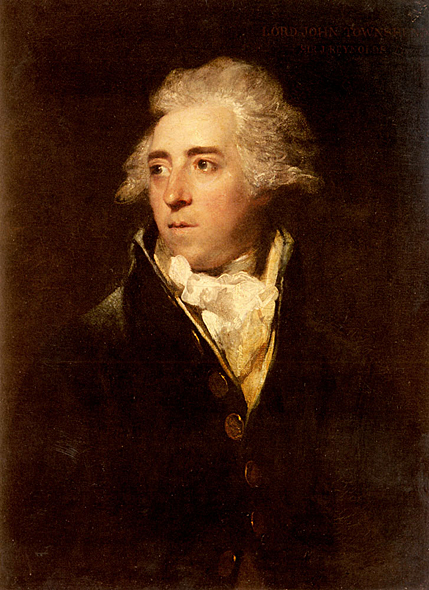
Tart of the Week: Georgiana Fawkener Townshend


Another famous victim of a bad aristocratic marriage was Georgiana's own cousin, Georgiana Poyntz.  Georgiana, or 'Jockey' was born in 1763, the second of seven children who all had the Poyntz longevity.  Jockey had the misfortune of being the first daughter presented with a marriage opportunity.  The lucky man was the boring William Fawkener who was rich and therefore a perfect match for Jockey in her parents' eyes.  Jockey, however, was disgusted by the man and made her disinterest known.  Sadly though, she was forced into the marriage. 

Jockey took her mind off her unhappy marriage by spending time with her friends.  Too bad Jockey's friends had a reputation as being the 'bad crowd,' Jockey hung out with her cousins at Devonshire House. It was there that she met the rather dashing and witty Whig, Lord John Townshend.  The two fell for each other and felt comfortable enough in the lax environment of the Devonshire Set to enter into a hot and heavy affair.  By 1786 the two could no longer take the strain of the affair and revealed themselves which created some major dramz.

Fawkener flew into a fury upon realizing he had been cuckolded.  He actually even accused Georgiana of aiding the couple in their adultery.  Georgiana was enraged at the accusation and her husband was equally as upset, writing to Fawkener to stop pointing the finger at his innocent wife.  Fawkener then accused Lord Melbourne of having something to do with the affair, resulting in a duel (which he lost but not at the price of his life).  Meanwhile Jockey's parent's and aunt kept her prisoner in their home, trying to force her to give up Townshend.  Jockey never relented. 

If Fawkener was a clever man with a mind for revenge, he would have kept his married to Jockey.  However, he gave his wife exactly what she was looking for.  Fawkener sued for Crim Con (in which the Duke of Devonshire testified at the trial- I'm sure he loved that) and then had Parliament grant him a divorce.  Jockey and Lord Townshend promptly married.  Although Jockey caused a scandal, alienating herself from polite circles, I would say she found an even more advantageous marriage than her parents could get her; now she had a title!

Tuesday, April 7, 2009

Quotables

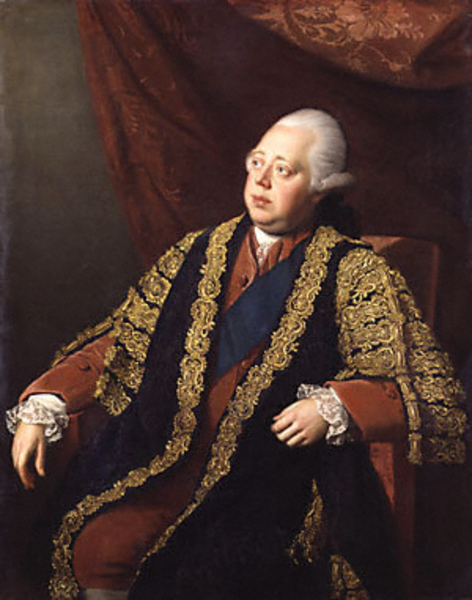
"If all my Cuckolds desert, I will be beaten indeed!"


-Prime Minister, Lord North, in response to being told that Sir Richard Worsley would miss a parliamentary vote due to his Crim Con suit

Friday, February 13, 2009

Tart of the Week: Elizabeth Lady Holland


This wild beauty was born in Jamaica in 1771, the only child to the extremely wealthy Richard Vassall. As was common in rich families who only had a daughter, anyone who was to marry their precious Elizabeth would have to take their last name in order to receive the money that came with her. It also ensured that the family name would be carried on. Because of her upbringing on the tropical island, Elizabeth developed a fondness for the exotic and penchant for discovery. She "devoured" books and was absolutely fascinated by science; specifically geology and chemistry. Elizabeth also had a sunny personality but was known to be blunt in her opinions and ambitious. Her one weakness was thunderstorms which she remained deathly afraid of throughout her life. Even lighting many candles and not even having one inch of widow showing in order to avoid seeing lightning.

When it came time for Elizabeth to marry, her parents settled upon a baronet in England, Sir Geoffrey Webster who just happened to be 23 years older than fifteen year old Elizabeth. The teen was carted away to the opposite hemisphere to become mistress to the imposing Battle Abbey, it must have been quite the shell shock for a plantation girl from Jamaica.

Sir Geoffrey himself was no prize. He was a depressed fellow (quite opposite from his young bride) who was prone to jealousy, drink, and gambling. Children followed the marriage but so too did physical abuse. It wouldn't be risky to say this could have been the result of Elizabeth's stubborn, acid-tongue ways. She was not the type of lady to refrain from defending herself or at least stating her opinions! Sir Geoff also came with baggage: his mother. Elizabeth hated the old bag. The feeling was reciprocated. Open warfare soon developed between the two Lady Websters. Elizabeth would inquire daily as to whether the "old hag was dead yet." Harsh! She would also try and scare her out of the house with ghostly pranks. There is even a story of Elizabeth going so far as to stage a prank that the French had invaded the cost, employing friends and such, dressed as commoners, to run toward the abbey with carts, screaming bloody murder. The dowager Webster invited them in for food and drink and told them to let the French know they would be treated the same and she could be found there until her death. Ha!

Is it any surprise then, that Elizabeth was always begging her husband to travel? He was a stick in the mud, and therefore never interested as leaving the house which Elizabeth saw as her prison. By 1791 Elizabeth was finally satisfying her need to travel, sometimes with her husband and sometimes without. It was in her travels on the continent that she met up with Harriet Lady Duncannon and the two women became fast friends. Despite their different temperaments they had a common interest in (Whig) politics and partying. While abroad the broads traveled, partied, and flirted together in what appears to have been a really fun time. It also just happened to be where they both met the men they would come to cheat on their husbands with.

At first it was Granville Leveson-Gower who was constantly flirting with Elizabeth. But when his attention was turned to Harriet, Elizabeth began paying more attention to her suitor, Henry Richard Fox, Baron Holland. Like Caroline Lennox with Henry's grandfather before him, Elizabeth initially found Henry to be "not in the least bit handsome" and with many "personal defects." But you know how those Foxes are, women can't resist them! Henry's rakish father died when he was a baby so he was raised by his uncle, Charles James Fox, which should be explanation enough into his personality. Soon the gay party (Elizabeth, Harriet and the boys) were taking fun day trips and exploring together, prompting love to bloom between the couples. When Elizabeth finally was ready to return to England and her husband in 1796 she was accompanied by Henry. Later that year she gave birth to his baby and soon a divorce proceeding was underway.

At first Sir Geoffrey was enraged about being cuckolded. Then he would claim that he would go through with the proceedings, then he would be angry again, then he would claim he still loved Elizabeth. It just got ridiculous when he began considering a duel with Henry, not for banging his wife but for commissioning Romney to paint a portrait of her. At last it was decided that he would divorce Elizabeth, and what a doosey he presented her. She had to give up her whole fortune and children, only to receive a mere £800 a year and that was on top of suing Henry for £10,000 in damages (which was later decreased). Perhaps anticipating the disastrous divorce, Elizabeth had written to her husband on her way back from the continent to inform him that their daughter Harriet had died of measles. This was a desperate act of a mother, done in order to stay with her two year old daughter. The trick worked but Elizabeth was in constant fear of discovery. Meanwhile, she was denied any access to her other children.

Now a fallen woman Elizabeth was scared at her prospects and that of her baby. Luckily, Henry loved her and married her. Polite society excommunicated Elizabeth but as they tended to do with their fallen friends, Harriet and Georgiana remained loyal and continued to see Elizabeth. Eventually her home, Holland House, became the next Devonshire House, a political epicentre. Like a captain running a tight ship, Elizabeth relished her role as political hostess, and even began to rival Georgiana. The scandalous couple, in the tradition of all Foxes, had a happy marriage and threw fabulous parties. She died five years after her husband, in 1845 after bearing tremendous death pains for three days. Proving, once again, that she was a tough broad even up to the end.

Friday, January 30, 2009

Tart of the Week: Lady Henrietta Grosvenor


Henrietta Vernon was born in the most fortunate of circumstances. Not only was she an aristocrat (grand-daughter of the famous politician Thomas Wentworth) but she was a noted beauty. Therefore, it may come as no surprise that she was married very early in life. She met her future husband in one of the most cinematically romantic of ways, during a rainstorm. Richard Grosvenor, the 1st Baron Grovesnor captured the young girl's fancy despite the 14 year age gap between them. They married within a month of their initial meeting, in 1764.

Henrietta soon realized that her hast in marrying Richard had been a huge mistake. He was a huge gambler, even by 18th century standards. We're talking £250,000 in one night (more than a million today)! When he wasn't gaming away the couple's money he was out whoring in every brothel in London. Yuck! Imagine the diseases he brought back to his young bride. It was not long before Henrietta admitted to feeling "ill used." Do you blame her eye for wandering?

Henrietta's attention fell on the King's brother, Henry Duke of Cumberland who just happened to be the same age as her. Henry himself, already had a rebellious history, it was rumoured that he had married a commoner, Olivia Wilmot and there was to be more commoner marriages in his future as well. Henry was young and royalty; there was a dangerous appeal to having an affair with him. The couple would meet in secret in inns around the country. One time, while they were out at a friend's house in Cavendish Square Henrietta asked for a private meeting with the Duke to talk about her brother in the dining room. They were excused but after a half hour, the friend decided there had been enough talking and went in to interrupt. She found Henry on top of Lady Grosvenor, "with her petticoats up" on her couch. There is nothing I hate more than rude house guests! A crim con trial was soon underway.

As with just about every other crim con trial, this was the talk of the town, especially since it involved royalty. Henrietta, was outraged at her husband's hypocracy. She slept with one man and was to be damned for all time while her husband constantly frequented brothels. She went to bawdy houses in search of witnesses to testify upon Richard's many infidelities. But this was not to aid her defense. Henrietta and Henry's dirty letters to each other was enough to award Richard damages of £10,000. After a mere seven years of marriage, Henrietta and Richard were seperated in 1771.

Now Henrietta was an outcast with a mean £1,200 allowance. But rather than wallow in the sorrow of her situation she made the best of it, and became friends with other social outcasts. Soon she was seen at the Pantheon arm in arm with Lady Worsley. The papers would follow her, in hopes of catching her in a scandalous act with a rake. Once they reported that she showed up to the opera with a different man every night. Well, can you blame her? With such a small allowance, Henrietta needed rich men to support her elegant lifestyle.

In 1802 Richard finally kicked the bucket. Relieving Henrietta of her marriage limbo. A month later Henrietta was no longer Lady Grosvenor. She married Lt.-Gen. George de Hochepied, 6th Baron de Hochepied and retired to a quiet life with him until her death in 1828. Her second husband followed, two months later.

Monday, November 24, 2008

Crim Con Court

Perhaps you have seen the phrase "crim. con." getting tossed around here, especially in reference to certain tarts. Crim con is the abbreviation for Criminal Conversation, trials usually connected to divorce...but not actual divorce trials. When a tart wandered into another man's arms and her husband found out he could charge that man of, well, trespassing. Although enlightened thinking may have given women more rights and freedoms than they previously had, they were still considered property of their husbands. Crim con trials are a perfect example of this primeval state of mind still being practiced.

Here is how these trials typically went down: Lady Tart and Lord Rake would conduct a steamy, semi-public affair. When Lord Cuckold discovers his wife's infidelities he is outraged but mostly embarrassed in how Lady Tart emasculated him in front of everyone. Lord Cuckold has many different options for revenge on his wife, one being divorce, which is extremely costly and time-consuming. In order to seek revenge on Lord Rake he can press crim con charges and, if Lord Rake is found guilty, get some money out of him. Crim Con's weren't exclusively for husbands who had been cheated on. They were originally masterminded for husband's who wanted "justice" if their wife had been raped. Sex wasn't even a criterion to validate the case, you could sue for any form of tarnishing the property.

So basically crim con is suing that guy for fooling around with your wife. You can still do that today, there just isn't a special name for it. It makes good daytime television though.