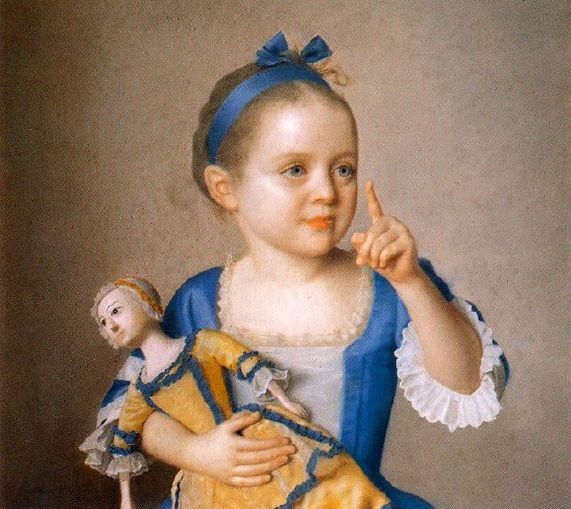
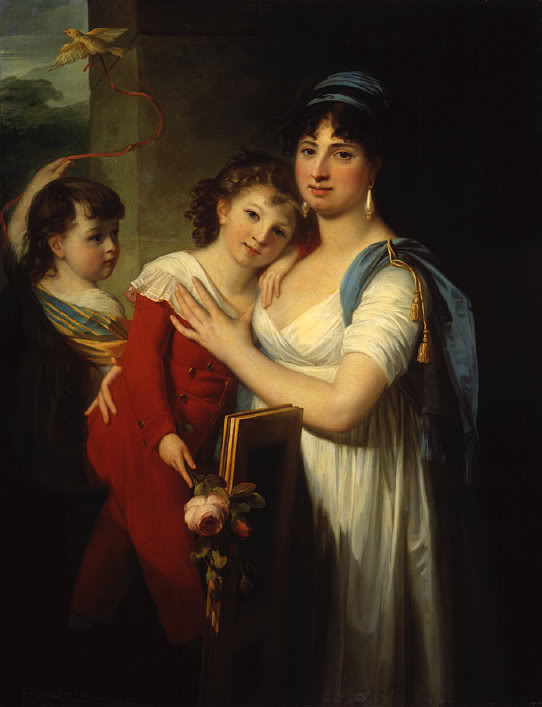
Sir Thomas Lawrence, Emilia Mary Boucherett with a Doll, 1793
Showing posts with label Children. Show all posts
Thursday, February 2, 2012
Saturday, December 24, 2011
Children's Dolls
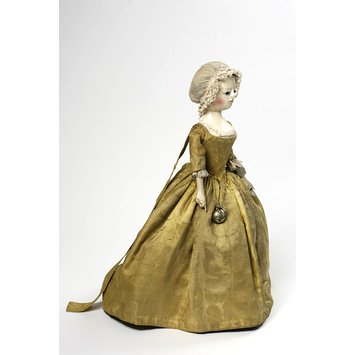
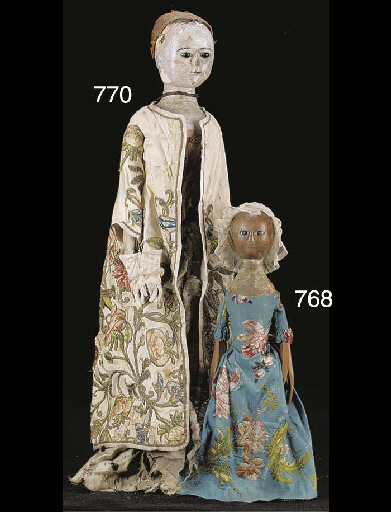
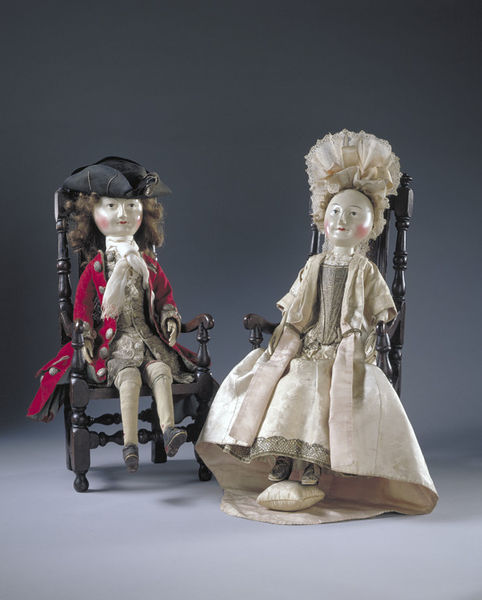
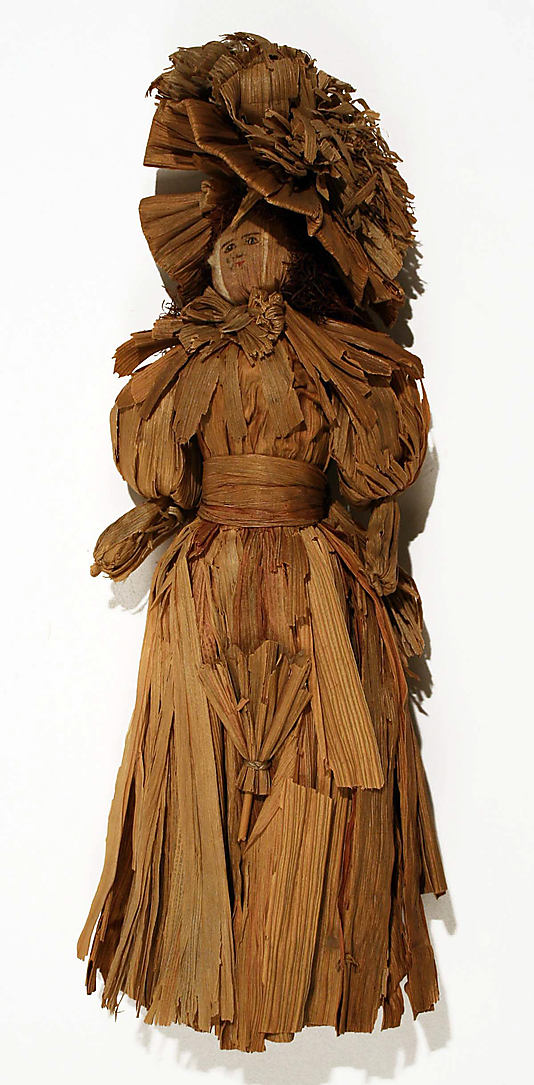
In this season of shopping and gift wrapping and endless commercials my mind begins to wander to the days when children didn't have whole room dedicated to their toys. If a child was lucky enough to have a doll in the 18th century, only one would suffice. What's more amazing is when these old and beloved toys survive hundreds of years and multiple children's love.
For more images of dolls, the website 18th Century Notebook has amassed a fantastic online collection of these surviving toys.
| Williamsburg |
| V&A, 1740s |
| Deerfield Memorial Hall, c 1770 |
| Museum of London, 1766-70 |
| Christie's |
| Bowes Museum, c 1735 |
| V&A, c 1690-1710 |
| The Met, Late 18th C |
For more images of dolls, the website 18th Century Notebook has amassed a fantastic online collection of these surviving toys.
Wednesday, August 31, 2011
A Stolen Child
It is quite strange that an era in which sleeping with another man's wife was considered a misuse or stealing of property yet there were no laws outlawing kidnapping. No wonder people were worried about the gypsies stealing children- they certainly could with little to no legal repercussions.
An unfortunate mother who had to deal with the lack of child protection laws was Mary Davis, a military wife and landlady. Mary's husband was fighting in Spain, leaving Mary and her six-year-old son alone in their Westminster house, which she rented out to lodgers. One of the lodgers offered to watch over Mary's son while Mary went to her job as a washer-woman, an offer which the over-worked gladly accepted. However, when Mary returned from work that night neither her son nor the babysitter could be found anywhere.
The devastated mother searched high and low for her son, even after she delivered another son a few months after the incident. Eventually Mary found herself and her newborn at an Inn in Folkingham (over a hundred miles away from London) where they stopped to rest for the night. Mary was eating dinner at the Inn when the landlady insisted that two young chimney sweeps who just entered eat something as well. To the dismay of everyone, one of the sooty children looked up from his dinner and jumped into Mary's arms with the joyful cry of, "That's my mother!"
Mary's story was one of the few with a happy ending (despite never finding the woman responsible for her son's indentured servitude) and thankfully, two years later in 1814 a law was finally passed outlawing the theft of children.
An unfortunate mother who had to deal with the lack of child protection laws was Mary Davis, a military wife and landlady. Mary's husband was fighting in Spain, leaving Mary and her six-year-old son alone in their Westminster house, which she rented out to lodgers. One of the lodgers offered to watch over Mary's son while Mary went to her job as a washer-woman, an offer which the over-worked gladly accepted. However, when Mary returned from work that night neither her son nor the babysitter could be found anywhere.
The devastated mother searched high and low for her son, even after she delivered another son a few months after the incident. Eventually Mary found herself and her newborn at an Inn in Folkingham (over a hundred miles away from London) where they stopped to rest for the night. Mary was eating dinner at the Inn when the landlady insisted that two young chimney sweeps who just entered eat something as well. To the dismay of everyone, one of the sooty children looked up from his dinner and jumped into Mary's arms with the joyful cry of, "That's my mother!"
Mary's story was one of the few with a happy ending (despite never finding the woman responsible for her son's indentured servitude) and thankfully, two years later in 1814 a law was finally passed outlawing the theft of children.
Tuesday, March 22, 2011
Skeleton Suits
Remember those silly articles of children's clothing that weren't very cute but since they were synonymous with childhood you were put in them constantly and ooed and ahhed over? I spent my first years in many rompers (just like last summer!) and onesies would look ridiculous on anything other than an infant. The long eighteenth century equivalent were skeleton suits, which well-to-do little boys were forced into. These jumpsuits look similar to clown suits and I am sure more than one little boy gave his nurse a hard time about wearing them. However, they present a sentimental portrait into the lifestyle of the time. Take a look at the wide range of skeleton suits worn all over Europe.
| French School, Count Strogonov and Family, ca. 1778 |
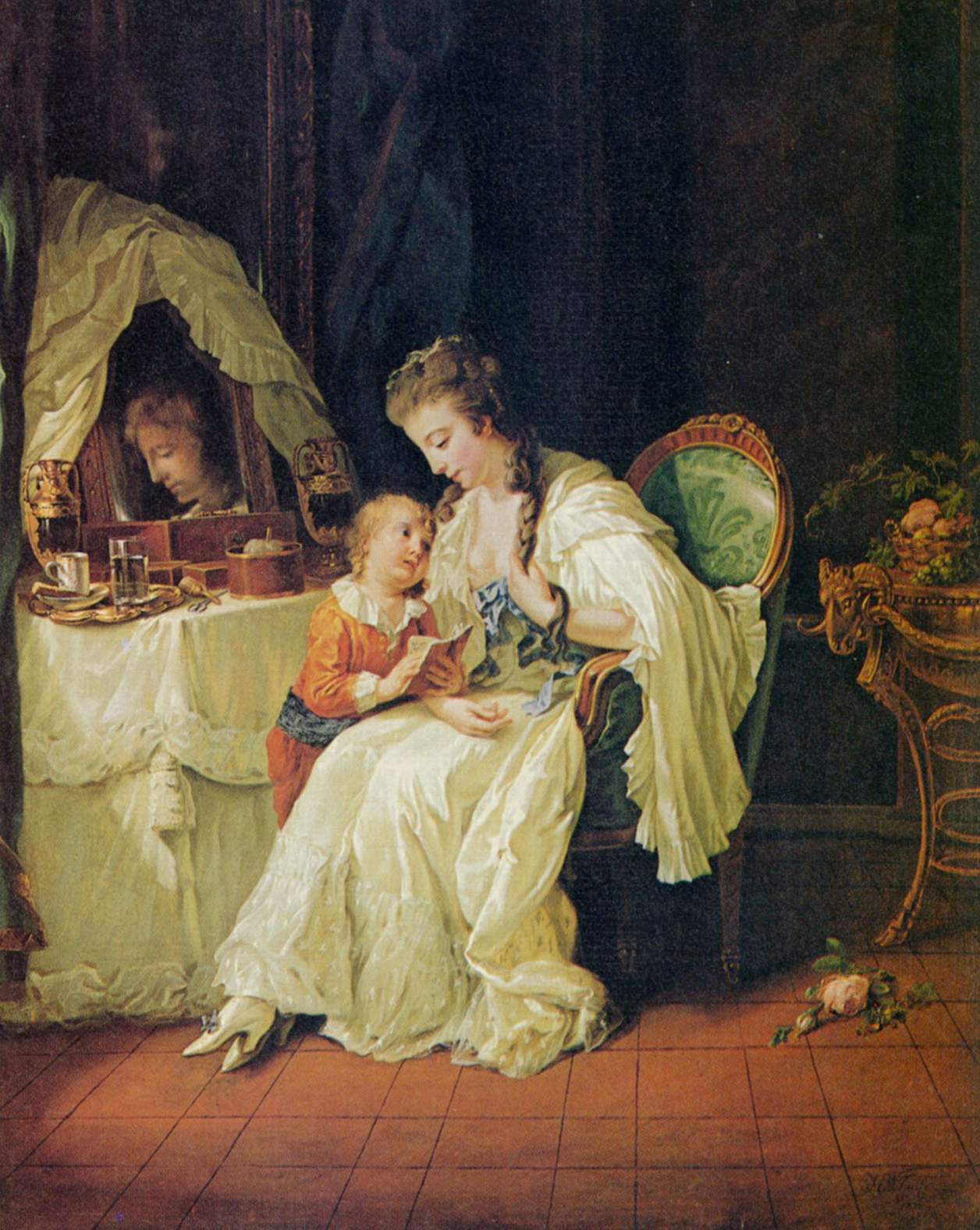
| Johann Tischbein, Family Scene, 1778 |
| Anne Rosalie Filleul, The Children of the Comte d'Artois, 1781 |
| Thomas Gainsborough, The Baillie Family, 1784 |
| Adolf Ulrik Wertmüller, Marie Antoinette and her Children, 1785 |
| Francisco Goya, Portrait of Don Manuel Osorio Manrique de Zuniga, 1787 |
| Jean-Laurent Mosnier, Anna Muravyova-Apostol and her Children, 1799 |
| Gerard von Kugelgen, The Family of Paul I of Russia, 1800 |
| William Berczy, The Woolsey Family, 1809 |
| Francisco Goya, Porträt des Pepito Costa y Bonelis, 1813 |
| Giuseppe Cammarano, The Family of Francis I of the Two Sicilies, 1820 |
Monday, January 17, 2011
Children's Clothing
| George Romney, Charlotte Bosanquet and Her Five Elder Children, 1795 |
![]() |
| Harriet's sons' gowns opened in front |
![]() |
| 8 year-old Isabella of Parma |
In the early part of the century children were dressed as little adults. Portraits of children had them in fashion that rivaled painted adults in terms of fabulousness. By the end of the century the idea of little adults wasn't as appealing. Girls tended to be dressed in simple white gowns and boys would be given skeleton suits, an example of which can be seen on Charlotte Bosanquet's eldest son above.
Baby-proofing to keep the little ones safe was just as much of an issue in the Age of Reason as it is today. Not only did children have leading strings to keep them in safe parameters but also pudding hats. These soft helmets were worn by those crawling and learning to walk so that they wouldn't have pudding heads, that is, bump into something and permanently dent their soft little heads. Our "toddlers" were the 18th century's "puddling heads," named after the hats they sported. Sadly, pudding hats weren't stylish enough to make it into formal portraits!
Monday, January 3, 2011
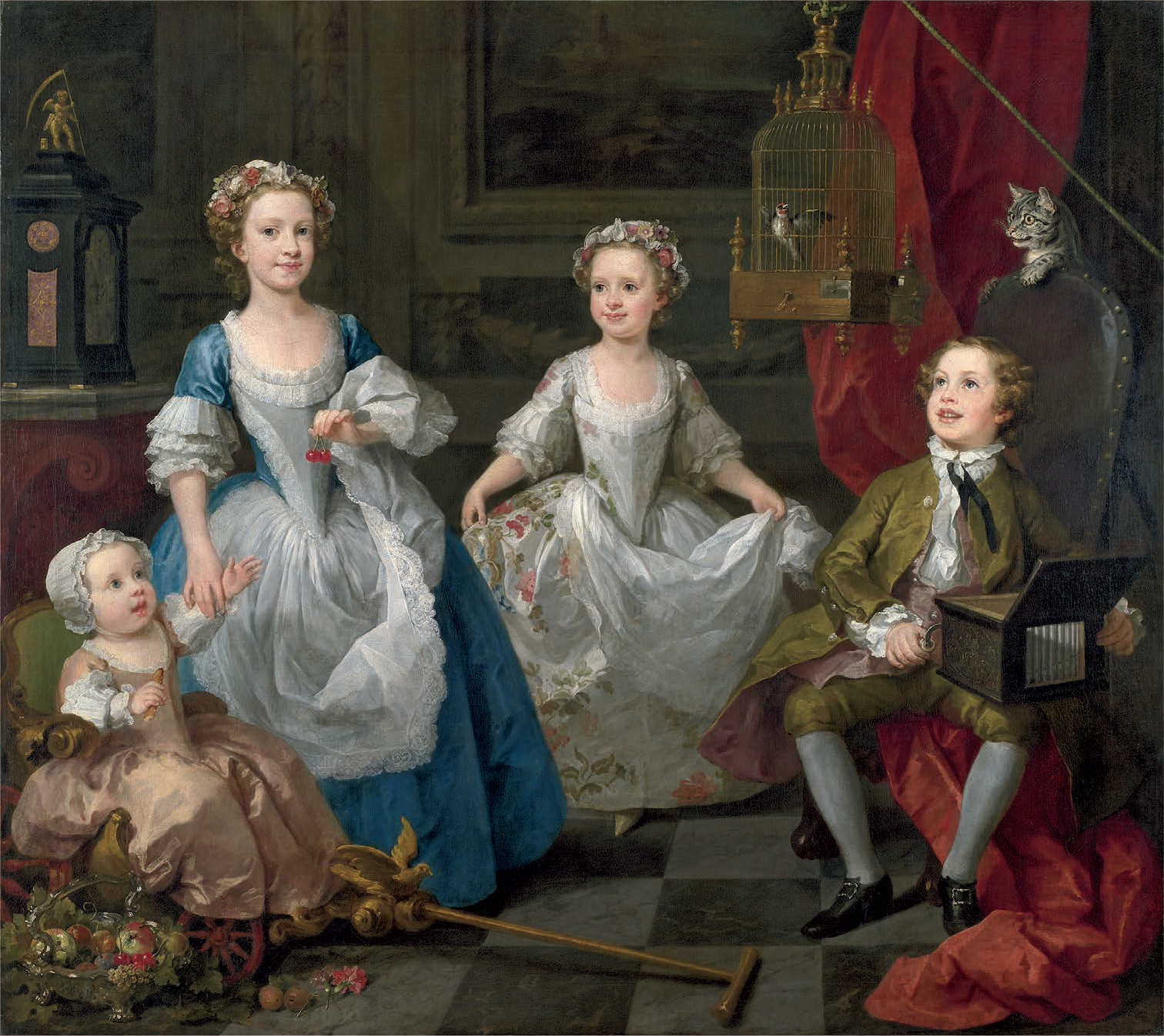
Hogarth's The Graham Children
Perhaps William Hogarth's finest portrait would be his 1742 painting, The Graham Children. The Graham whose children was portrayed was Daniel Graham, the king's personal pharmacist. As you can probably tell by the children's fine clothing and the fine background, the king's apothecary made a good wage. Something that also stands out is how beautifully rendered and happy the children are. Hogarth had a great fondness for children (he was a founder of the Foundling Hospital) and his affections for them shine through in his painting.
Like Hogarth's satirical pieces, the artist can not help himself and includes symbolism into the work. Behind the children stands a clock with the bronze figure of Cupid wielding a scythe next to an hourglass which symbolizes death's triumph over love, hinting to viewers that this is a posthumous portrait. My favorite aspect of the painting is the cat crawling up the chair to get closer to the the pet goldfinch who is quite unsettled by its new visitor. From far away the feline has the "aww" factor but an up close examination delivers a more frightening perspective. The cat's expression actually reminds me of of Sir John Tenniel's illustrations of the Cheshire Cat. The direction of the boy and cat's eyes reflects the opposite plane of the composition in which the baby reaches upward for the cherries in his sister's hand. The cherries which have somewhat of a scandalous symbolism today were a childhood symbol in Hogarth's time, the "fruit of paradise."
If you have been trying to figure out which of the child sitters had sadly passed at the time of the portrait it would be Baby Thomas which explained why the cherries were just out of his reach. Hogarth created a fitting sentimental portrait of the Graham children which many would admired. Gone were the stiff child portraits, Hogarth brought a new standard for the sentimental family portrait.
Tuesday, September 7, 2010
Teen Mom: Bess
If Bess Hervey was born into a normal middle-class family, she may have had the luxury of marrying in her twenties. The average age for a woman to marry was about 25, but many well-to-do families rushed their daughters into marriage. Bess was one of the unlucky girls who found herself married with a lack of maturity to handle her new life changes. The new Mrs. Foster was also especially fertile and found herself at the age of 17 already with a baby. Reading her notes from the period makes one feel as if they are watching an episode of MTV's Teen Mom, there is such an abundance of whining one has to wonder where the cheese is!
First, she whimpered about her new home in Dunleer being a "Dungeon."
Momma Hervey (Lady Bristol) wrote back to tell her to appreciate what she had and if it was so bad to do something about it! She recommended picking out some new wallpaper.
When Frederick was born Bess wrote again to her mother describing the horrors of labor.
Lady Bristol, having gone through the ordeal of labor seven times over, once again had little sympathy for the over-dramatization of the process and asked Bess to reflect more on the joys of motherhood rather than complain about the toils of the labor.
After a month of laying in, Bess was re-released to the world and all she could do was roll her eyes at it. First she remarked on how she found all babies "much alike" and then bemoaned how her son was "dependent" on her. Not being a mother myself, I noticed two-month-olds tend to do that. One has to wonder how much mothering Bess was actually doing seeing as she had a wet nurse.
It wasn't only Bess' son which bored her but now Dublin seemed just as odious as Dunleer. While many contemporary accounts rave about Dublin's ability to be a thoroughly diverting metropolis Bess wrote, "je m'ennuie à la mort" [I am bored to death]. Besides finding the city "dirty" and "dull" she found the women "ill educated & indelicate." But perhaps Bess' real beef with Dublin was the fact that her flirting wasn't reciprocated. According to Bess the men were "too much engrossed by Politicks to engage much in society..."
Season 2
When Bess was three months pregnant with her son, Augustus she had enough of her boring life and ran away. She then met up with a Mr. Churchill and attempted absconding to Scotland with him. One has to wonder if Bess was so bored by Dublin if Scotland would have been much better? In any case she never would reach the amusements of Scotland for her husband caught her in York.
The year was now 1782 and Bess was staying in Bath with her sister, Mary. Both ladies were poor, separated from their husbands, and ostracized from public (I bet Dunleer wasn't looking too bad anymore!). It was here where Bess was to be introduced to the Duke and Duchess of Devonshire who befriended the two fallen women. However, Bess only too easily left her sister in the dust when the Devonshires invited her to accompany them out of Bath. Bess' sob story of her lost children had pulled on their heartstrings more than Mary's, whose child had been allowed to stay with her after the separation.
The truth of the matter is, Bess only really experienced being a "teen mom," for by the time she was in her twenties her husband had custody of her two sons, whom she wouldn't see for another fourteen years. Her other children (Caroline and Clifford) were illegitimate offspring of the Duke and were also raised more by others than by Bess. Bess would find that she appreciated being a mother only when the ability was taken away from her.
First, she whimpered about her new home in Dunleer being a "Dungeon."
Momma Hervey (Lady Bristol) wrote back to tell her to appreciate what she had and if it was so bad to do something about it! She recommended picking out some new wallpaper.
When Frederick was born Bess wrote again to her mother describing the horrors of labor.
Lady Bristol, having gone through the ordeal of labor seven times over, once again had little sympathy for the over-dramatization of the process and asked Bess to reflect more on the joys of motherhood rather than complain about the toils of the labor.
After a month of laying in, Bess was re-released to the world and all she could do was roll her eyes at it. First she remarked on how she found all babies "much alike" and then bemoaned how her son was "dependent" on her. Not being a mother myself, I noticed two-month-olds tend to do that. One has to wonder how much mothering Bess was actually doing seeing as she had a wet nurse.
It wasn't only Bess' son which bored her but now Dublin seemed just as odious as Dunleer. While many contemporary accounts rave about Dublin's ability to be a thoroughly diverting metropolis Bess wrote, "je m'ennuie à la mort" [I am bored to death]. Besides finding the city "dirty" and "dull" she found the women "ill educated & indelicate." But perhaps Bess' real beef with Dublin was the fact that her flirting wasn't reciprocated. According to Bess the men were "too much engrossed by Politicks to engage much in society..."
Season 2
| Lady Bristol was quick to tell Bess to stop complaining |
When Bess was three months pregnant with her son, Augustus she had enough of her boring life and ran away. She then met up with a Mr. Churchill and attempted absconding to Scotland with him. One has to wonder if Bess was so bored by Dublin if Scotland would have been much better? In any case she never would reach the amusements of Scotland for her husband caught her in York.
The year was now 1782 and Bess was staying in Bath with her sister, Mary. Both ladies were poor, separated from their husbands, and ostracized from public (I bet Dunleer wasn't looking too bad anymore!). It was here where Bess was to be introduced to the Duke and Duchess of Devonshire who befriended the two fallen women. However, Bess only too easily left her sister in the dust when the Devonshires invited her to accompany them out of Bath. Bess' sob story of her lost children had pulled on their heartstrings more than Mary's, whose child had been allowed to stay with her after the separation.
The truth of the matter is, Bess only really experienced being a "teen mom," for by the time she was in her twenties her husband had custody of her two sons, whom she wouldn't see for another fourteen years. Her other children (Caroline and Clifford) were illegitimate offspring of the Duke and were also raised more by others than by Bess. Bess would find that she appreciated being a mother only when the ability was taken away from her.
Monday, January 12, 2009
Baby-proofing
Oh yeah, and you know those adjustable gates you put up to keep children out of the toilet or from falling down stairs? The 18th century estate house had its own version of that too: steel bars across the fireplace. I think the flaw in that baby proofing is when the child touches the hot steel bars! I have permanent scars on my hands from when I decided to boost myself up the kerosene heater as a baby, no wonder I needed a leash!
Subscribe to:
Posts (Atom)