E
Ever wonder what was under those breeches and gowns? Let's chat about unmentionables, an essential part of the wardrobe. These were known as "small clothes" and being seen in them, despite the many layers, was just as if we were caught in our modern day undies, a state of undress!
GentlemenMen would begin their clothing regiment by putting on their drawers. These were usually simple and made from thin linen. They resembled elongated boxers. Next, a gent might fancy to put his socks on which would be secured at the knee with a garter (a simple ribbon). A shirt that was about knee-length would be tucked into the breeches and between the legs. Voila! Now you are ready to put your clothes on!
LadiesOf course undergarments for ladies were a more complicated matter. They served the essential function of shaping women in the fashionable mold that God failed to.
The core piece of ladies' small clothes was the chemise or shift. This was a simple white gown that looks like a night gown. Nothing would be worn underneath the shift. It was thought that the ladies' region needed to be aired out. This made that special time of the month a pretty sloppy event since women would just bleed into their layers. At the time of her death,
Marie Antoinette had been wearing the same ragged clothing in prison and her uterus was hemorrhaging (poor thing!). In an effort to appear clean and decent, the doomed queen had saved a new, unworn chemise in her cell, specifically for the day she would be brought to the guillotine.
Petticoats would be put on over the chemise. These were skirts, usually two or more, that were meant to keep the lady warm and the gown flouncy.
Stays, or the corset, would be put on over the shift and tightened to give the torso a nice V shape.
A
pocket would be tied around the waist. These could be embroidered with pretty designs even thought they were never seen once clothes were on. They were large enough to hold all the necessities and the modern purse is actually an evolved form of a pocket! But that's a whole 'nother post for later.
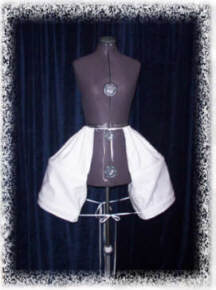
Panniers would sit over the pocket on the hips to give the appearance of a slender waist. These came in many shapes and sizes, from a cage-like structure to small pads to flair out the skirt slightly. At the end of the century, false bottom (or bustles) and even false stomachs (a fad Georgiana invented) would replace panniers.
As soon as stockings were put on and secured with garters (ribbons again) a woman was considered...undressed. Well, in a state of undress. She was now prepared to put on her gown!
For good visuals,
Dangerous Liasons,
Amadeus, and
The Duchess show the undergarment portion of the clothing process.


 I love this video for its portrayal of a rather mundane activity that is often forgotten about when we look at portraits, such as the Lady Lever Gallery's own Mrs Peter Beckford by Joshua Reynolds. My one critique is that as the narrator begins talking about pockets, the model is handed what looks like a giant popsicle stick and slips it down her stays between her breasts. Quite a loud omission in my humble opinion! The item in question is a busk, which added additional structure to the stays. According to dress historian extraordinaire, Elisabeth Gernerd, they were often decorated with love poems due to being 'worn next to the heart' (I may or may not have questioned her anatomical accuracy was when she told me that). Busks aside, this is a fantastic video to provide you with a better idea of just how intensive and time-consuming it was for privileged women to dress every day.