There is perhaps one thing that comes to mind with the mention of the artist George Stubbs which would be the horse. Like Monet with his flowers, Stubbs' had a fascination with his four-legged muses, and he was in good company. Many aristocrats (the same people who commissioned his paintings) shared Stubbs' love of horses and requested their prize stallions and mares be immortalized. Anyone who has visited the National Gallery in London can't miss Stubbs' portrait of
Whistlejacket, the Marquess of Rockingham's prized racehorse, painted against a neutral background in order to not take away from the beauty of the horse. The painting is placed at the end of the gallery so you see it from far away, adding more majesty to the stallion and more credit to Stubbs' talent.
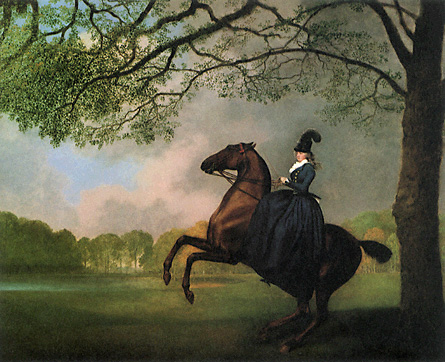
Stubb's talent was not limited to horses, or even the many cherished pets he portrayed. Overall, he was fantastic at portraying nature and his sitters' relationship to nature. Those who commissioned Stubbs for portraits were the aristocrats who tended to trade city life and the gaming tables for their majestic
country estates. Portraits of sitters riding about their property do two essential things: prove the sitter is in touch with nature and display their wealth by portraying their ability to own thoroughbreds and large vasts of land.
 |
| Countess of Conings by Livery of Charlton, c1760 |
 |
| Laetitia, Lady Lade, 1793 |
 |
| John and Sophia Musters riding at Colwick Hall, 1777 |
 |
| William Anderson with Two Saddle-Horses, 1793 |
 |
| Baron De Robeck Riding A Bay Hunter, 1791 |
 |
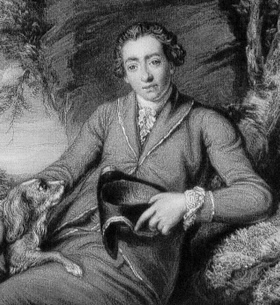
| Self-Portrait, 1782 |
Stubbs' lack of formal training adds a sense of folk art to the portrayals which make them all the more charming and appropriate to hang in those country homes. Although there is a sense of portraying the animal perfectly, which is lost on other aspects of the painting, that same painstaking skill is used in rendering the sitter's face. The true joy of painting can be seen in the background, in which Stubbs used a whole different technique in order to capture the landscape. His ability to capture all these varying elements easily transforms viewers into the work. I particularly enjoy his equestrian portraits because you feel as if you could just ride away into the painting with the sitters.