Showing posts with label Alcohol. Show all posts

Wednesday, May 18, 2011

Mind Your Drinking, Gentlemen

Many of us have hit the gin bottle for one reason or another and, as a consequence, have had a night they can't remember or don't want to remember.  Just ask Lord Santry who could tell you first-hand about the evils of drinking.

Harry Barry, Lord Santry was no stranger to drink and debauchery but it nearly cost him his head one fateful night in 1739.  Santry was boozing with his friends in Palmerstown to the point where he probably wouldn't be able to recognize his mother.  In the midst of this drinking a poor sap by the name of Loughlin Murphy dared to offend our most drunken of Lords.  One can only imagine what Murphy's offense was (my guess is Murphy was merely in the wrong place at the wrong time) but it offended Santry so much that he drew his sword...or at least attempted to draw his sword.  Since some form of sobriety is needed in order to utilize basic motor skills Santry failed in unsheathing his weapon.  He let Murphy off with a warning that he would run him through if he were to utter another word.  Murphy replied that he had no intention of offending his lordship to which Santry finally managed to free his sword and fatally stabbed Murphy. 

Despite Barry's efforts to cover up his crime he was sentenced by his peers and found guilty.  Luckily for him though, his buddy, the Duke of Devonshire, stepped in and secured a pardon from King George II who gave him a get-out-of-beheading pass.  But rest assured, the murderer spent the rest of his unhappy life riddled by debts which eventually lost him his home.

Tuesday, March 1, 2011

Puss and Mew

Last week I wrote of gin and how it basically became an illegal substance.  So what does one do when their favorite substance becomes illegal?  Sneak around the authorities of course!  The roaring 20's had their speakeasies and today we have our drug-dealers on the street.  What they had in the Georgian age was a combination of the two: the puss and mew.

Puss and mews were gin vending machines created when the law was passed decreeing that gin could only be distributed under license.  These machines weren't licensed and therefore quite illegal.  Any self-respecting gin-guzzler knew where to find these machines, which looked something like a door in a wall or even just a small slot.  You walked up to your puss and mew of choice and said "puss" then a voice would answer, "mew." Out popped the slot to reveal a little drawer into which you would place your money.  In goes the coins, out comes a dram of gin.

Quite the genius little "machine," no?  I just wonder how many puss and mew operators were sacked for drinking and then subsequently falling asleep on the job.

Monday, February 21, 2011

Gin: England's Drug

As we may recall from our adolescent health classes, heroine came to being due to a medicinal need.  The same is true of Gin, a drink that became an epidemic in early 18th century England.

Beer and wine have existed and been popular for centuries but it wasn't until the middle ages that hard liquor came to being.  Thank you Italy.  Aqua vitae is what they called it, and it was something like our modern brandy (burnt wine) and used for medicine rather than having a good time.  To make brandy you needed grapes, a fruit not exactly bountiful in the climates of northern Europe.  By the 15th century the renaissance mind figured out how to create grain alcohol and drinks, such as whiskey, soon followed (The Scots took up that trade, even exhausting their wheat fields in their excitement).  In the mid-17th century the Dutch invented gin and less than one hundred years later it was nearly outlawed.  Perhaps the Dutch Prince (cough, cough William!) running England could be partially to blame for the introduction of the Dutch-made liquor which caused such problems in London; after all, their arrival coincided.


Gin was an alternative to Brandy which had unpopular French connotations, so naturally that helped elevate gin's popularity.   As a country fond of their beer, the working class ordered their gin in the same quantities as their beer, unaware of the fatal results.  People (poor people, usually) would consume such large quantities they would literally drink themselves to death, sometimes in one sitting.  Soon people made the connection of the sudden increase in public fighting with the popularity of gin.  What especially seemed to horrify witnesses to the Gin Craze was its effect on women.  Many of the bloody brawls were cat fights, The Grub-Street Journal reporting of a woman "beating off" another's nose.  There was also a story of a woman tearing off her infants clothes to pawn them for a drink.  Although gin mostly terrorized the poor, the rich were also subject to its charms.  Queen Anne was known for her love of the drink.

If you are morally outraged by hearing that, you now know how others felt when these many reports reached their ears.  England had a drug problem.  In 1736 the Gin Act was created and the cheaply-produced liquor was now heavily taxed.  You also needed a license to distribute gin which was quite expensive and had to be renewed annually.  Only two people actully took the license out.  The gin craze would and could not be stopped.  The government then set about rewarding informers who tattled on unlicensed gin distributors.  That caused even more violence. 

The gin laws were revised with the Gin Act of 1751.  Instead of being a strict reaction to the trouble caused  by gin, the new laws made it so that one didn't have to go through hoops to drink gin, but you still had to be better behaved.  Following the second Gin Act, the consumption of the liquid nuisance went down.  However the bad grain crops that ironically occurred at the same time and consequential rise in prices are more to blame for that than the revised law. 

Monday, November 22, 2010

John Jameson, The Scot Who Makes the Best Irish Whiskey

Guinness isn't the only popular Irish alcohol that been brewed up since the 18th century.  Just as Guinness is synonymous with Irish beer, Jameson is synonymous with Irish whiskey.  The recent ad campaigns in the US have been capitalizing on that legendary Irish nature.  However, John Jameson was Scottish!


Believe it or not, the whiskey business was a second career of John; a mid-life crisis decision of you will.  He was originally a lawyer in Scotland but John had a dream and that dream was to make a delicious whiskey and the place to do that was Dublin. Of course, moving to a city known for its whiskey was jumping headfirst into a competitive field.  Dublin had many distilleries and breweries in the 1780s.  John knew if he wanted to keep his Bow Street distillery he would have to make his product stand out, so he used different ingredients.  It was common for whiskey to be distilled twice in the 18th century, and John opted to distill it thrice for good measure, to this day Jameson still brags about "triple distilling" their whiskey.

Another smart business move was giving the workers good wages; happy workers means happy whiskey.  John knew his workers' names too and was known for giving them creative nicknames and he had no problem having a drink with them after their shift.  In fact, he was known to throw parties at the distillery on a regular basis.  Just imagine, taking the time to set and powder your hair to attend a distillery party!  Yes, it seems that John Jameson was quite the entrepreneur which is why his whiskey is still popular today.  So when you sip on that whiskey today you're tasting an authentic 18th century brew, cheers!

Wednesday, July 21, 2010

Marking Colonies with Swizzles

It's hot outside and you can only drink so many baybreezes and pina coladas before you need a new fun summer drink. How about an old 18th century one?

Rum Swizzle
1 shot of dark rum (although 2 of malibu rum couldn't hurt anyone)
1 ounce lime juice
1 ounce orange juice
A splash of falernum

Shake with ice in martini shaker or blend and pour into your most 18th century-looking glassware. Garnish with lime or orange slice and cherry.

Yum yum! The swizzle is Bermuda's national drink (there are national drinks??) and if you have the great fortune of visiting the island paradise your trip cannot be complete without visiting the Swizzle Inn which is an adorable little pub that specializes in, you guessed it, swizzles.

Funnily enough the swizzle seems to colonize as well as the British Empire. In 1760 the people of Fort Ticonderoga were guzzling down swizzles in between battles of the French and Indian War. Later, in the following century, the swizzle appeared in various islands such as Saint Kitts, Barbados, Saint Thomas, and the Virgin Islands. Of course, the drink was also being enjoyed in England at the time as well, but one can only imagine the variety of ways the drink was prepared over time and borders.

So now that you have your new summer drink I will will leave with the parting words that are the Swizzle Inn's motto: "Swizzle Inn, swagger out!"

Wednesday, May 5, 2010

Georgiana Drinks

This weekend Lauren, Vic and I began a conversation on Twitter about drinks themed after our favourite icons. Being the lush that I am, I proclaimed I would come up with a Georgiana-inspired drink (or two) just in time for Cinco de Mayo.

Devonshire Brown Martini
Drizzle chocolate syrup into empty martini glass
1 oz VanGough chocolate vodka
1/2 Godiva chocolate liqueur
1 oz Devonshire Irish Cream
Top with whipped cream and or cherry

Kisses For Votes aka Blue and Buff
Champagne of your choice
A dash of Blue Curacao liqueur
Top with cherry

Duchess of D--
3 oz Everclear
8 oz Sprite
6 oz Strawberry Margarita Mix
Blend together with ice and serve in chilled glass

Monday, September 14, 2009

The 9,000 Year Lease

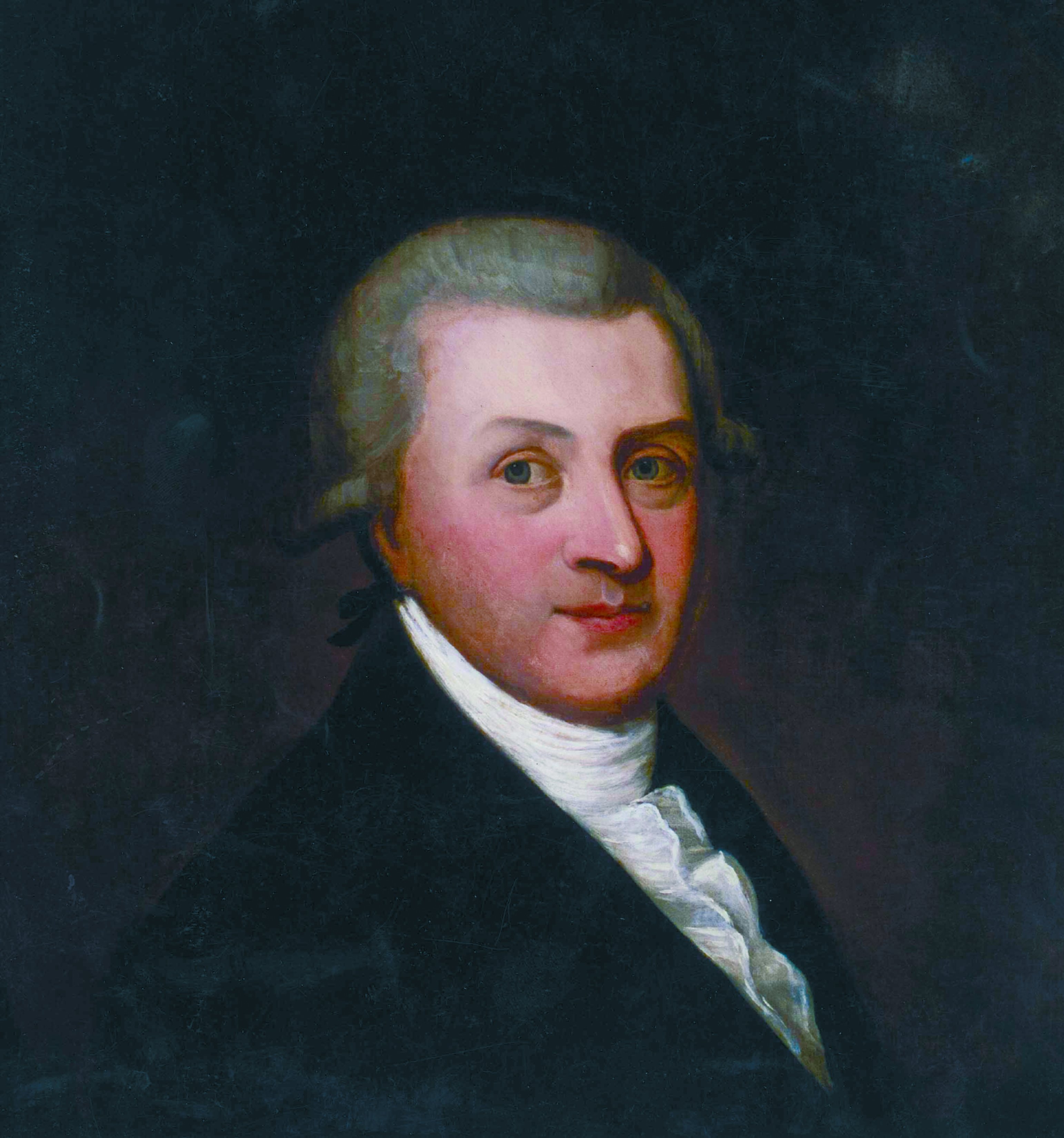
It's time to bring up an event that is close to my heart: beer. Well, I shouldn't say beer because I'm a beer snob and have a favourite kind which would be Guinness stout. It only figures after all, I'm of Irish descent AND Guinness is a product of the eighteenth century! Yes, that 1759 on the label is a proclamation that you are drinking the same beer our enlightened friends once did, and you don't even have to go to a historical reenactment tourist trap to drink it either! God bless that maverick Arthur Guinness!

In 1755 Arthur took a risk and opened up a brewery outside of Dublin with £100 that was bequeathed to him in his godfather's will. The brewery was such a success that he decided to take an even bigger risk and move his business to the capital. He found a nice little plot in the west of the city and signed a 9,000 year lease at £45 a year. This was St James Gate and Guinness is still brewed there to this day. St James Gate itself, is full of history. It was the western gate to medieval Dublin and the starting point for Irish pilgrims. A brewery was put in in the late 17th century and that is where Arthur would establish his Guinness brewery.

250 years later and we are still enjoying the iconic stout. Can you believe it's been 250 years since that lease was signed? Well, not quite yet. September 24 will be Arthur Day which marks when he signed the lease for St James Gate. So at 17:59 GMT you must raise your pint of Guinness for a worldwide toast to the enlightened entrepreneur. Cheers!