 W
When I think of tooth care in the 18th century one of the first images that pops into my mind is David's sketch of Marie Antoinette as her cart was wheeled by on the way to the guillotine. It has been criticized by some as being inaccurate; David was biased in his feelings for the doomed queen and therefore portrayed her as haggard and the opposite of the many colorful portrayals of her during her rein. But in this case I believe bitterness did not fuel David's pen and we see the results of the stress Antoinette went through in her final years. This is
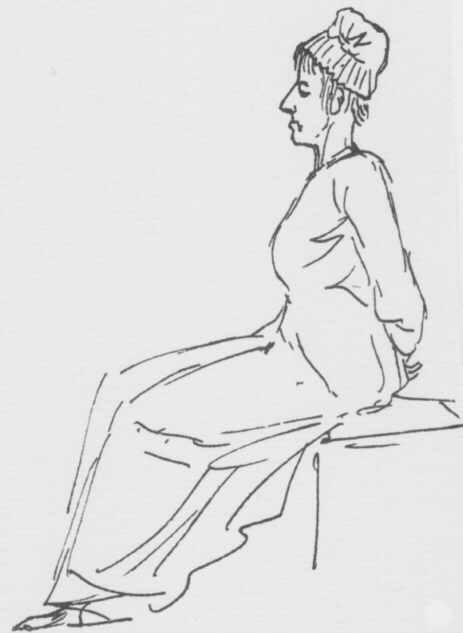
most notable in her jawline which looks too haggardly for a 37 year old to our modern eyes. But the truth is that even the queen of France, like many people of the age was missing a few teeth.
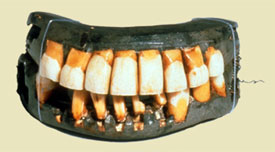
Heads of Nations and Their Missing TeethMarie Antoinette was in good company with her dental dilemma. George Washington has long been known for having wooden teeth. The wooden part is a myth (Mr. Washington had ivory dentures) but the lack of teeth is quite true; poor George began loosing his teeth in his 20s. And so was the case for many due to lack of proper nutrients, vitamins (especially in the case of pregnant women) and of course, sweets! While the ancient Greeks were the first to discover the connection with sugary foods and bad teeth, this useful information was forgotten and it wasn't until the 18th century that dentist, Thomas Berdmore was the first to print his hypothesis about sugar being bad for teeth. So, like gout, cavities also plagued the well-to-do due to their being able to indulge in fancy foods.
Tooth CareIt wasn't like George Washington didn't take care of his teeth. He actually brushed them every day! Mount Vernon still has the president's silver toothbrush and tongue scraper. The first mass-produced toothbrush came from England in the 1780s although I can't tell you how popular it was. Bad breath was certainly unpopular and people were criticized for the unbecoming attribute.
 Lack-of-Tooth Care
False teeth were a common solution for those teeth that wouldn't stay in place. They also were probably more ornamental than functional. Another 18th century invention was denture paste which came out of France in the 1790s. Nicholas Dubois de Chemant created the paste to go with his new porcelain dentures which were one solid piece, no separate teeth. Although this sounds quite frightful, the dentures were quite popular. If you were only missing a few teeth, you could have real or fake ones transplanted. Your tooth would be pulled and someone else's would be inserted into its place. A string or silver wire would then be used to anchor the tooth, by tying it to the others. Hopefully the root would take to the new location, in which case, you had to try another tooth.
 A Visit to the Dentist
The word "dentist" was still not exactly being used in the 18th century, and it was more of a side-job still at the time. For instance, Paul Revere the silversmith also advertised his abilities in dental work. Why a silversmith? Well, cavities needed fillings after being drilled. The best and most pricey filling was a gold filling. Alternatives were pitch, beeswax, and even lead which I can't imagine as being too successful. Porcelain fillings seemed like a good idea since they were white and but their acidity killed the tooth nerve, leaving the filling white but the rest of the tooth black.
Without modern anesthesia, you might imagine a trip to the dentist to be far more unpleasant than it is today. Jane Austen described one such trip with her nieces in 1813 who had to get their teeth cleaned, filed, and fillings. Austen described hearing her niece's screams from an adjacent room while her teeth were drilled, going on to claim the dentist was "...a Lover of Teeth & Money & Mischief."
 Say Cheese
But usually these various treatments were all in vain and people like George Washington's teeth would fall out. This made for an awkward trip to get your portrait painted. Many portraitists found that the awkward dentures made for an equally awkward shape of the face. Padding would be put in your mouth to fill in the cheeks for a more natural, teeth-filled mouth look.
It may be surprising how advanced dentistry was in the 18th century. The century saw the first dental chair, foot powered drill, and even orthodontics. Thomas Berdmore recommended jerry-rigging a wire insert to adjust out of place teeth. At the same time, dentistry was also extremely painful and the improvements came with many risks. Perhaps I would have just let my royal teeth fall out too!
Further Reading:
Time lineA Visit to the DentistThe 18th century dentist's guide to 'a brilliant smile'


