During the height of Emma Hamilton's celebrity, English visitors touring Italy would make sure to stop at the Hamilton homestead to check out her 'attitudes.' Emma would pose in the classical positions (or attitudes) found on Greek vases, much to the delight of all who saw. These were witnessed and drawn by many great artists of the time. One particularly enterprising artist, Fredrich Rehberg, drew Emma's attitudes and made them into a collection of prints so that the poor souls who couldn't afford to see this tourist draw could relive it every day in book form. Rehberg called this book, Drawings faithfully copied from nature at Naples : and with permission
dedicated to the Right Honourable Sir William Hamilton, His Britannic
Majesty’s Envoy Extraordinary and Plenipotentiary at the court of Naples
/ by his most humble servant Frederick Rehberg, historical painter in
His Prussian Majesty’s service at Rome. What a mouthful.
However, poor Emma, like many celebrities today, struggled with weight issues (among other things). Unlike celebrities today, there was no strict workout regime for Emma to undergo to maintain her slim figure. Emma grew bigger, but that didn't stop her from receiving visitors and displaying her attitudes. It wasn't long before this caught the eye of satirical artists back in London. In 1807 a new version of the book came out under the title, A new edition considerably enlarged, of Attitudes faithfully copied from
nature : and humbly dedicated to all admirers of the grand and sublime. Although a characterization, the satirical artist's (probably Gillray) prints were fairly accurate: Emma was obese by 1807 due to years of food and alcohol abuse. But with that said, I must say that I much prefer the satirical version of Emma's attitudes!
Showing posts with label James Gillray. Show all posts
Sunday, March 24, 2013
Thursday, April 28, 2011
Tart Weddings: Maria and George Prince of Wales
It's the day before the big day! The festive occasion bring to mind another English prince who set his eyes upon a another commoner and decided to make her his wife. Let's hope these latest royals at the alter have better luck! At least they have the sovereign's backing!
Maria had two husbands under her belt when she first met George Prince of Wales. The first, Edward Weld, died three months after the wedding; the second, Thomas Fitzherbert, died three years after the wedding. Maria then went into a sort of state of retirement and began a socialite life in London, it was there that she met the young prince. Prinny was almost instantly smitten with Maria and pulled out all his tricks to seduce her. But Maria wasn't going to budge, she was not interested in filling the role of "royal mistress." The prince would have to resort to more desperate measures.
One night while Maria was kicking up her heels at home there was a sudden desperate pounding on her door. It was two messengers come to tell her that the prince had stabbed himself almost to death. His dying wish was to see Maria. She flew to her carriage but not before asking to make a stop on the way to Carlton House. That stop was Devonshire House. Georgiana was enjoying drinks on the balcony with friends when she was called away and explained that her presence was needed and it was of dire importance. Feeling as though she had no choice in the matter Georgiana handed party-duties off to her sister and joined Maria on the trip to Carlton House. There they found the prince covered in blood, dramatically begging for Maria's hand in marriage. She accepted, but a ring was needed to seal the deal which Georgiana begrudgingly provided. The next day, Maria realized the magnitude of what was done (the prince couldn't marry without his father's permission, especially a Catholic) and possibly realized that she had been duped. She flew to France to hide out in hopes Prinny would forget about her in her absence.

In this case though, absence does make the heart grow fonder and Maria eventually gave in to her yearnings for her socialite life...or a royal husband. The December 15, 1785 ceremony was sketchy. The two were married in the drawing room of her London home by Prinny's chaplain whose payment was the £500 bond needed to get him out of debtors prison. Maria's brother and uncle served as witnesses. Not quite the usual royal wedding.
Of course King Dad was not pleased at all when he found out. However he considered the marriage null and void since it was illegally done. That didn't stop Prinny from seeing Maria, especially after his marriage to Caroline of Brunswick. Maria considered Prinny to be her rightful husband (and a bigamist) until the day she died. When he died in 1830, he wore and was buried with, a miniature of her around his neck.
Maria had two husbands under her belt when she first met George Prince of Wales. The first, Edward Weld, died three months after the wedding; the second, Thomas Fitzherbert, died three years after the wedding. Maria then went into a sort of state of retirement and began a socialite life in London, it was there that she met the young prince. Prinny was almost instantly smitten with Maria and pulled out all his tricks to seduce her. But Maria wasn't going to budge, she was not interested in filling the role of "royal mistress." The prince would have to resort to more desperate measures.
One night while Maria was kicking up her heels at home there was a sudden desperate pounding on her door. It was two messengers come to tell her that the prince had stabbed himself almost to death. His dying wish was to see Maria. She flew to her carriage but not before asking to make a stop on the way to Carlton House. That stop was Devonshire House. Georgiana was enjoying drinks on the balcony with friends when she was called away and explained that her presence was needed and it was of dire importance. Feeling as though she had no choice in the matter Georgiana handed party-duties off to her sister and joined Maria on the trip to Carlton House. There they found the prince covered in blood, dramatically begging for Maria's hand in marriage. She accepted, but a ring was needed to seal the deal which Georgiana begrudgingly provided. The next day, Maria realized the magnitude of what was done (the prince couldn't marry without his father's permission, especially a Catholic) and possibly realized that she had been duped. She flew to France to hide out in hopes Prinny would forget about her in her absence.

In this case though, absence does make the heart grow fonder and Maria eventually gave in to her yearnings for her socialite life...or a royal husband. The December 15, 1785 ceremony was sketchy. The two were married in the drawing room of her London home by Prinny's chaplain whose payment was the £500 bond needed to get him out of debtors prison. Maria's brother and uncle served as witnesses. Not quite the usual royal wedding.
Of course King Dad was not pleased at all when he found out. However he considered the marriage null and void since it was illegally done. That didn't stop Prinny from seeing Maria, especially after his marriage to Caroline of Brunswick. Maria considered Prinny to be her rightful husband (and a bigamist) until the day she died. When he died in 1830, he wore and was buried with, a miniature of her around his neck.
Monday, January 31, 2011
Judge Thumb
Many of us have heard/used the phrase, "rule of thumb." Some may even know the phrase's notorious origin. It is yet another phrase, still used today, that we can thank 18th century England for.
Sir Francis Buller at the age of 32 was the youngest justice ever appointed to the King's Bench, a mere six years after he was called to the bar. You may think this would mean his actions as a judge to be just and good but that wasn't necessarily the case. He was known to be bull-headed and impulsive in his judgments. Justice Buller was most known for his stance on domestic abuse. Supposedly, he believe there should be a "rule of thumb," that is, a husband could beat his wife, as long as it was with a stick no longer than his thumb. This rule was never adopted legally. As silly as the rule sounds now, it sounded just as foolish in 1782. James Gillray especially thought so and dubbed Justice Buller, "Judge Thumb," making him quite the laughing stock of the justice system.
Ironically, Buller was one of the judges which presided over Mary Eleanor Bowes' extreme case of domestic abuse. However, Mary's horrid husband, Andrew Stoney's abuse shocked even Judge Thumb who was disgusted by Stoney's actions and threw him into prison. So although he was a bit medieval in his ideas on domestic felicity, Buller wasn't a complete misogynist!
Sir Francis Buller at the age of 32 was the youngest justice ever appointed to the King's Bench, a mere six years after he was called to the bar. You may think this would mean his actions as a judge to be just and good but that wasn't necessarily the case. He was known to be bull-headed and impulsive in his judgments. Justice Buller was most known for his stance on domestic abuse. Supposedly, he believe there should be a "rule of thumb," that is, a husband could beat his wife, as long as it was with a stick no longer than his thumb. This rule was never adopted legally. As silly as the rule sounds now, it sounded just as foolish in 1782. James Gillray especially thought so and dubbed Justice Buller, "Judge Thumb," making him quite the laughing stock of the justice system.
Ironically, Buller was one of the judges which presided over Mary Eleanor Bowes' extreme case of domestic abuse. However, Mary's horrid husband, Andrew Stoney's abuse shocked even Judge Thumb who was disgusted by Stoney's actions and threw him into prison. So although he was a bit medieval in his ideas on domestic felicity, Buller wasn't a complete misogynist!
Thursday, August 12, 2010
Georgian Holidays Through Satire
Sorry everyone, I have vacations on my mind, so that will be projected onto the blog. Today let us take a journey through the satirical Georgian holiday, there is still a thing or two we can learn.
Be prepared for bad traffic...
...in worst-case scenarios you will have to resort to ducking behind a bush or carriage when nature calls.
Or if you are in the position of trusting your luggage to others, pack accordingly, loosing luggage is never fun.
Remember, just because you're on vacation doesn't mean you should get too out of control, just a simple out of control should be enough.
Be sure to be conscious of any skin slip-ups when swimming, the beaches are usually crowded and you never know who is around.
Please dress appropriately on hikes and nature walks.
Try to add a little culture into your trip, visit a local museum.
Sample the local fair, don't be afraid to over-indulge.
Last but not least, have a great time but be safe doing it!
| James Gillray, Middlesex Election, 1804 |
![]() |
| Thomas Rowlandson, Family on a Journey Laying the Dust, 1800 |
![]() |
| Thomas Rowlandson, Portsmouth Point, 1811 |
| Carington Bowles, Two Bloods of Humour..., 1771 |
![]() |
| George Cruikshank, Royal Embarkment, 1819 |
![]() |
| Anon., Mlle des Faveurs a la Promenade a Londres, 1775 |
![]() |
| Thomas Rowlandson, Exhibition Room, Somerset House, 1808 |
![]() |
| James Gillray, Monster Crawls at a New Coalition Feast, 1787 |
![]() |
| James Gillray, The Pursuit of Knowledge, 1799 |
Monday, July 5, 2010
Fashionable Contrasts
Gillray's print, Fashionable Contrasts may be familiar to many of you. But whose feet are those?
This was the satirical artist's marriage gift/big English welcome to Princess Frederica when she married Prince Frederick (Duke of York). Yup, as if it weren't cruel enough to be named Fred, the couple now each had a spouse also named Fred. Frederica had notably dainty feet, which was apparently easy fuel for Gillray's satirical fire. But were her feet really that tiny? Sources say they were a mere 5.5 inches long. That would be the equivalent to about a children's shoe size 7 (US). Given, Frederica was reportedly pretty short even for the 18th century but she became quite famous for her tiny toes.
Friday, June 26, 2009
Tart of the Week: Hannah Humphrey

Hannah Humphrey is one of those women who is amazing in the sense that she was a self-sufficient female who managed to be one for most of her life, and come out unscathed. I can't tell you much about dear Hannah's beginnings (possibly born around 1745) but I can tell you her brother, William was a publisher and print seller on Gerrard Street in London. Hannah likely learned the tricks of the trade from her brother and decided to begin her own print shop where she would publish as well. This was quite a risk for a woman in London, on many accounts. In order to protect her reputation, Hannah did as many actresses tended to, and went by Mrs. Humphrey, for a married or widowed woman with a business was much more acceptable than a single one.
Hannah established her print shop on Old Bond Street.
The storefront was black with gold lettering which read, Humphrey's Print Shop. A large Bay window was covered from head to toe in all the prints Hannah published. The inside of the shop was just as posh, with mahogany counters. People would stop, gawk, and giggle over the storefront and be enticed into spend a few shillings on a satirical print. The shop was one of the most successful print shop in London and it even attracted customers like the Prince of Wales, who was usually on more than one of the prints in the window. One of the decisions Hannah made as a print seller was to exclusively sell (usually bawdy) satirical prints and to exclude prints made after paintings. This was another risk, but Hannah was looking for a certain clientele.Hannah's shop not only attracted a particular clientele but a particular artist. James Gillray knew Hannah through her brother, who published some of his prints. In 1791 Gillray exclusively published with Hannah, so if you wanted to buy one of his prints there was only one place to get them. Above the Humphrey's Print Shop was apartments where Hannah took residence. Gillray also conveniently moved into a room above the shop. Now I would be the last to start rumours here, but isn't it a little suspicious to have a single man and woman living in such close proximity? There were many rumours going around about Hannah's and Gillray's "professional" relationship, especially when he followed her when she moved her shop to New Bond Street and then again to fashionable St James Street. It is said that Gillray thought of proposing to Hannah numerous time, and even did one day on their way to church. But that could just be the talk of romantic gossipers.
Hannah was with Gillray up until his death. Poor Gillray went insane after a bout of depression and failing to commit suicide and was looked after by Hannah for the remainder of his life (six years after producing his last print). Hannah, herself died a few years later in 1818. She died a respected and extremely successful businesswoman.
Tuesday, May 26, 2009
The Genesis of Rowdy Rowlandson
Thomas Rowlandson is often disregarded when we think of great artists of the eighteenth century. You may have noticed from this blog's banner that I am quite a fan of the sometimes raunchy satirical artist. So, for those who are not familiar with him, let me introduce Rowlandson to you.Rowlandson's artistic talent was noticed from a young age. But the artist was not without his own initial setbacks. For one, he was not the son of an artist, his father was a simple city tradesman from Old Jewry, London. Still, education was a priority in the Rowlandson household and this city boy spent his youth in school. His big break came at the age of sixteen when he was given the opportunity to be a student at the illustrious Royal Academy and then later study in Paris. He first exhibited a painting in 1775 and was on a nice, productive roll. Then, disaster. You know those fictional aunts we all wish we had that die and leave you obscene amounts of money in their wills? Well, Rowlandson had a non-fiction one who left him £7,000 when she died. Rowlandson did what anyone else living in 18th century
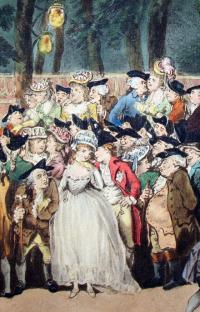
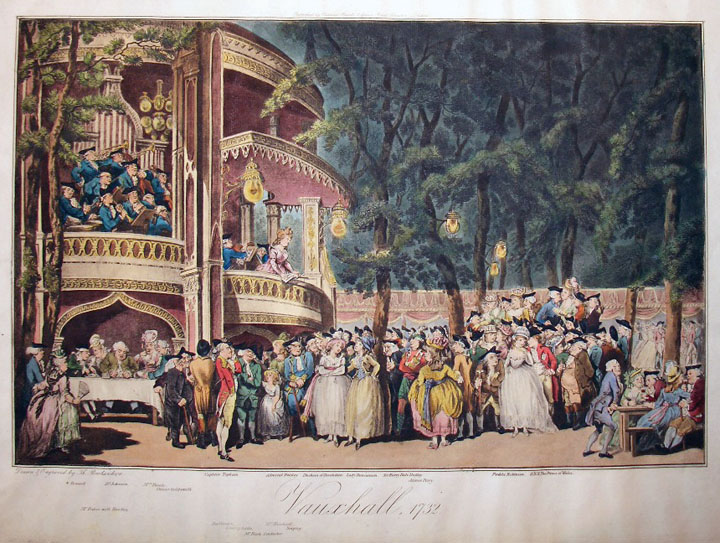
Rowlandson needed to get back on his feet, and fast. His friends Henry Bunbury and James Gillray, who just happened to be caricaturists, suggested he take upon their 'lower' form of art. That way he could produce work faster and generate money from selling prints. He began slowly, with his drawing of Vauxhall which bordered on satirical, by displaying the great celebrities of the time. While the drawing was exhibited, prints were selling left and right. Rowlandson decided this caricature gig might not be so bad after all. Soon enough he was pumping out satirical images which has given us some of the best political, social, and celebrity commentary of the time.
Tuesday, August 12, 2008
Dr Graham and The Sex Machine
There have been many quack doctors in the past but the most notorious of the 18th century is arguably Dr James Graham. It’s hard to even know where to start with this character so I will just introduce him as a typical celebrity. Like our contemporary celebrity doctor, Dr Phil, Graham didn’t entirely know what he was talking about, and people didn’t necessarily believe him yet he still had flocks of people flooding to his practice, mostly the rich and celebrities.The Scottish doctor had a rather nomadic start. After going to medical school (notice I didn’t say ‘graduating’) he moved to the American colonies where he learned some electricity basics from Ben Franklin’s friend. He turned his tail and ran at the first hint of revolution and ended up in a variety of European cities, gaining a name for himself along the way. His specialty: sex therapy.
TEMPLE OF HEALTH
By 1779 Graham had acquired enough press and money and in 1780 he was able to open his infamous Temple of Health. It cost a crown for admittance and modest ladies were given masks at the door so their privacy was preserved and gossip could not be spread about infertility. Among gaudy gilded decorations and soft playing music, guests would listen to Graham’s pretentious lectures in his auditorium. This usually ended with a sharp electric jolt from their seat which was supposed to cure impotence and infertility. Graham employed lovely assistants as his ‘Goddesses of Health’ and they dressed scantily in Classical drapery. It has been rumoured that Emma Hamilton was one of these Goddesses but her biographer Flora Fraser argues against this gossip.
THE CELESTIAL BED
The Temple was a success and allowed him to build the Temple of
Hyman in Pall Mall which in 1781 housed his invention, the Celestial Bed. The electro-magnetic bed was available to desperate couples attempting to conceive who could afford the £50 charge; about £3,000 today. Gilt dragons adorned the bed along with the saying (in Latin) “It is a sad thing if a rich man has no heir to his property.” To the sounds of music, a couple would make love on the bed while “magnetic fire” was pumped into the room. While the couple watched themselves copulate from the mirror on the bed’s canopy a tilting inner-frame helped position them in the best stance for conceiving.Of course on top of using this bed, customers were urged to buy Graham’s special products to further aid in conceiving an heir.
CELEBRITIES
Celebrities were drawn to the temples like moths to the flame. Even ones like the Prince of Wales, who obviously didn’t need any help conceiving, were known to frequent Graham’s creations. It was just the “in” thing to do. After years of miscarriages Georgiana and the Duke went to the temple in hopes of producing an heir, to no avail. Other celebrities who were associated with the temples were Charles James Fox, Elizabeth Armistead, the Duke of Richmond, and John Wilkes. Mary Robinson’s reputation began to disintegrate after it became public knowledge that she was a patron of the quack. Not because he was a quack but because he was a sex-quack!
Like with most celebrities, what comes up must come down and this was the case with Graham as well. He went bankrupt in 1782 with the help of The Morning Herald and James Gillray’s campaigns against his quack-practice. Plus it probably didn’t help that his methods didn’t actually work either. He was imprisoned for debt and then went insane and died in 1794.

In this satirical print, Graham is flanked by his famous customers including Fox (center), Mary Robinson and Grace Ellitot (top)
Friday, June 6, 2008
Tart of the Week: Mary Eleanor Bowes

Mary Bowes was many of the many female antagonists in English media. For whatever reason she was made out to be the biggest bitch on the block, and maybe that's why I like her so much.
Raised by a libertine rake, Mary became one of England's richest heiresses upon her father's death when she was merely 11. She was extremely smart and rather than spending all her money frivolously she would put it towards advancing her knowledge by buying things such as experimental hothouses to raise exotic plants. She also hung out in bluestocking groups and spoke her mind and didn't care who that bothered. At 18 she married the Earl of Strathmore who would complain about every aspect of her except the fact that she slept around. He thought she had a sharp tongue, was malicious, and had an unhealthy love of cats and dogs. Don't you love Mary? The press hated Mary and capitalized on her love of cats and known
dislike of her young son.Then some real dramz began.
After her husband's death from consumption Mary met Andrew Robinson Stoney whom she fell in love with. She married him and he took her last name in order to secure some of her inheritance. No sooner had they married than Stoney became a total bastard. He beat her, had numerous affairs, sold her beloved greenhouses to pay off his gambling debts, and controlled her every movement including her personal letters. He even forced her to write a memoir called Confessions in which he had her lie about her past life so he could have something to blackmail her with. Finally Mary found an escape and was able to have him arrested and tried for abuse.
But that wasn't the end of Stoney.
He began stalking her, becoming increasingly obsessed with her. He began to commission more damaging satires of her to publicize her sinful and malicious ways. Hired goons watched her every move. One day she was assaulted and kidnapped in her own coach which quickly exited London to the cries of "Murder!" Stoney had kidnapped her and for 11 days drove all over the country torturing and beating his former wife. The abduction was highly publicized and Mary was saved and Stoney captured. He was tried and found guilty but continued to burden her life, eventually publishing her Confessions that he had forced her to write. Mary was now safe but she never gained a positive reputation despite the empathy she received from her abduction.
Thursday, May 22, 2008
Gossip from France: Charlotte Corday
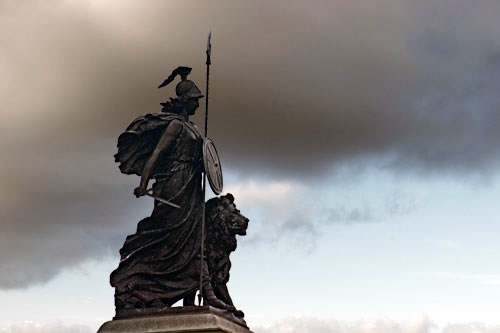
Without getting into too much detail, because this is another post with babble-potential, I'd like to touch upon the imagery of Charlotte Corday, who definiately wins the prize for "Most Spartan" Frenchwoman. But I'd like to look at it from the English perspective. To review, Charlotte was the broad who took matters into her own hand when the executions in the French Revolution became too numerous. Placing blame on Jean-Paul Marat for the out of control killing sprees, Charlotte assassinated Marat with a butter knife in his bathtub. Well, maybe not a butter knife, but she she did buy a kitchen knife right beforehand to do the job. She was of course punished with the original execution of death by guillotine.This of course this made her a martyr. The French despised her for her actions. A man even lifted her freshly severed head from the guillotine basket to slap her cheek. The English, on the other hand, idolized the murderess. As can be seen in this Gillray print, Corday is one of the few women to be portrayed in a positive light by the satirical artist. Her depiction is very similar to those of Britannia, a rare compliment for those not of English origin. Don't you just love how in this depiction Charlotte address the assembly as "Wretches," plus I doubt Gillray ever put so much time into making a hairdo look nice as he did with this print. It should also be noted how incredibly un-French Charlotte looks, she looks more hmm...British? Her depiction is notably in the British vogue.
The British, who have a tradition of enjoying a good rebellion (unless it was against them) felt France crossed the line with the execution of Louis XVI. Charlotte became, for them, a symbol of liberty; the exact thing France was fighting for. The French disagreed with this viewpoint, and felt it was Marat, the guy who died taking a bubble bath, who was the true martyr.
Subscribe to:
Posts (Atom)