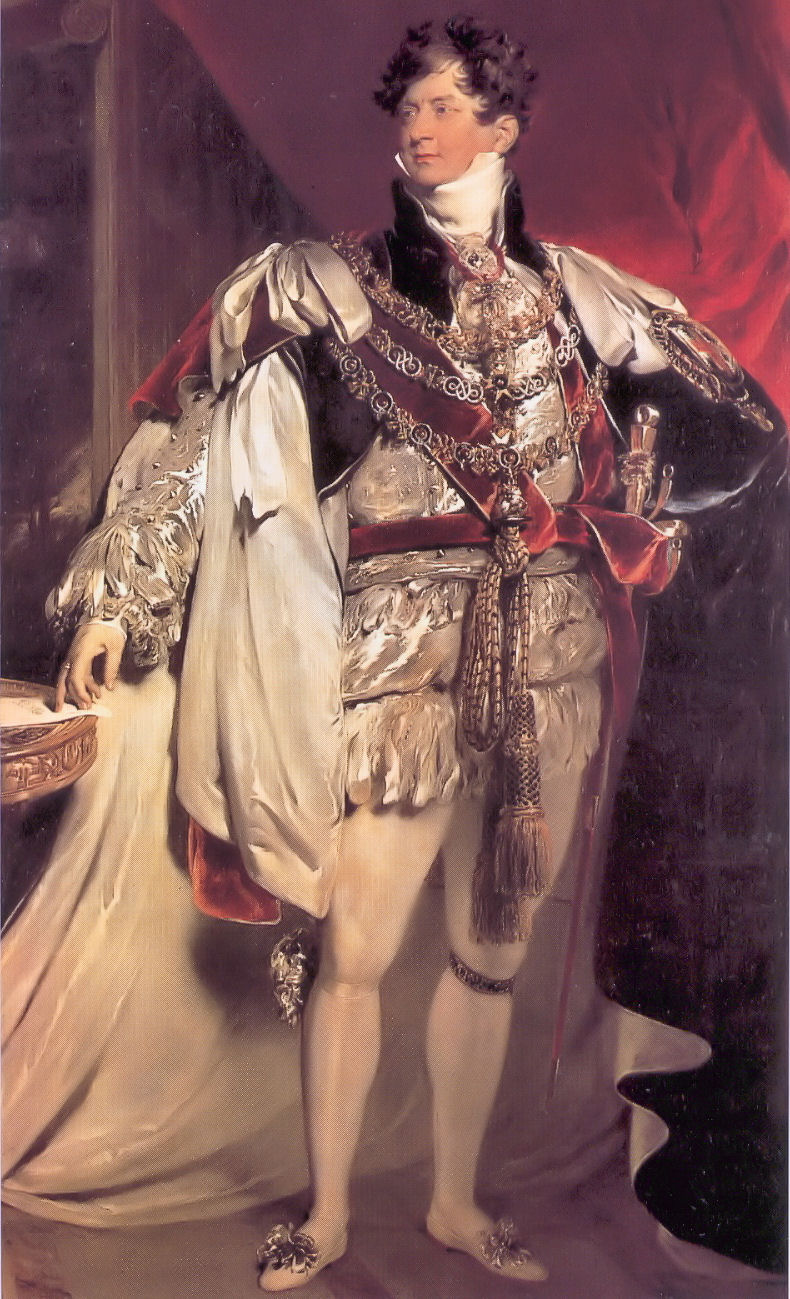
Showing posts with label Prince of Wales. Show all posts

Tuesday, December 23, 2014

A Royal Joke

Poor Mrs Fitzherbert.  Aside from the pain of being attached to the Prince of Wales, the unfortunate woman also seemed to suffer from a deficiency in brains by most accounts...which is likely how she got stuck with the prince to begin with.

Even though the Prince refused to socialise with people who refused to invite his illegal wife to their events, he and his family weren't entirely kind to Maria Fitzherbert Hanover.  Court gossip, Lady Mary Coke's letter tellsof one such occasion that left Maria publicly mortified.  While taking a walk with some of her friends and her husband in Windsor, enjoying the fresh air by the water's edge.  The Duke of Cumberland (the prince's uncle) approached Maria, and making polite conversation, asked her if she could swim.  When she responded that she 'thought she could,' he swiftly pushed her into the water.  Being that this was 1789, you can only imagine the layers upon layers of soaking wet muslin and delicate little shoes that were ruined in this display of 'humour.'  While poor Maria cried, the Duchess of Cumberland (and presumably, her hilarious husband) burst into laughter.  Mrs Fitzherbert wasn't injured, but I am sure her ego surely was.  Lady Mary Coke seemed to have little sympathy for her story's subject either, stating the whole thing was brought about 'by the company she is so desirous of keeping.'

Friday, September 2, 2011

Elegance & Decadence & A Fat Regent

The BBC keeps serving up so many good historical programs lately it is making me give The History Channel a very intentional side-eye for their lack new material that doesn't have something to do with pawning or whathaveyou.  Take for example Elegance & Decadence, a small series Lucy Worsley put together to explore the regency era.  Sound awesome? Why of course it is!  Evangeline from Edwardian Promenade was kind enough to put the first episode up here so you can watch it in its entirety.  It mostly explores our good friend the Prince of Wales and even goes on to mention a bit about his girth which we were just gossiping about. How timely!

Those lucky enough to have a TV in the UK can watch the next segment of the series this coming Monday.

Wednesday, August 24, 2011

Fat George, Fashion Icon

 "Who is your fat friend?"
-Beau Brummel


George Prince of Wales was not a prince to be taken very seriously and then he became king, he wasn't much of a king to be taken seriously either.  Perhaps the saddest part of this recollection was that he was regent for a mad king, making a hedonistic and incompetent young man the backup for ruling an Empire.  Ah, monarchy!

Surprisingly enough the Prince's hedonism led to some of the famous fashion trends of the time period that was named after him, the Regency era.  The foppish prince was never slender but always enjoyed being rather fashionable.  By the 1790s George's waistline was in serious trouble, earning him the affection nickname, The Prince of Whales.  It was challenging for a egotistical prince to continue in his role as a fashionista with his stomach spilling over his trousers so like the cartoon character that he was, he began wearing a corset.  At one point the corset had to reach around fifty inches of waist and required some strong servants to string him into it.  The corset may have given George a slightly daintier shape but it couldn't cover up the double and triple chins he was sporting so George began wearing high collars -- extremely high collars.  The collars caught on and began to be part of every fashionable male's outfit. 

Overall, George did pretty well in disguising his girth with dark colors, corsets, high collars and whatever else.  Looking back on his portraits from the time you wouldn't exactly call him obese, although flattering portrait painters like Lawrence, could probably be credited for that.  However when the sovereign's head appeared on currency in the traditional roman motif, there was no disguising the king's weight from his subjects....or the fact that they had been dressing in weight-disguising fashions the whole time!

Thursday, April 28, 2011

Tart Weddings: Maria and George Prince of Wales

It's the day before the big day!  The festive occasion bring to mind another English prince who set his eyes upon a another commoner and decided to make her his wife.  Let's hope these latest royals at the alter have better luck!  At least they have the sovereign's backing!

Maria had two husbands under her belt when she first met George Prince  of Wales. The first, Edward Weld, died three months after the wedding; the second, Thomas Fitzherbert, died three years after the wedding.  Maria then went into a sort of state of retirement and began a socialite life in London, it was there that she met the young prince.  Prinny was almost instantly smitten with Maria and pulled out all his tricks to seduce her.  But Maria wasn't going to budge, she was not interested in filling the role of "royal mistress." The prince would have to resort to more desperate measures.

One night while Maria was kicking up her heels at home there was a sudden desperate pounding on her door.  It was two messengers come to tell her that the prince had stabbed himself almost to death. His dying wish was to see Maria.  She flew to her carriage but not before asking to make a stop on the way to Carlton House.  That stop was Devonshire House.  Georgiana was enjoying drinks on the balcony with friends when she was called away and explained that her presence was needed and it was of dire importance.  Feeling as though she had no choice in the matter Georgiana handed party-duties off to her sister and joined Maria on the trip to Carlton House.  There they found the prince covered in blood, dramatically begging for Maria's hand in marriage.  She accepted, but a ring was needed to seal the deal which Georgiana begrudgingly provided.  The next day, Maria realized the magnitude of what was done (the prince couldn't marry without his father's permission, especially a Catholic) and possibly realized that she had been duped.  She flew to France to hide out in hopes Prinny would forget about her in her absence.

In this case though, absence does make the heart grow fonder and Maria eventually gave in to her yearnings for her socialite life...or a royal husband.  The December 15, 1785 ceremony was sketchy.  The two were married in the drawing room of her London home by Prinny's chaplain whose payment was the £500 bond needed to get him out of debtors prison. Maria's brother and uncle served as witnesses.  Not quite the usual royal wedding.

Of course King Dad was not pleased at all when he found out.  However he considered the marriage null and void since it was illegally done.  That didn't stop Prinny from seeing Maria, especially after his marriage to Caroline of Brunswick.  Maria considered Prinny to be her rightful husband (and a bigamist) until the day she died.  When he died in 1830, he wore and was buried with, a miniature of her around his neck.

Friday, March 4, 2011

Friday Tee-hees

I just came across a Horrible Histories video I hadn't previously seen, so I had to share.  We all know what a big fan of his wife the Prince of Wales was not, here is some musical commentary on just that.  I think they need one from Caroline's perspective as well, don't you?  Happy Friday!


Tuesday, December 14, 2010

The Wedding of George IV and Caroline

Royal weddings are the hot topic as of late. Nary a day passes without us hearing about the upcoming nuptials of a prince and his future princess.  Royal wedding ceremonies have been happening for centuries and some go off without a hitch but others, such as the Prince of Wales' in 1795, are quite infamous.

The prince was originally married to Maria Fitzherbert but that marriage was considered null and void by the Royal Marriage Acts.  The prince was quite in love with his wife but he was also extremely short of cash so he agreed to his father's terms of marrying someone of his choosing.  The king's choice was his niece, the prince's first cousin, Caroline of Brunswick.

Since George was only marrying Caroline in order to have his father pay off his massive debts, you can imagine how thrilled he was to marry the 26 year old German relative whom he had never met.  When the two did meet, Princess Caroline hugged her husband and he immediately wretched himself away and called for a stiff drink.  He considered her fat and of bad hygiene which turned out to be a mutual feeling.

Prints of the time disguise the truth of the marriage: a handsome, slender couple promenade arm in arm, a glorious royal wedding ceremony where the prince is lost in his bride's eyes- nothing could be further from the truth.  George felt the only means of getting himself through the ceremony was to become inebriated.  Instead of staring into his bride's eyes he was being held up by two men because he was too drunk to stand.  Caroline was so decked out in jewels and finery she could barely walk up the aisle, let alone stand.  It is little wonder she took to the simple empire-style gowns.

Caroline knew that if her wedding was this bad, the wedding night would be even worse.  George had already decided she wasn't a virgin and thought she could have used a bath which may have added to his decision to go through the wedding in a drunken state.  He claimed he only consummated the marriage twice, on the wedding night and the night after.  However that wouldn't be entirely accurate.  On the night of the marriage while a frightened Caroline waited under the sheets, her husband blacked out on the floor.  He most likely woke up in the morning in order to go about the process of creating heirs.  After the second intimate encounter with Caroline, George vowed he'd never touch her again.  He stayed true to his word and after Caroline gave birth to his daughter, the two were estranged.


Thanks to Margravaine Louisa who suggested we celebrate Will and Kate's engagement with stories of other royal weddings.  Let's hope this royal marriage goes much better!

Wednesday, March 10, 2010

Bitch Please!

Georgiana may have been an important presence in the nuptials of Maria Fitzherbert and the Prince of Wales but that didn't leave a warm place for her in Maria's heart. For so beloved a duchess, there were three distinct hate-ahs of Georgiana: Jane Duchess of Gordon; her sister in law, Lavinia Countess Spencer, and Mrs. Fitzherbert.

Georgiana just didn't care for Maria's personality and when she found out the socialite's feelings about her, she decided she didn't much like Georgiana either. Truth is, she was probably just jealous of Georgiana and her celebrity lifestyle.

Tea times Maria shared with Mrs. Eleanor Creevy tended to become slightly awkward because they usually culminated with Maria going into tirades against Georgiana. Finding out about her illegitimate daughter, Eliza Courtney was like striking gold for Mrs. Fitzherbert. She proudly boasted the fact to Mrs. Creevy over tea, hoping the words would make it to the venomous tongues of gossipers. It didn't really catch on. Maria's jealousy didn't hinder up until Georgiana's final years; she was still bitching about her in 1805. Mrs. Creevy would go on to quote Maria as saying she knew all the dirt on the duchess because she would read all of her husband's letters. She slyly added as she slowly stirred her tea that the Prince knew everything about Georgiana.

Apparently not enough to ruin Georgiana though! Mrs Fitzherbert's gossip left Georgiana unscathed and she never seemed to pay any mind to the threats of her good friend's jealous wife. Georgiana gracefully avoiding the barbs while at the same time getting her vengeance on Maria: she paid no attention to her.

Friday, February 5, 2010

Tart of the Week: Anna Maria Crouch


For many years there was a thin line between actress and whore, which was entirely unfair considering there were some fabulous actresses out there who worked hard on stage for their living. But then again, this was the eighteenth century, actresses tended to come from the lower classes where it was dog-eat-dog, and stereotypes don't just appear out of thin air. While the fabulous Mrs. Crouch never took to the streets (as far as we know) she was no stranger to scandal, or rich men's bedrooms.

Born Anna Maria Phillips, in 1763, Anna Maria was destined to be a famous actress, starting her stage career while still a child. She broke into the London scene at the tender age of sixteen, performing at Drury Lane, which was then under the management of Richard Brinsley Sheridan and Thomas Linley (Eliza's father). Not only was Anna Maria not bad on stage, she had a lovely singing voice. Her singing talent naturally landed her many singing rolls, most notably Polly Peachum in The Beggar's Opera.

Not long after Anna Maria began at Drury Lane, she was already flouncing off with rakes. In 1783 it was reported that she eloped with a certain Irish peer, but we cannot confirm who. The fling must not have lasted long for the following year she married a naval lieutenant by the name of Crouch. Right after the marriage, she returned to the stage. Now that Anna Maria was married, she could go by Mrs. Crouch which many actresses would title themselves, whether married or not, so they would look like chaste married women instead of floozies. It was once Anna Maria returned to acting in London that she met her great love.

Michael Kelly was a Dublin-born musician and singer who had been giving performances all over Europe and had also dabbled in acting. He arrived in London from Vienna with Nancy Storace, looking to making it big in England's capital city. A mere three years after her marriage, Anna Maria began an affair with Kelly. The two were not only sleeping together but also acting together, which as we all know, made great whisperings around London. To further delve into infidelity, Mrs. Crouch caught the eye of the Prince of Wales (he always did have a thing for actresses) and she had a brief affair with him. Let us examine how very tartly this was: Anna Maria was married and having an affair, and possibly hadn't cut things off with Kelly yet. The Prince, was also married at this time albeit, illegally to Maria Fitzherbert. Although the affair was brief, Anna Maria still managed to make off with a £10,000 bond from the silly prince, which probably ticked Perdita Robinson off royally because of all trouble she went through to get some of the prince's money!

After jumbling all these men around in 1791, Anna Maria reorganized herself. She separated from her husband and moved in with Kelly. The two divided their time between their home in London and their other home in Brighton. Sadly, Anna Maria's life was cut short in 1805 when she suddenly died. The 42 year old's cause of death is unknown and it sounds as if it wasn't a pretty situation, for rumors suggest she died from either drinking or a tragic carriage accident. Kelly was heartbroken and the monument he errected in her memory still stands today.

Wednesday, July 29, 2009

The Duke of Dorset Writes to Georgiana

News from France!

In April of 1786 the Duke wrote to Georgiana to fill her in on the latest gossip. "The little Po [the duchesse de Polignac] is preparing to set out..." for her awaited visit to Georgiana. He reported that "poor Mrs. B" [Marie Antoinette] was in true despair about the loss of her friend and green with envy about not being able to join the happy party in England. In fact, he said, it seemed as if a whole "colony" was going to London. Even the Queen's other favourite, the princesse de Lamballe had requested leave to Brighthelmstone, but the Duke was doubtful whether Antoinette would be willing to part with her. "Mrs. B told her she would think about it before she mentioned her wishes to the King, and yesterday she sent me (Mrs. B) to desire to see me on Saturday morning so I am afraid [her voyage depends upon my advice], which I am sorry for, as I cannot judge the propriety or impropriety of her being in a place with the P. of W. and Mrs. F..." It would appear the antics of the Prince were about to ruin the Princesse's planned holiday!

Friday, June 5, 2009

Tart of the Week: Harriette Wilson


Like her predecessor, Mary Robinson, before her Harriette Wilson became famous for her sex appeal, tenacity, and her uncanny ability to blackmail.
Born in 1786, Hariette Dubouchet, teeters on being an official 18th century tart since most of work was done during the Regency period. But I will not let that disqualify her from her prestigious title, especially since this blog is more about the long 18th century. Harriette grew up surrounded by the sounds of constant ticking, her father being a Swiss clockmaker who set roots in England. She was also surround by her fourteen siblings. So like many people born into a large family, she was eager to get out.

Perhaps when her father changed their name to Wilson, in 1801, Harriette saw the change as an opportunity to start anew, and escape a mundane existence. She was no beauty and had little education. But what she lacked she made up in determination. By the time Harriette was fifteen she found the means to escape out of her crowded, ticking home. She became the mistress of Lord William Craven, the son of lovable Lady Craven; and so launched her career as courtesan which would also tempt three of her sisters to follow in her footsteps.

Harriette turned out to be a natural. In fact, I would go so far as to say she was born a couple of decades too early and should have had her heyday at the same time as Elizabeth Armistead, Grace Elliott, Perdita and the Bird of Paradise. Just like these famous courtesans of the 1770-80s, Harriette partied hard, was wracked with debt, was followed in the press, and was the most sought after woman. Not to mention, she also became the mistress of, you guessed it, the Prince of Wales. Many famous men entered the bed of Harriette and many more sought it out. While she spent her money unwisely, Hariette used her position wisely by feverishly educating herself every chance she got. She also became a fashion icon of her time, and was known to be very picky when it came to what to wear, on both her and her men.


But fame can not last forever. Harriette bowed out and retired in her thirties, and debts began piling up. What's a girl to do? Time to write a tell-all memoir which discusses all the famous men she slept with and ever some dirt on other ladies of society. She sent letters to everyone mentioned in her manuscript asking for a mere 200 pounds to have their names blacked out. This caused quite the ordeal among politicians, noblemen, and anyone else who was a household name. Although, it really shouldn't have considering just about everyone had slept with Harriette. One of the people who refused to pay for her silence was the celebrated Duke of Wellington who famously backfired at her, "publish and be damned." Ooo those sound like fighting words to me! She published alright, and next to the Duke of Wellington's name was this little tid-bit, "[he] has sighed over me and groaned over me by the hour..." Me-ow!

When she died in 1845 Harriette had just converted to Catholicism. One of her few mourners was her old fling, Henry Brougham, former Lord Chancellor, who arranged her funeral.
Harriette remains proof that the pen is mightier than the sword, or at least, just as scary.

Wednesday, May 6, 2009

A Toiling Schedule


No one ever said it was easy being a fashionable duchess! Take for example the week of 14 February, 1785. Georgiana was just swamped with social events!

Monday

On that day (a Monday) Georgiana wrote her daily letter to her mother before going out. She reassured Lady Spencer that although she was going to many balls she was never out after midnight and that dancing was a good distraction from the temptations of gambling. Well, there was a lot of distraction this week,
"There is a ball tonight at Ly Beauchamp's, Tuesday Ly Lucan's, (I GO upon PARTICULAR invitation), Wednesday Princes, Thursday D'Adhemar's, Friday Mrs. Poole (who was Miss Forbes), Saturday, the Prince, and Monday the survivors dance Scotch reels at the Dss of Gordon's..."
The Duchess of Gordon's? Georgiana's foil? I predict some major dramz!

Tuesday Night

Georgiana wrote that the Duchess of Gordon "made a great riot at the Opera." She was tricked into thinking that in France it was a proper mark of respect to kiss a blood royal upon introduction. So when introduced to Louis, the Duke of Chartes (future Duke of Orleans and Louis Egalite) Jane laid a big one on him! Oh the laughs that must have followed... Georgiana also reported that
"Ly Lucan's was a very pretty ball...Nannette's dancing is vastly pretty, but my sister is without question the best. I sup'd and was home about 3."
What happened to 'before midnight' Cinderella?

Wednesday

The Prince of Wales' ball at Carlton House was a hit. Georgiana spent most of the letter gushing that her and her sister's outfits which were "very smart." She went into detail,
"Our gowns were night gowns of my invention. The body and sleeves black velvet bound with pink and fasten'd with silver buttons. The pettycoat light pink, and the skirt, apron and handkerchief crape bound with light pink, large chip hats with feathers and pinks."
If that doesn't sound absolutely fabulous, I don't know what is! She added, "My shape look'd very decent." After describing the rooms, Georgiana went back to talking some smack on the Duchess of Gordon,
"[She] was drest in the Prince's uniform [what a suck-up!], blue and buff, and his buttons. They persecuted her by pinning foxes' tails to her back..."
The moral of that story, Mrs. Gordan: stick to your roots because no one likes a sycophant!

Thursday, March 26, 2009

Preserving Those 'Fine Eyes' in Miniature

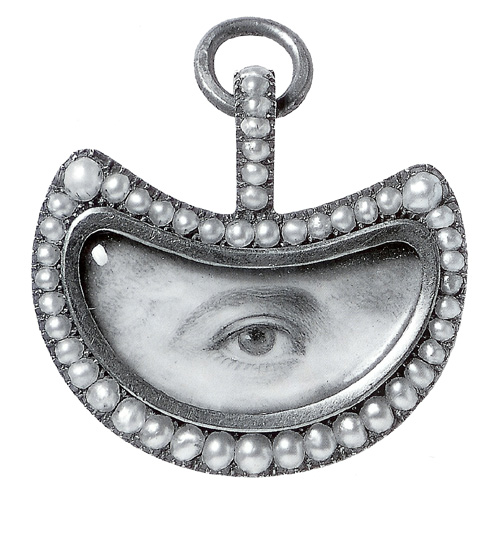
Supposedly it is a person's eyes that we first notice when we fall in love. I'm sure that's what the Prince of Wales was looking at when he first became smitten with the busty Mrs. Fitzherbert. Either way, he presented his shy lover a token of his affection in the form of an eye miniature. Eye portraits became a common lovers' token in the late eighteenth century and into the Regency period. After all, eyes are not as conspicuous as a full miniature. This makes them difficult to identify today. If you find one of these rare miniatures in a museum they seldom know whose eye is depicted. Many letters from the time talk of how supposed lovers had "exchanged eyes."

Eye portraits were created the same way miniatures were and usually by miniature artists such a Richard Cosway (who painted the eye for the prince to give to Mrs. Fitzherbert). The eyes would be placed on jewelery such as brooches or rings to display that the wearer's heart belonged to someone. Some settings even have a wife's eye surrounded by her childrens'. Other eyes were not put on constant display and only shown to select parties, but that usually meant that they already had someone else's eye, if you get my drift, wink wink.

Friday, January 23, 2009

Tart of the Week: Lady Letitia Lade


Doesn't her name alone just send the message that Letitia was no saint? We can't be sure of the true origins of Letitia, or even what her true name really was. We can infer that she came from humble origins which led her to employment in seedy London as a servant in a brothel. It is here that the young Letitia met the first of her movie-worthy lovers, John Rann. Rann was a dashing highwayman, and we know how irresistible those can be! But bad boys are never good for the long haul. Sixteen String Jack was captured and sentenced to death in 1774. Not one to go down without a show, he came out in a custom green suit, joked around with the executioner and crowd, then danced a jig before he was dropped through the floor. Letitia recovered from her loss and moved on from her romantic bad boy to a rich aristocrat, the Duke of York.

Climbing the social ladder proved to work out well for Letitia. Her connections with the Duke helped her form even more. Soon she was modeling for Reynolds under the name of "Mrs. Smith," the portrait of which was exhibited at the 1785 Royal Academy exhibition. Knowing that a son of the king would eventually tire of her, Letitia began to set her sights on his (and Rann's) friend, the Baronet, Sir John Lade. John was rich, fun, good looking, and friends with the Prince of Wales so he was the perfect target for Letitia. He was was a true horseman, one of the best riders and drivers at the time. He was so into it, that he was constantly wearing his riding gear and even insisted on carrying a whip on his person all the time. No wonder Letitia was interested! She won John over with her own natural horsemanship. Here was a beautiful, vivacious, and slightly dangerous woman who shared his love of the sport. Perhaps he could hone her riding skills and maybe even tame her as well? Their affair lasted quite a while and was scoffed at by his family before John made Letitia "Derby" a honest woman, when he married her in 1787.

I imagine the marriage was actually a fun one. The two were so similar in their tastes. When John's friend, the Prince took interest in Letitia, the two seemed to enjoy the game of his pursuit (The Prince even commissioned Stubbs to paint her portrait). Unfortunately, they also had similar spending habits and were commonly in financial turmoil. Letitia relished her new place among the aristocracy while they, in turn, found her a bit course. Her casual cursing was overwhelming to many and began the phrase, "he swears like Letty Lade!" Her carnal past also was a hot topic and she was said to, "withstand the fiercest assault and renew the charge with renovated ardour, even when her victim sinks dropping and crestfallen before her," and that she never "turned her back against the most vigorous assailant."

In the saddle, Letitia proved to be just as reckless and daring as her expert husband. He himself, had trained her well. Not only did she enter herself in the Newmarket Races one year (scandal!) she also placed a bet on herself as well (the audacity!). The portrait the Prince of Wales commissioned to hang in his London home shows Letitia's talent in the saddle. Her horse rears partially en levade as she sits side-saddle, perfectly balanced in this most challenging of position; a position more difficult for the rider than the horse.

Although financial problems may have forced the Lades to relinquish ownership of some of their prized horses, Letitia lived a fairly happy life. She died in 1825 and was followed years later, by her husband. She stands today as a tartly tamer of beasts!

Friday, January 2, 2009

Tart of the Week: Isabella, Lady Hertford


It has been a while since we've talked about one of the endless amounts of women that the Prince of Wales became involved in. Lady Hertford's only claim to fame was her affair with the womanizing prince. Isabella was the eldest of five daughters by the 9th Viscount Irvine and his wife, therefore Isabella and all her sisters had the title of "Honourable." Interestingly, Isabella's maiden name was Ingram-Shepherd which was a combination of her two parent's last names. It was likely hyphenated due to inheriting a large amount of money.

It must have made sense for Isabella to marry someone else with a long hyphenated last name because at the age of sixteen, in 1776 she became the second wife of Francis Seymour-Conway, the 2nd Marquess of Hertford. Both families must have loved changing last names more than splitting heraldic arms because the happy couple then changed their last name to Ingram-Seymour-Conway in 1807 after receiving a large amount of money from Isabella's mother's death. Talk about going overboard! Francis must have been delighted with his young wife. She was reportedly tall and beautiful, and just a tad bit pudgy. She also was a big fan of the Tory party and very anti-Catholic...but would still hang out occasionally with Maria Fitzherbert. The couple quickly had an heir, but he remained their only child. As the years passed, the old Marquess began to notice the Prince of Wales' eye on his wife. Knowing George's history, Francis wanted to remove his wife from the possibility of involvement so he moved the whole family to Ireland, hoping the prince would forget about Isabella. Of course his attempt backfired.

It probably didn't help that the Ingram-Seymour-Conways liked throwing parties (because the Prince of Wales loved going to them). They even bought that the Duke of Manchester's former duck hunting lodge, built from 1776-1788. Its location and elegant facade was ideal for their London residence and the long galleries ideal for throwing rad parties. They renamed the house Hertford House and it still stands today but also goes by the name of The Wallace Collection, which holds one of the best collections of eighteenth century and Renaissance paintings. But I digress. By 1807 the Prince was a regular at Hertford House. It was around this time also that the Prince began becoming less involved in the Whigs and siding more with the Tories. Perhaps the Tory princess Isabella had something to do with it? I wouldn't be surprised if Isabella craftily wouldn't let George into her bed until he began sharing some of her political opinions.

Their affair was rather long; it lasted until 1819 (Isabella was 60!) when George found a new squeeze. Her husband died three years later. Strangely enough, Isabella's son was good friends with the prince. Meaning that the friendship and affair coincided at the same time. What a MILF!

Friday, November 21, 2008

Tart of the Week: Princess Caroline


The marriage of George, Prince of Wales to his consort is either a tale you want to laugh at or just shake you head in pity. For Caroline of Brunswick, it was definitely not a laughing matter. But our tarts usually don't take these things lying down...well, in a manner of speaking they don't...
Caroline of Brunswick was born in 1768, the daughter of the Duke of Brunswick and Princess Augusta of Wales, George III's sister. Caroline turned out to be an average-looking girl who was nice enough, but she had a few bad habits. She was noted to be crass and vulgar and didn't see any reason to bathe often. She had even been described as smelling "like a farmyard." So who better to sell her off in marriage to than her cousin, the Prince of Wales.

If you recall, the prince was already very much, although illegally, married to Mrs. Fitzherbert. He had merely agreed to the marriage in order to get his father to pay off the massive debts he had accrued. Well, the wedding spelled doom from the start. The cousins met for the first time three days before the wedding. Caroline was 26, and considered an extreme spinster, especially by rich aristocrat standards. The 32 year old George was instantly disgusted, after their initial contact he recoiled and asked for a drink. At the wedding, Caroline's gown was so over-decked in jewels and ermine fur, she could barely stand under the weight of it. When George got to the altar it was only with the assistance of his groomsmen because he was so incredibly drunk that he couldn't stand. Meanwhile, he kept staring back longingly at his trusty tart, Lady Jersey, who had already begun torturing the poor, stinky princess. When everyone went to retire after the celebrations George ended up passed out on the bedroom floor, too drunk to perform his husbandly duties. In the morning when he woke up, he deflowered his bride and then vowed never to touch her again.

Nine Months later Princess Charlotte was born. Two days after that George made up his will, leaving everything to Mrs. Fitzherbert and a shilling to Caroline. He also wanted Caroline to have no part in raising her daughter. He hated Caroline so bad, and for no good reason either! After two years of dealing with George's immature behavior toward her, Caroline was finally like, "F this!!" and allowed herself to be banished to a country estate. The English people were sad; they had been cheering her on since they hated George and Lady Jersey so much.

Once Caroline had a house to herself she decided that if George was going to spend his days cheating on her with countless women, why shouldn't she be able to do the same? And that is what she did. With women and men. She was also rumoured to dance half-naked at dinner parties. While Harriet was visiting the continent, she unexpectedly ran into Caroline:
"The first thing I saw in the room was a short, very fat, elderly woman, with an extremely red face (owing I suppose, to the heat) in a girl's white frock looking dress, but with shoulder, back and neck, quite low (disgustingly so), down to the middle of her stomach....She was dancing and at the end of the dance a pretty little English boy ran up and kissed her. I was staring at her from the oddity of her appearance, when suddenly she nodded and smiled at me, and not recollecting her, I was convinced she was mad, till William pushed me, saying: 'do not you see the Princess of Wales nodding to you?'"
Caroline's sadness at the loss of visiting her daughter caused her to adopt children left and right. When George caught wind of this (eventually) he saw it as an opportunity to accuse Caroline of bearing other men's children. He launched an investigation of her fidelity in 1806 which didn't prove anything against her. Still, Caroline decided to move out of England to avoid any further investigation.

While living in Europe Caroline partied hard and racked up huge amounts of debt. She also continued sleeping around. Meanwhile (in 1813) her only daughter, Charlotte, died in childbirth. Caroline was devestated. In 1820 George III finally kicked the bucket and it was time for George IV to be crowned. Caroline came racing home to claim her right as queen. As you can guess, George attempted to prevent this at all cost. First, he offered her large amounts of money-but Caroline wanted the power to help the people of England, and money couldn't lure her away. Next, George sued her for adultery, a crime that could stripe her of her title and head. It was at this trial that Caroline claimed she had committed adulterly with only one man: George, her husband. She had a solid point too because he was technically married to Mrs. Fitzherbert, whom he never divorced. The jury saw her point too and George lost his case.

However on the night of the coronation Caroline suddenly fell ill with severe abdominal pains. She was convinced she had been poisoned, and quite honestly, who can blame her for this claim. She died three weeks later, just barely a queen of England.

Friday, October 31, 2008

Tart of the Week: Elizabeth Armistead


This week's tart is a very special and notorious tart of the late 18th century. She enjoyed a celebrity as the most famous courtesan and slept with just about every famous man in England during her career. Please just try to wrap your mind around that! Not much is known of Elizabeth Cane's humble beginnings except that she was born July 11, 1750. Elizabeth's beauty was able to secure her a career as a model for a hairdresser when she first arrived in London. It has even been rumored that she had been Perdita's dresser when she was an actress at Drury Lane. Either way, her beauty (and large breasts) attracted the attention of well-known madam and soon Elizabeth was a working out of a brothel. So much for the hair modeling business! It was around this time that Elizabeth began going under the name Mrs. Armistead in order to protect her family.

Elizabeth's success as a courtesan can probably be attributed to the fact that she wouldn't let herself get too attached to her clients. Most of them being rakes anyway, Elizabeth saw no need to be bothered with love. Some of her long list of lovers include, the Duke of Dorset, Duke of Ancaster, Earl of Derby, Viscount Bolingbroke, Lord George Cavendish (The Duke of Devonshire's brother), and, of course, the Prince of Wales. Elizabeth must have been very good at her craft! She was even good enough to buy herself the Armistead House. A famous story the Devonshire set like to joke about (along with everyone else) was when Lord George Cavendish came to Elizabeth's house one night after a few too many drinks. When he was refused admittance he barged in anyway. He went straight to her chamber, opened her door and, candle in hand, discovered the Prince of Wales cowering behind the door. Lord George burst out laughing, made a low bow and walked the whole way home, laughing. He had a much better sense of humor than his brother.

One person who was certainly not laughing was Perdita. She was very upset that the prince had spurned her love for that of "The Armistead."* Since both women were both celebrities, the papers capitalized on Perdita's anguish by gleefully supplying stories of the two women's rivalry. Luckily for Perdita, the prince broke things off with Elizabeth and moved on to Grace Dalrymple Elliot. Elizabeth herself moved on to bigger and better fish. That fish just happened to be a Fox.

After a string of lovers later, Charles James Fox was now the sad, rejected lover of Perdita. He somehow found consolation in the arms of Elizabeth. But neither politician nor courtesan thought that they would end up falling in love. For the first time it appeared that Elizabeth was in love with one of her clients, and he loved her back. However, years of drinking, gambling, and womanizing didn't leave Fox with enough money to sustain Elizabeth's pricey lifestyle. She resisted his advances but finally gave in and by 1783 she settled down to a monogomous relationship with Fox. In 1795 they secretly wed. Who would have thought that these two party animals could settle down and become models of marital bliss? But there they were in their cosey London home, hosting dinners and gardening. Yes, gardening!

Fox surprised everyone in 1802, including his best friends, when he revealed that he and Elizabeth had been married for seven years. His true friends, like Georgiana, warmly accepted the "fallen" woman knowing the strength of the couple's love. When Fox lay on his deathbed four years later his last words were to his beloved wife, "It don't signify my dearest, dearest Liz." Although, heartbroken, the ever-independent Elizabeth went on to live for many years, watching many of her and her husbands friends pass into the next world. She died at the ripe old age of 91 in 1842.

For more information on Elizabeth and Fox's love story check out Scandalous Women.


*The papers liked to refer to courtesans as if they were boats, because many men boarded them. This is how the nickname for Elizabeth came to be.

Tuesday, August 12, 2008

Dr Graham and The Sex Machine

There have been many quack doctors in the past but the most notorious of the 18th century is arguably Dr James Graham. It’s hard to even know where to start with this character so I will just introduce him as a typical celebrity. Like our contemporary celebrity doctor, Dr Phil, Graham didn’t entirely know what he was talking about, and people didn’t necessarily believe him yet he still had flocks of people flooding to his practice, mostly the rich and celebrities.

The Scottish doctor had a rather nomadic start. After going to medical school (notice I didn’t say ‘graduating’) he moved to the American colonies where he learned some electricity basics from Ben Franklin’s friend. He turned his tail and ran at the first hint of revolution and ended up in a variety of European cities, gaining a name for himself along the way. His specialty: sex therapy.

TEMPLE OF HEALTH
By 1779 Graham had acquired enough press and money and in 1780 he was able to open his infamous Temple of Health. It cost a crown for admittance and modest ladies were given masks at the door so their privacy was preserved and gossip could not be spread about infertility. Among gaudy gilded decorations and soft playing music, guests would listen to Graham’s pretentious lectures in his auditorium. This usually ended with a sharp electric jolt from their seat which was supposed to cure impotence and infertility. Graham employed lovely assistants as his ‘Goddesses of Health’ and they dressed scantily in Classical drapery. It has been rumoured that Emma Hamilton was one of these Goddesses but her biographer Flora Fraser argues against this gossip.

THE CELESTIAL BED
The Temple was a success and allowed him to build the Temple of Hyman in Pall Mall which in 1781 housed his invention, the Celestial Bed. The electro-magnetic bed was available to desperate couples attempting to conceive who could afford the £50 charge; about £3,000 today. Gilt dragons adorned the bed along with the saying (in Latin) “It is a sad thing if a rich man has no heir to his property.” To the sounds of music, a couple would make love on the bed while “magnetic fire” was pumped into the room. While the couple watched themselves copulate from the mirror on the bed’s canopy a tilting inner-frame helped position them in the best stance for conceiving.
Of course on top of using this bed, customers were urged to buy Graham’s special products to further aid in conceiving an heir.

CELEBRITIES
Celebrities were drawn to the temples like moths to the flame. Even ones like the Prince of Wales, who obviously didn’t need any help conceiving, were known to frequent Graham’s creations. It was just the “in” thing to do. After years of miscarriages Georgiana and the Duke went to the temple in hopes of producing an heir, to no avail. Other celebrities who were associated with the temples were Charles James Fox, Elizabeth Armistead, the Duke of Richmond, and John Wilkes. Mary Robinson’s reputation began to disintegrate after it became public knowledge that she was a patron of the quack. Not because he was a quack but because he was a sex-quack!

Like with most celebrities, what comes up must come down and this was the case with Graham as well. He went bankrupt in 1782 with the help of The Morning Herald and James Gillray’s campaigns against his quack-practice. Plus it probably didn’t help that his methods didn’t actually work either. He was imprisoned for debt and then went insane and died in 1794.


In this satirical print, Graham is flanked by his famous customers including Fox (center), Mary Robinson and Grace Ellitot (top)

Friday, July 25, 2008

Tart of the Week: Frances, Countess of Jersey


The insufferable Lady Jersey was not only a trollop, she was just plain nasty-mean. This wild Irish rose was the daughter of the Bishop of Raphoe, although he died before she was born. His death was the result of him trying to rob a stagecoach in London unsuccessfully. It remains unclear how the simple Frances Twysden was able to nab George Villiers, the next in line for the Earldom of Jersey. He was more than 20 years her senior and she was only 17 at the time of their marriage. George would later become the Master of Horse and Lord of the Bedchamber to the Prince of Wales. You probably know where this is going already.

Frances' marriage proved to be fruitful and she had ten children from 1771 to 1788. In between the children she made a hobby (and reputation) of wrecking her friends' marriages. She was a definitive member of the ton and one of the elite members of the Devonshire House Circle. This allowed her even more access to her friends' husbands and lovers. She was like a really evil version of Lady Melbourne. During Georgiana's first years of marriage she naively considered Lady Jersey to be one of her friends. Frances felt the same way, but she had an odd way of showing it. While Georgiana and her friends paraded in their gowns en militaire in Coxheath, Frances took advantage of the Duchess' brief absences from her husband to visit him alone in his tent...frequently. Worst of all, both parties made no secret of it; in fact they both seemed to flaunt the affair to poor Georgiana. The affair was ended by Georgiana's parents, Lord and Lady Spencer, who threatened Frances if she decided to continue the affair as well as told the Duke how disgusted they were with his behavior.

No matter to Frances, she moved on to other lovers very quickly, not worried at all about her reputation. When an article ran in the paper about her infidelities, this only caught her husband by surprise. The couple was visiting Chatsworth at the time and during dinner George jumped up and declared he would show the world he did not believe the press' slander against his wife. Everyone must have rolled their eyes. She continued to have affairs with the likes of Lord Morpeth and the Earl of Carlisle.

Her most famous affair was, of course, with the Prince of Wales. From 1794 to 1798 she was his main squeeze. In fact, it was she who broke up the prince's relationship with Mrs. Fitzherbert. The satirical cartoonists had a field day depicting the chubby prince canoodling with a haggish grandmother (Frances was over 40 when the affair began). Frances turned out to be more than just an outlet for the prince's carnal desires. Like Camilla with Prince Charles, she convinced Prince George to marry Caroline of Brunswick because she didn't think her to be a threat. She even became Caroline's Lady of the Bedchamber, much to Caroline's dislike. Frances continued her habit of torturing wives. The Prince took two pearl bracelets from Caroline's wedding jewels on the wedding day and gave them to Frances who made sure to always wear them in Caroline's presence. From day one, Frances was involved in the marriage and therefore a huge reason for it's ill-success.

Harriet Lady Bessborough (Georgiana's sister) made the comment that Lady Jersey could not be happy unless she had some rival to torment. Frances' hate for Caroline reached a point where she went out of her way to torment the poor princess. This caused her downfall, she became the most hated woman in England while the crowds cheered for poor Caroline. When she arrived at the Duchess of Gordon's ball, no one greeted her and every time she went up to a group of people to chat, the talking immediately stopped and the crowd dispersed. This wasn't as bad as her treatment by the lower classes who threw rocks at her house and drove her away in embarrassment by parading figures dressed as her and the prince on donkeys. Her golden age of snobbery and evil had come to an end.

Friday, July 11, 2008

Tart of the Week: Elizabeth Lady Melbourne


Before Georgiana ruled London society as leading hostess and leader of the ton there was Lady Melbourne. Only five years older than Georgiana, she gracefully stepped down from the post and became good friends with the new duchess. Less social obligations meant more time to play!

Elizabeth Milbank was the daughter of a baronet and grew into a beautiful, intelligent, clever girl. At 18 she was married to Peniston Lamb (does that name sound familiar?) and immediately set herself in organizing his rather disorganized affairs. That included overseeing the building of Melbourne House. After she had successfully fulfilled her duties of getting her husband's affairs in order and giving him an heir Elizabeth retired, if you will, to a hedonistic lifestyle of debauchery and scandal.

Because of her assertive and intelligent personality she accomplished her sinful lifestyle very well. It was rumored that Lord Coleraine sold Elizabeth to Lord Egremont for £13,000 and that both Elizabeth and her husband were parties of this contract and got shares of the money. She not only got money from this contract, but two children as well. She had a notorious temper and was a natural leader so even when she resigned from her post as leading hostess she was likely holding a puppet string or two of Georgiana's. In Sheridan's play, The School for Scandal, the character of the evil Lady Sneerwell was likely modeled after Elizabeth.

Unlike her character, Lady Sneerwell, Elizabeth did seem to be a decent friend of Georgiana's,
"The Duke of Richmond has been here, and told me you and I were two rival queens, and I believe, if there had not been some people in the room, who might have thought it odd, that I should have slapped his face for having such an idea; and he wished me joy of having the Prince to myself. How odious people are, upon my life, I have no patience with them."
Oh yeah, she also slept with Prince of Wales and bore one of his many bastards.

In fact, Lady Melbourne could be as loyal a friend as she was a disloyal wife. When rumors surfaced about an elopement involving Georgiana's sister Harriet, she venomously denied it all while writing Georgiana to find if it was in fact true. As for her disloyalty to her husband, the Viscount seemed not to mind it too much, especially since he received the title of Viscount in 1781 due to her infidelities and manipulations.

Lady Melbourne's affairs lasted past her youth and beauty and too numerous to count. One of her younger men conquests was Lord Bedford, who was courting Georgiana's daughter at the time I believe. Some of the infamous lover and poet, Lord Byron's most scandalous letters were addressed to Elizabeth despite the massive age gap. In fact, Byron's other conquest, Lady Caroline Lamb was Elizabeth's daughter in law. How incestuous! Unlike Caroline, the affair did not end disastrously and Byron has been quoted as saying Elizabeth was "the best friend I ever had in my life and the cleverest woman." Clever indeed, it seems that no ill-will was ever wished on Elizabeth by the many men she toyed with. The same probably can't be said about the wives of those men.


In this painting by Daniel Gardner Lady Melbourne (left) and Georgiana (right) are depicted as witches.


[The Milbanks and Melbourne Families by George Stubbs is property of The National Gallery of London]

Friday, July 4, 2008

Tart of the Week: Mrs. Fitzherbert


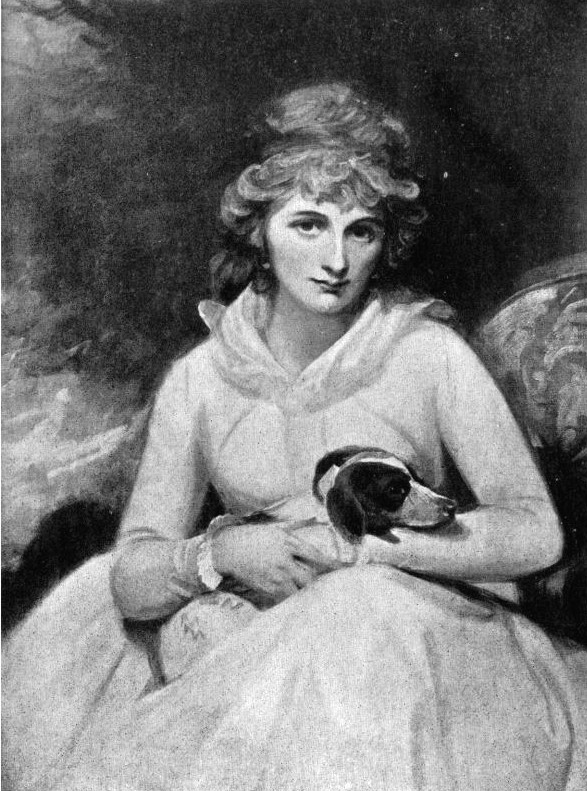
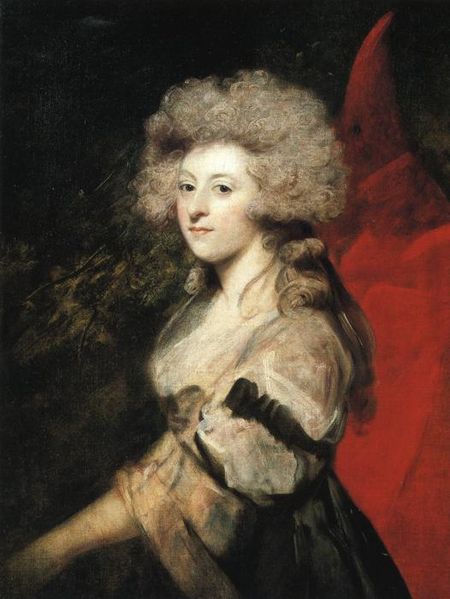
It's time to talk of the black widow, Maria Fitzherbert. Well, I guess calling her the black widow is a bit of an embellishment, she really wasn't that evil. Or even that tartly, but she's a tart just the same. Maria is mostly guilty by association, but don't worry she had some tart-like qualities.

Maria was a Catholic commoner educated in Paris. She married Edward Weld when she was 18 who was almost twice her age. He then died from falling off his horse three months later. Maria recuperated from her grief three years later and married Thomas Fitzherbert who was only ten years older than her. After three years of marriage he died. Maria said "screw this marriage business" and proceeded to London to spend her money on fun things such as balls and pretty shoes. She was a blonde who was ready to have her fun!

She entered London society and was quickly swept up into it. She has been described as heavy; her figure, her walk, even her conversation was too heavy to be welcomed in the gossiping, light-hearted Devonshire House circle. Still, she fit in well and had an ego to prove it. In 1784, while attending the opera she was introduced to the Prince of Wales and he fell madly in love with her. Which, really, wasn't unusual for him. But, strangely enough, this one was different. Maria welcomed the attention but had no interest in being a royal mistress. This only made George want her more. He offered her marriage and even is reported to have thrown himself at the floor screaming and pulling his hair and proclaiming he would die if she was not his wife (can't you just see this in an episode of Blackadder?). This could obviously not come to be. First of all Maria was Catholic, secondly George needed the king, his father's, permission to wed. Therefore the marriage was impossible.

One nice July evening Georgiana was on a balcony on Devonshire House having a few drinks with some friends. A footman called her inside to inform her two men were waiting to see her. They were the Prince's cronies and they told her George had stabbed himself with his sword and his dying wish was to see Maria who would not go unless Georgiana accompanied her. Georgiana was distressed about the prince but pissed off about Maria, who she really did not care for. The two women were escorted to the bloody dying prince who said in order to die in peace he needed to marry Maria. She panicked and agreed and he insisted on a ring to seal the deal. Everyone looked around blankly at each other and Georgiana rolled her eyes and begrudgingly slipped a ring off her finger. And so they were, ever so illegally, married.

Oh, and the prince was fine.

After this show from the prince Maria had quickly fled to France in hopes of him being diverted with other women. After 18 months she grew bored and lonely and returned to the waiting Prince of Wales. Maria enjoyed her place as the secret and illegal wife of George until 1794, when he agreed to leave her in order to please his father and therefore have his debts paid off. Until then, Maria had been aiding him in the attempt to pay them. He soon married Caroline of Brunswick which proved to be an unsuccessful match. He rekindled their romance and began an affair with Maria in 1800. She didn't see it as such since she had been married to the Prince and felt she still was. The Pope even backed her up on this. However since the married was illegal twice over it was considered null and void.

After George's coronation and subsequent death, the older Maria lived on. King William IV even proposed to make her a duchess after all she had been through as his predecessor's mistress/wife to which she responded that she 'had borne through life the name of Mrs Fitzherbert; that she had never disgraced it, and did not wish to change it.'